Working as a Model for Exhibitions and Product Presentations
Behind the Scenes: Fashion and Modelling: Working as a Model for Exhibitions and Product PresentationsExhibition work is a segment that is often undervalued: it doesn't provide stunning portfolio shots or lead to magazine covers, but it does ensure regular income, trains your interpersonal skills, and creates contacts in industries far beyond fashion. For many models, this serves as a financial foundation that allows them to wait for high-end shooting projects with peace of mind.

Available Roles
Booth Model
Working at a company's stand: greeting visitors, providing basic product information, distributing materials, and inviting guests to speak with a specialist. Basic knowledge of the product, usually provided during a briefing, is required.
Hostess
Greeting guests, registration, escorting, and helping with navigation. This role focuses more on service and communication and less on the specific product.
Promo Model
Distributing samples, conducting simple activities, and attracting attention to the venue. Often involves wearing a specific costume or branded uniform.
Presentation Model
Demonstration: cars, technology, jewelry, or clothing. The work is more static, but requires great endurance—standing next to an object for several hours is harder than it looks.
Activity Host
Running contests, quizzes, or short interactive sessions at the booth. Requires strong speaking skills and the ability to engage a crowd; typically pays a higher rate.
Translator-Model
A distinct and well-paid position at international exhibitions. Professional-level language skills significantly increase the pay rate.
How It Differs from Photoshoots
- Duration. A shift lasts eight to ten hours, almost entirely on your feet, usually for several consecutive days.
- Communication. The primary load is not physical but communicative: hundreds of short interactions per day.
- Appearance is important, but not decisive. Poise, speech, friendliness, and the ability to learn quickly are highly valued.
- Broader requirements for age and look. Unlike fashion shoots, a wide variety of types are in demand here.
- Regularity. The exhibition calendar is known in advance, allowing you to plan your work months ahead.
How to Prepare for a Shift
Footwear
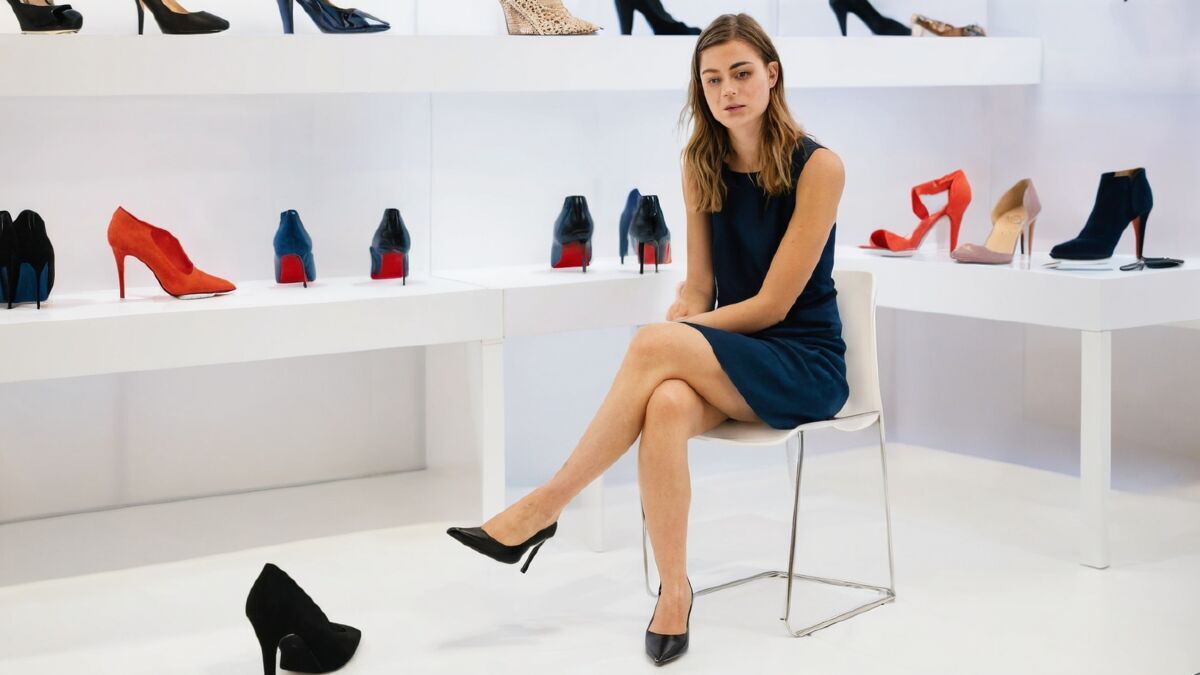
This is the most critical factor. Eight hours in heels on the hard floor of an exhibition hall is a trial that few endure easily.
- Break in your shoes in advance, at least a week before the event.
- Bring a second pair of the same height but with a different fit—changing the pressure points saves your feet.
- Silicone foot pads and anti-blister protection are essential.
- If the dress code allows for a lower heel, choose comfort over effect.
- Keep bandages in your bag at all times—don't wait until you have a blister.
Legs and Back
- Compression stockings or socks under trousers significantly reduce swelling.
- Shift your weight from one foot to the other every hour, step around, and relieve pressure on the lower back.
- During breaks, elevate your legs above hip level for at least five minutes.
- After the shift, use a contrast shower for the legs and stretch your calves.
- Avoid standing completely still: slow movement around the booth is less tiring than total immobility.
Voice
Exhibition halls are noisy, and you will have to speak louder than usual all day. By the end of the second day, most people's voices begin to fail.
- Drink room-temperature water constantly in small sips.
- Speak from the diaphragm, without straining your throat.
- Move closer to the listener instead of increasing your volume.
- Use breaks for silence rather than chatting with colleagues.
- Avoid ice-cold drinks and spicy foods during breaks.
Maintaining Appearance Throughout the Day
- Use long-wear makeup with a mattifying base; touch up during breaks.
- Choose a hairstyle that holds without constant adjustment—there is no time for fixes at the booth.
- Keep deodorant and a spare blouse handy if the uniform is light-colored.
- Keep jewelry to a minimum: it can get snagged and become a distraction.
- Ensure your hands are neat, as they are highly visible when handing over materials.
Interacting with Visitors
The ability to start a conversation is the key skill in this segment, and it can be trained.
- Avoid asking "Can I help you?" — the standard answer is "No, thank you." Use specific questions instead: "Are you looking for a solution for production or for an office?"
- Start with an open-ended question that cannot be answered with a simple yes or no.
- Maintain distance. Do not intercept people in the walkway or follow them.
- Know who to refer them to. Your task is often to lead an interested visitor to a specialist, not to make the sale yourself.
- Learn three to five key facts about the product and one short phrase explaining why it is useful.
- A smile and eye contact work better than any script, especially toward the end of the day when everyone is tired.
Handling Difficult Situations
- Intrusive attention. This happens regularly. Calmly shift to a professional business tone; if it continues, notify the booth manager. Your safety is more important than politeness.
- Aggressive visitors. Do not enter into an argument; refer the person to a manager.
- Questions you cannot answer. "I will invite a specialist to help you right now" is the correct answer. Never make up information.
- Requests for photos. Clarify the booth policy in advance—some companies welcome this, while others prohibit it.
What to Clarify Before Agreeing
- Schedule: days, hours, number of breaks, and whether lunch is provided and paid.
- Dress code: whether a uniform is provided or if you need your own; if the latter, specify exactly what is needed, including color and heel height.
- Responsibilities: whether it is just greeting guests or if it involves sales, distribution, or physical handling of materials.
- Briefing: when and where it takes place, and if it is paid.
- Payment: the daily rate, payment terms, and who is paying—the agency or the client. Note that rates, contract forms, and tax rules differ by market.
- Food and water available on-site.
- Changing area and storage for personal belongings.
- Filming and publication requirements — whether you are allowed to post photos from the booth.
Additionally, ask about setup and teardown: models are sometimes asked to help pack materials after closing. This is additional work and should be negotiated separately.
Managing Energy Over Multiple Days
Exhibitions rarely last a single day. Three to five consecutive shifts of eight to ten hours is the typical format. The biggest mistake beginners make is giving 100% on the first day.
- The first day is the most intense in terms of attention, but do not exhaust yourself physically; you have several days ahead.
- Prepare your things the night before. You won't have the energy for it when waking up at 6:00 AM.
- Eat proper meals, not just coffee and cookies from the booth. An energy crash by mid-day two is almost always a result of poor nutrition.
- Stick to a strict sleep schedule. Attending evening events after a shift is a direct path to working at half-capacity by day three.
- Rotate your shoes between days, not just during the day.
- Coordinate rotation with colleagues: decide who stands at the entrance and who stays deeper in the booth. Changing positions relieves both the legs and the mind.
Clients often judge performance based on the final day: by then, it is clear who maintains their level and who is just "counting down the minutes." Repeat invitations are based on this criterion.
How to Get More Bookings
- Work with multiple agencies. The exhibition market is split between organizers and various contractors.
- Create a separate set of photos for this segment: a business look, a smile, and a neat portrait. High-fashion shoots often work less effectively here.
- List your languages and proficiency levels—this is the primary factor in increasing your rate.
- Ask for feedback from the booth manager after the exhibition; a good review ensures you'll be invited back next year.
- Follow the exhibition calendar in your city: large events form their teams months in advance.
- Be obsessively punctual. In this segment, punctuality is valued above almost everything else.
Pros and Cons of the Segment
Pros: predictable calendar, regular income, less rigid requirements for "look" than in high fashion, development of communication skills, networking across various industries, and frequent repeat bookings.
Cons: heavy physical load, monotony, limited benefit for a high-fashion portfolio, and the need to deal with a large volume of people, including unpleasant ones.
For most, the smartest strategy is to keep this segment as a stable foundation without making it your only occupation. It pairs well with shooting work, as exhibitions usually happen in blocks, leaving time in between.
Offers for exhibitions and events appear in the castings section—be sure to indicate your willingness for this type of work and your language skills in your profile.
Share


Author: Svetlana Lisa, Stylist and fashion designer
Publication date: November 16 2026
Views: 45
About us and our editorial policy
Comments
Other materials in this section
Learn what a fitting is, how to prepare, and why your professional behavior during a garment trial can determine whether you get booked for the shoot.

Discover who needs hand and foot models, the physical requirements for the role, and how to build a portfolio for this accessible entry point into the industry.
Learn how daily heavy makeup affects your skin, the correct way to remove it after a shift, and how to restore your skin barrier when breakouts occur during a project.
Discover which segments hire plus size models, how requirements and measurements differ, and how to build a portfolio that gets you hired.

Discover which market segments actively hire mature models, how requirements differ from the youth market, and the best way to enter the profession later in life.
Discover why catalog shoots are the "bread and butter" of the modeling industry, how a high-volume shoot day works, and how to break into this segment.
 Auditions in India
 Casting calls in USA
 Castingi w Polsce
 Кастинги в Україні

