How to start practicing stage speech on your own
Behind the Scenes: ACMODASI: How to start practicing stage speech on your ownSpeech is the only tool an actor possesses that is heard before their performance is seen. The good news is that it can be significantly improved independently: the basics do not require a coach, only consistency. Fifteen minutes a day can produce noticeable results in a month or two.

The Core Components of Speech Work
There are four levels of work. You must practice all of them, and in this specific order:
- Breathing. The foundation of everything: without proper support, the voice sounds thin and tires easily.
- Articulation. The mobility of the lips, tongue, and jaw.
- Diction. The clarity of consonants and word endings.
- Intonation and Meaning. Logical emphasis, pauses, and tempo.
A common beginner's mistake is starting with tongue twisters. Without proper breathing and a relaxed jaw, these exercises only reinforce tension.
Breathing
The goal is to learn diaphragmatic breathing (lower-body breathing) and to speak on the exhale without forcing the air out.

- The Check. Lie down and place your hand on your stomach. When you inhale, your stomach should rise, not your chest. Remember this sensation and try to reproduce it while standing.
- The Long Exhale. Inhale for a count of four, then exhale for eight using a "s-s-s" sound. Gradually increase the exhale to sixteen counts.
- Counting on One Breath. Count aloud steadily for as long as your air lasts. Do not squeeze out the last bit of air, as this creates physical tension.
- Phrasing on the Exhale. Recite a long sentence, distributing your air so that the end of the phrase sounds just as strong as the beginning.
Articulation
This is a three-to-four-minute warm-up that is mandatory before any speech practice and before auditions:

- Massage your face and jaw with your fingers.
- Open your mouth wide, hold, and relax—repeat several times.
- "The Horse"—flutter your lips rapidly.
- Move your tongue in circular motions along the inside of your lips in both directions.
- Press your tongue alternately against your cheeks.
- Stretch your lips into a wide smile, then gather them into a small circle, alternating between the two.
- Silently pronounce vowels with maximum amplitude (e.g., A-O-U-E-I).
Diction
The most common problem for many is "swallowing" the ends of words. In a casual conversation, a listener fills in the gaps based on context, but a microphone does not.
- Exaggerated Reading. Read aloud, intentionally over-pronouncing every ending. It will sound unnatural, but this is how the habit is formed.
- Final Consonants. Specifically practice words that end in hard or voiceless consonants.
- Slow Tongue Twisters. The goal is not speed, but the clarity of every single sound. Speed is added last, only once the clarity is perfect.
- The Obstacle Method. A classic exercise: read a text with a clean object (like a cork or a finger) held between your teeth, then read it without. The difference in clarity is immediate.
- Consonant Clusters. Train the specific combinations of sounds that you find difficult—everyone has their own.
Intonation and Meaning
Technique without meaning creates a voice-over artist, not an actor. Focus on these areas:
- Logical Emphasis. Take a phrase and say it several times, emphasizing a different word each time. Listen to how the meaning changes.
- Pauses. Read a text, consciously placing pauses where a thought ends, rather than just where a comma is placed.
- Tempo. Read the same paragraph slowly, at a medium pace, and quickly. Identify the point where the meaning begins to be lost.
- Punctuation Through Voice. A period should drop in pitch, a question should rise, and a colon should maintain a sense of anticipation.
The Fifteen-Minute Daily Routine
- Breathing — 3 minutes.
- Articulation warm-up — 3 minutes.
- Slow tongue twisters — 3 minutes.
- Reading aloud with emphasized endings — 5 minutes.
- One phrase with various logical emphases — 1 minute.

It is better to read dense prose or non-fiction rather than plays: the syntax is more complex, forcing you to think more deeply about the meaning.
How to Track Your Progress
The only effective method is recording yourself. Once a week, record one minute of text on your phone and listen back using headphones, noting:
- Where you swallowed an ending.
- Where you sped up too much.
- Where you ran out of air.
- Where the intonation remained flat despite the meaning requiring a change.
Save these recordings: comparing your current work with the first recording after a month will provide an objective picture of your progress.
Common Mistakes in Self-Study
- Practicing rarely but for long periods. Fifteen minutes daily is more effective than two hours once a week.
- Starting with tongue twisters. Without a warm-up, they only reinforce physical tension.
- Chasing speed. Clarity comes first.
- Shouting. Volume is not the same as vocal support; you risk straining your vocal cords.
- Ignoring the body. Tense shoulders and a stiff neck make any speech work useless.
- Not recording yourself. You cannot hear half of your problems from the inside.
When You Need a Coach
- A persistent accent or speech pattern that you cannot hear yourself.
- Pronunciation defects with specific sounds—this may require a speech therapist.
- Tension that does not go away with exercises; this is often psychophysical rather than technical.
- Your voice becomes hoarse or hurts after practice—this is a sign of incorrect technique.
- You need to project your voice for a large theater house.
Usually, a few targeted sessions with homework in between are sufficient, rather than a full year-long course. Note that rates, contract forms, and tax rules for hiring coaches differ by market.
Summary
- Workflow order: breathing, articulation, diction, meaning.
- Fifteen minutes daily, not two hours once a week.
- Tongue twisters: slowly and only after a warm-up.
- Read dense prose aloud, ensuring every ending is clear.
- Record yourself weekly and compare.
- Pain or a hoarse voice is a signal to stop and find a professional.
Find projects where speech is key in the castings section.
Share


Author: Alexander Shaida, Editor-in-chief
Publication date: August 09 2026
Views: 98
About us and our editorial policy
Comments
Other materials in this section

A detailed guide on filling out your profile: from choosing the right main photo to describing your experience and avoiding the common mistakes that lead to rejection.

Learn how talent database searches work, why listing a skill without a proficiency level is ineffective, and which phrasing helps you land in the final selection.

A guide to the essential photo set, the correct image order, and how to avoid common mistakes that can hurt your casting chances.
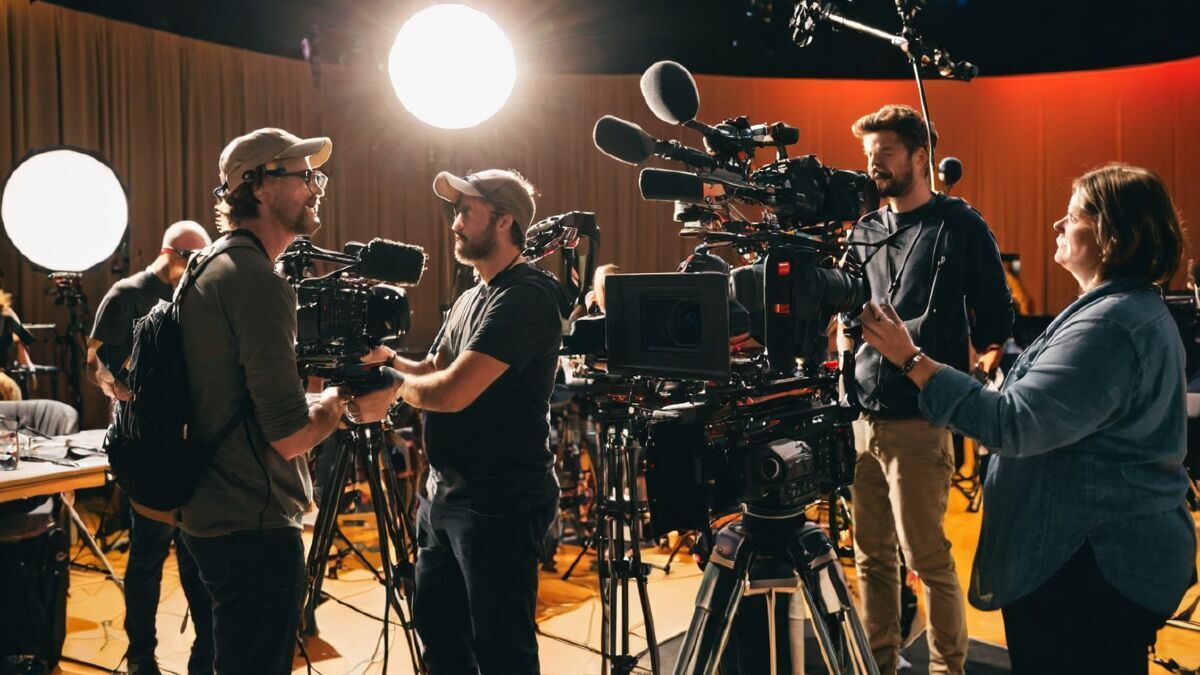
A detailed breakdown of the film crew: who to ask about your schedule, who handles your wardrobe, who commands the set during a take, and who you should never interrupt.

A step-by-step guide to analyzing casting notices: identifying non-negotiable requirements, flexible criteria, and red flags to help you decide within two minutes if you should apply.

Explore the actor's creative process from first script reading to final performance. A comprehensive guide to character construction, covering text analysis, physical embodiment, emotional preparation, subtext work, and the art of staying present on stage.
 Auditions in India
 Casting calls in USA
 Castingi w Polsce
 Кастинги в Україні
