Who does what on a movie set
Behind the Scenes: ACMODASI: Who does what on a movie setA film set can involve anywhere from twenty to two hundred people. To a newcomer, it may seem like everyone is preoccupied and no one is specifically responsible for you. In reality, the structure is very rigid, and every question you have has a specific designated recipient. Knowing who to approach saves you time and saves the crew's nerves.
The Golden Rule: The Chain of Command
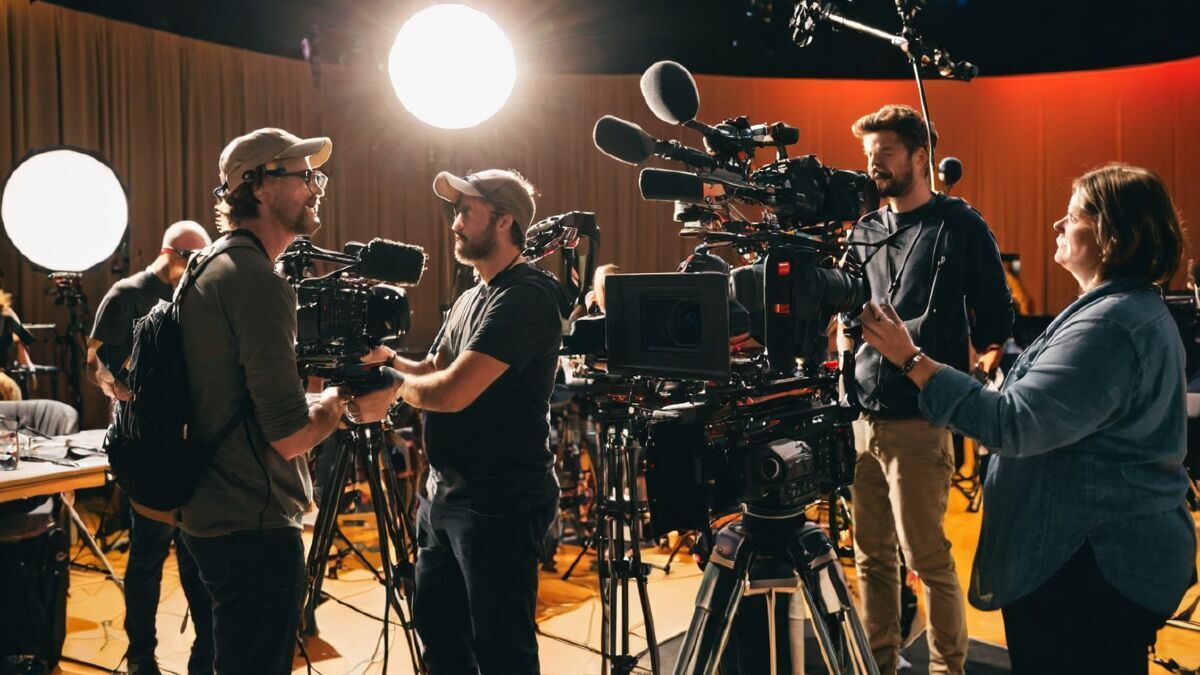
An actor does not go directly to the director, cinematographer, or producer with logistical or personal questions. All such inquiries go through the first assistant director (1st AD) or their assistants. This is not just a hierarchical formality, but a way to prevent production delays: while you are discussing where to find water with the director, the entire crew is standing idle.
There is one exception: questions regarding your character and the scene should be directed to the director, but only at the appropriate moment—not while they are setting up the lighting.
The Directing Team
Director. Responsible for the artistic vision. They work with you on the scene, provide direction, and give notes. They are almost always busy; between takes, they are usually discussing the shot with the cinematographer. You can and should approach them with questions about your role, but keep it brief and professional.
First Assistant Director (1st AD). Your primary point of contact. They are responsible for the schedule, call sheets, shooting order, and set discipline. They are the ones who tell you when you are working, when you are on break, and when you are wrapped. All logistical and organizational questions go to them.
Talent Coordinator / Actor's Assistant. On larger productions, this is a dedicated person who greets you, escorts you to makeup, and ensures you are in position at the right moment. If this role exists on your set, coordinate through them.
Script Supervisor. Responsible for continuity: which hand held the cup, whether the collar is buttoned, or which foot you stepped with. If you are unsure how something happened in the previous take, ask them; this is their job, and they are used to these questions.
The Camera Department
Director of Photography (DP / Cinematographer). Responsible for the image: lighting, composition, and camera movement. They typically interact with the actor through the director, though occasionally directly—for example, to ensure you are hitting the mark or staying in focus.
First Assistant Camera (1st AC / Focus Puller). Keeps you in sharp focus. They are the ones who place marks on the floor and ask you not to miss them. A mark is not a suggestion: stepping a few inches to the side can put your face out of focus, ruining the take.
Gaffers and Lighting Technicians. They set up the lights. If you are standing in the wrong spot, they will likely notice it before anyone else.
The Art Department
Production Designer. Responsible for the overall visual world of the project.
Costume Designer and Wardrobe Stylist. They handle costumes, fittings, and the condition of the garments. Go to the wardrobe stylist for anything related to clothing: if it's too tight, torn, or stained. You must never adjust your own costume or change clothes independently, as this breaks continuity.
Makeup Artist / Hair Stylist. Responsible for makeup, hair, and maintaining your look throughout the shift. Contact them if makeup runs, smudges, or if you are sweating. Between takes, they will usually approach you automatically.
Prop Master. Responsible for everything you hold in your hands. Props must not be carried away, left in random places, or taken without permission—every item has a specific location and a specific state for each scene.
Sound Department
Production Sound Mixer. Responsible for the clean recording of audio. The quality of their work determines whether you will have to do ADR (automated dialogue replacement) in post-production.
Boom Operator. Holds the microphone boom just above the frame. If they ask you to speak slightly louder or not to turn away, follow their instructions literally.
Lavalier mics are clipped under clothing, and there is a strict rule: do not touch them, do not rustle against them, and do not forget to remove them when going to the restroom. Forgetting an active lavalier mic is a classic set blunder that people talk about for years.
Production Management
Producer. Rarely appears on set. They are responsible for the budget and deadlines.
Line Producer and Production Manager. They handle the organization of the process, finances, transport, and locations. Questions regarding payment, contracts, and logistics go to the production manager—though usually still via the 1st AD.
Who Commands During the Shoot
The sequence of commands is generally universal:
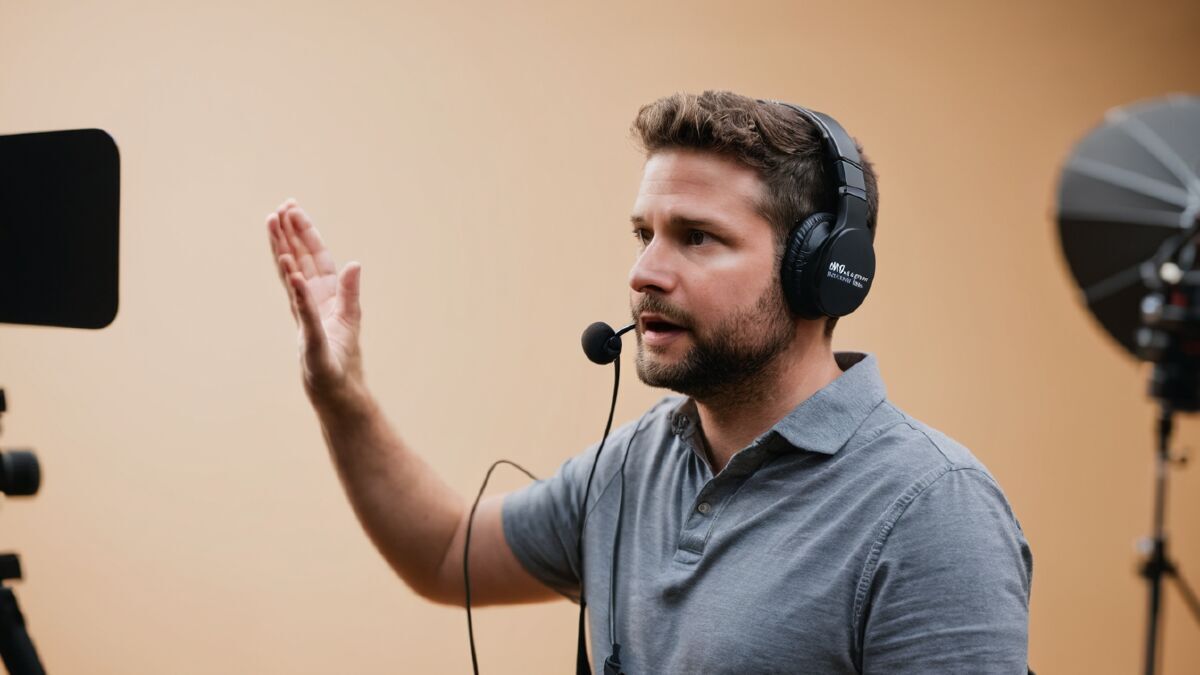
- "Quiet on set" — everyone stops talking, including those not in the frame.
- "Roll camera" / "Motor" — the camera starts.
- "Camera rolling" — confirmation that the camera is recording.
- "Sound speed" / "Sound recording" — confirmation from the sound mixer.
- "Slate" / "Clapper" — the clapperboard is snapped for synchronization.
- "Action" — you begin performing.
- "Cut" — the take stops. Do not leave the scene until this command is given, even if you make a mistake.
Only the director has the authority to call "Cut." An actor may stop only in the event of an immediate danger.
Quick Guide: Who to Ask
- When will I be filmed / when can I leave? — 1st Assistant Director.
- What happened in the last take? — Script Supervisor.
- Costume is too tight or torn — Wardrobe Stylist.
- Makeup is smudging — Makeup Artist.
- Where do I stand / where is my mark? — 1st AC (Focus Puller).
- How should I play this scene? — Director.
- I feel unwell — 1st Assistant Director, immediately.
- Payment and paperwork — Production Manager (via the 1st AD).
- Where is the catering/restroom? — Production Assistants.
The "Do Not" List
- Do not approach the director while they are setting up a shot.
- Do not move props or furniture.
- Do not step on cables or walk in front of the camera.
- Do not leave the set without notifying the 1st AD.
- Do not film the process on your phone—this is usually prohibited by contract.
- Do not comment on the work of other crew members.
In Short
- All organizational questions go through the 1st Assistant Director.
- Questions about the role go to the director; questions about continuity go to the script supervisor.
- Costumes, makeup, and props are handled by specialists; never adjust them yourself.
- Hit your floor marks precisely.
- Only exit the scene after the "Cut" command.
Please note: rates, contract forms, and tax rules vary by market and jurisdiction.
Projects currently casting actors can be found in the castings section.
Share


Author: Alexander Shaida, Editor-in-chief
Publication date: August 08 2026
Views: 103
About us and our editorial policy
Comments
Other materials in this section

A detailed guide on filling out your profile: from choosing the right main photo to describing your experience and avoiding the common mistakes that lead to rejection.

Learn how talent database searches work, why listing a skill without a proficiency level is ineffective, and which phrasing helps you land in the final selection.

A guide to the essential photo set, the correct image order, and how to avoid common mistakes that can hurt your casting chances.

A self-study program covering breathing, articulation, diction, and intonation. Learn what to do daily, how to track your progress, and when it is time to seek professional coaching.

A step-by-step guide to analyzing casting notices: identifying non-negotiable requirements, flexible criteria, and red flags to help you decide within two minutes if you should apply.

Explore the actor's creative process from first script reading to final performance. A comprehensive guide to character construction, covering text analysis, physical embodiment, emotional preparation, subtext work, and the art of staying present on stage.
 Auditions in India
 Casting calls in USA
 Castingi w Polsce
 Кастинги в Україні
