Understanding the Different Approaches to Acting Training
Behind the Scenes: Education: Understanding the Different Approaches to Acting TrainingThere are countless acting schools, and each claims to teach the "right" way. In practice, they solve different problems and suit different people. Understanding what each approach offers can save you years of effort: instead of jumping randomly between courses, you can choose the one that addresses your current needs.

An important caveat: pure systems are rarely found in the wild. Most teachers use a hybrid approach, and that is perfectly normal. The descriptions below refer to types of methodology rather than specific institutions.
Psychological Realism
This is one of the most common foundations in professional training globally. It is based on the internal logic of the character: what they want, what stands in their way, and how they attempt to achieve their goal. This leads to effective script analysis, breaking scenes into "beats," and working with objectives and obstacles.
What it provides: The ability to analyze any material independently, stability over long-term projects, and a common professional language with the director.
The weak point: If taught poorly, it can turn into endless intellectual analysis at a table without ever translating into action. The actor can explain the scene perfectly but cannot perform it.
Who it is for: Almost everyone as a foundation, especially those pursuing film, television, and ensemble theater.
Physical Action
This develops the same goal but from the opposite direction: instead of moving from analysis to action, it moves from a precise physical action to an internal state. The actor performs a specific sequence of movements, and the truth of the emotion emerges from those actions.

What it provides: Reliability. A physical action is reproducible from take to take, unlike a mood. This is especially valuable in film, where you may need to repeat a scene fifteen times with identical results.
The weak point: Without internal filling, it can become mechanical and hollow.
Who it is for: Those who tend to overthink or "get stuck in their head," and those who work extensively in production.
Affective Memory
In this approach, the actor draws upon their own emotional experiences to trigger the required state. Historically, this has been an influential line of training that produced generations of world-renowned performers.
What it provides: Depth and authenticity in specific scenes and a powerful personal presence.
The weak point: Significant risks. Systematically revisiting traumatic experiences without professional psychological support can be harmful. Furthermore, the result is unstable: what worked yesterday may not resonate today. Many modern educators have moved away from this technique for safety reasons.
Who it is for: To be used with caution and only with a teacher who understands boundaries. Working with personal trauma in a group setting without proper qualifications is a red flag, not a "deep" approach.
Practical Aesthetics and Text-Based Work
This approach minimizes internal preparation: the actor analyzes what the character wants, finds a similar situation from their own experience on an "as if" level, and simply performs the action. There is no deep immersion or emotional priming.
What it provides: Speed and simplicity. It works excellently when you need to enter the material quickly: self-tapes, episodic television, and commercials.
The weak point: If applied superficially, it can result in flat performances, particularly in complex psychological dramas.
Who it is for: Those who work fast and frequently, and those who are prone to over-analyzing to the point of tension.
Improvisational Schools
Training through stage improvisation: working without a script, accepting a partner's offer, and building a scene on the fly.
What it provides: Freedom, reaction speed, partnership, and the ability to handle unexpected situations—which happen constantly on set. It significantly improves audition behavior by removing the fear of making a mistake.
The weak point: It does not replace script work and analysis. An actor trained only in improvisation may feel lost when dealing with rigid, highly structured material.
Who it is for: Everyone as a supplement; especially those who feel stiff or are afraid of failing.
Physical Theater and Body Practices
An approach where the body becomes the primary tool: plastics, spatial awareness, mask work, grotesque, and movement as the source of the character.
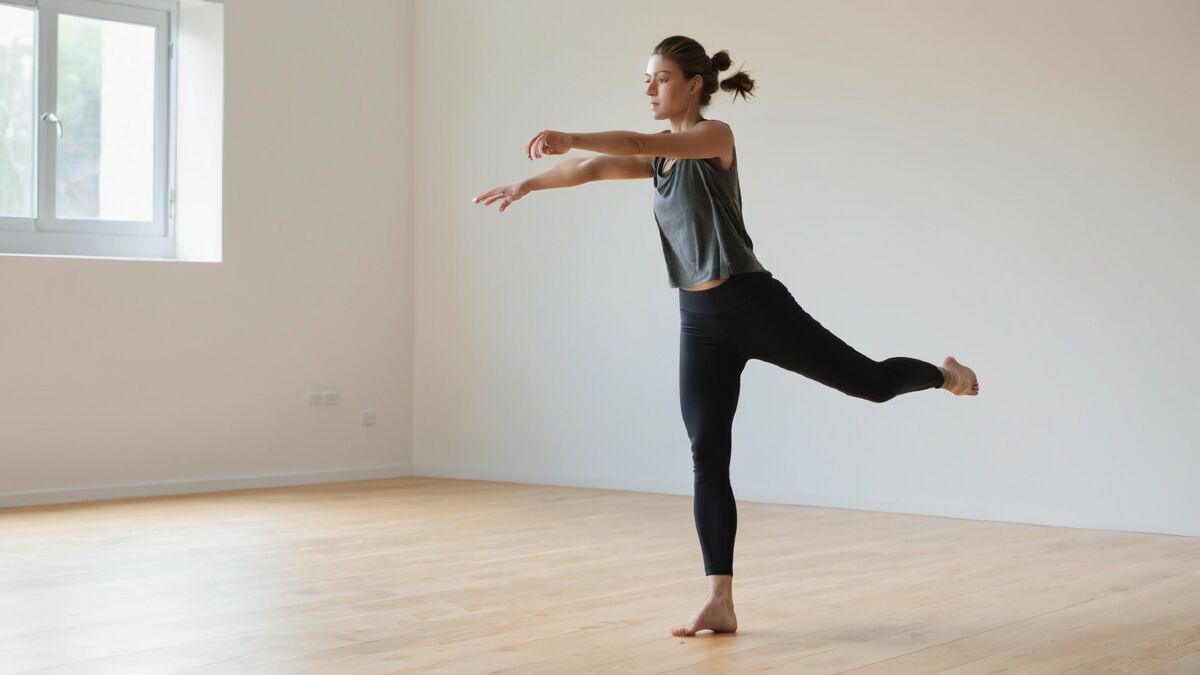
What it provides: Expressiveness, physical freedom, and the understanding that a character is built by more than just speech. This is indispensable for character roles and non-verbal screen work.
The weak point: Without a psychological foundation, it provides form without content.
Who it is for: Those who feel they are just a "talking head" with an unexpressive body, and anyone working in theater.
Acting for the Camera
Formally, this is a discipline rather than a "school," but for the modern actor, it is as vital as any system. It teaches what stage training often misses: scaling a performance for different shot sizes, hitting marks, repeatability, the "eight" movement, and knowing when to look into the lens and when to look away.
What it provides: Immediate applicability. An actor with a great theater background but no camera training often overacts in their first shoots and doesn't understand why the director is asking them to "do less."
Who it is for: Mandatory for anyone planning to act on screen. A course that doesn't include camera work and reviewing footage does not prepare you for film, regardless of the teacher's prestige.
How to Choose Based on Your Goals
- Applying to drama school: Psychological realism combined with speech and movement—admissions committees generally operate with this logic.
- Starting to get cast: A foundation in script analysis plus mandatory camera training.
- Overcoming tension and fear: Improvisation and physical action.
- Too much talking, not enough doing: Physical theater and plastics.
- One-dimensional acting: Improvisation plus character techniques.
- No time to prepare for auditions: Approaches oriented toward speed of entry into the material.
- Maintaining professional form: Regular training in any school plus new disciplines—vocals, stage combat, or dialects.
Common Ground Among Effective Approaches
Despite different terminology, all working schools agree on several core principles. You can use these to evaluate any teacher:
- The actor must act, not portray a state;
- The partner is more important than one's own internal experience;
- Attention should be directed outward, not toward self-monitoring;
- The specific is always stronger than the general;
- The body and voice are instruments that require separate, regular maintenance;
- Practice is more important than theory: a lesson where you didn't actually perform was a waste of time.
Mixing Systems vs. Sticking to One School
This is a common debate. The practical answer: master one system to a working level first, then add others. Someone who takes four different courses simultaneously for a year usually masters none of them—they end up with a collection of disconnected exercises.
Once you have a foundation, mixing becomes an advantage: you take from each approach what solves the specific task at hand and switch tools based on the situation.
Signs That a School Is Not Right for You
It is not about it being "hard"—it should be hard. Look for these signs instead:
- After six months, you still don't understand exactly what you are doing in a scene and cannot explain it in words;
- The technique works only in the classroom and falls apart during auditions;
- You leave lessons feeling emotionally drained without any professional result;
- You cannot apply what you've learned to unfamiliar material without the teacher's help.
The last point is the main criterion. The goal of any system is to enable the actor to work independently. If after a year you still need a teacher to break down a scene for an audition, the problem lies with the method, not with you.
The only way to test what you've learned is through real auditions: keep an eye on projects in the castings section, analyze the sides independently, and then compare the result with how you felt during your training.
Share


Author: Alexander Shaida, Editor-in-chief
Publication date: November 19 2026
Views: 19
About us and our editorial policy
Comments
Other materials in this section

A practical guide on how to identify the event, objective, and obstacle to transform your scenes during auditions and on set.
Learn how to evaluate instructors, what questions to ask before paying, and how to determine if your training is actually delivering results.
Discover the difference between stage combat and martial arts, the skills it provides actors, and the essential safety rules for filming fight scenes.

Discover the real language level required for filming, the difference between speaking and acting in a foreign language, and how to honestly represent your skills.
Discover which dance skills are most requested at auditions, which styles provide the most professional growth, and how to accurately list your level in your profile.
Learn the key differences between stage and screen acting and discover practical exercises to help you get comfortable in front of the lens.
 Auditions in India
 Casting calls in USA
 Castingi w Polsce
 Кастинги в Україні

