Doctor Who
Doctor Who (1963-1989)
Сезонов: 26,
серий: 694
Хронометраж серии: 25 min
Средний рейтинг:
8.4/10
58 549



Status
Ended
Country
Телесеть
BBC One, BBC Television
Production
Genre
Создатели
Verity Lambert, Sydney Newman, Donald Wilson, C. E. Webber
Actors
Scenario
Producer
Camera operator
Peter Hamilton
Composer
Editing
Martyn Day, Rod Waldron, Bill Symon
Whole Team (326)
Whole Team (326)
Short description
The adventures of The Doctor, a time-traveling humanoid alien known as a Time Lord. He explores the universe in his TARDIS, a sentient time-traveling spaceship. Its exterior appears as a blue British police box, which was a common sight in Britain in 1963 when the series first aired. Along with a succession of companions, The Doctor faces a variety of foes while working to save civilizations, help ordinary people, and right many wrongs.
Seasons
| Season | Episodes | Release date | Rating |
|---|---|---|---|
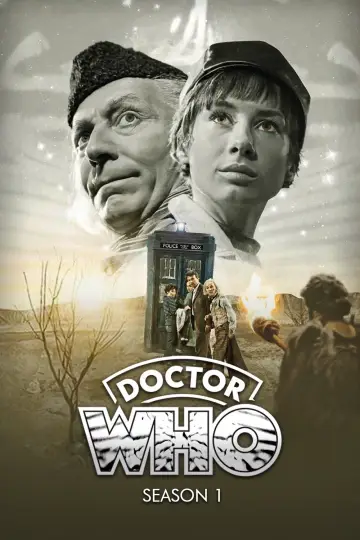
Season 1 The season introduces William Hartnell as the First Doctor, an alien who travels through time and space in his TARDIS, which appears to be a British police box on the outside. Carole Ann Ford is also introduced as the Doctor's granddaughter Susan Foreman, who acts as his companion alongside her s…
|
42 | 1963-11-23 | 6.4 |
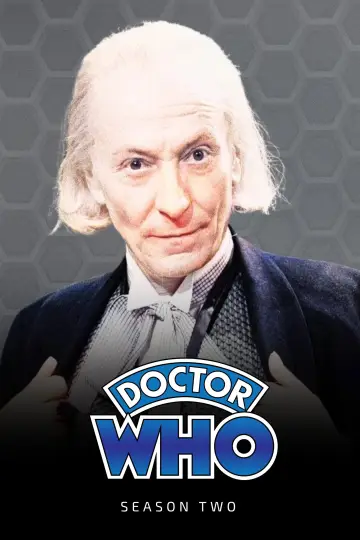
Season 2 Milestones this season included not one but two encore appearances by the Daleks; the departure of the original three companions, Susan Foreman, Barbara Wright and Ian Chesterton; and the first appearance of someone else from the Doctor and Susan's home planet, and the first Time Lord enemy to ap…
|
39 | 1964-10-31 | 6.4 |
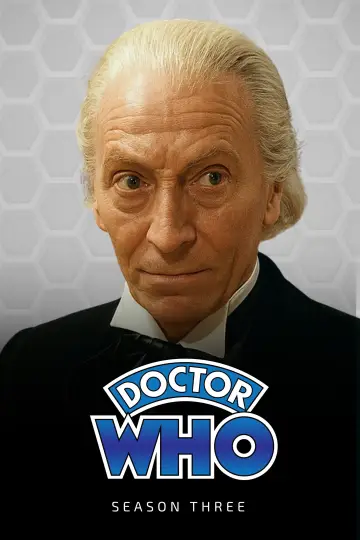
Season 3 At twelve episodes, The Daleks' Master Plan was the longest story in the show's history until superseded by the fourteen-episode The Trial of a Time Lord in 1986. The season also had the greatest number of different companions (seven) and producers (three). This was the longest season in the hist…
|
45 | 1965-09-11 | 6.4 |
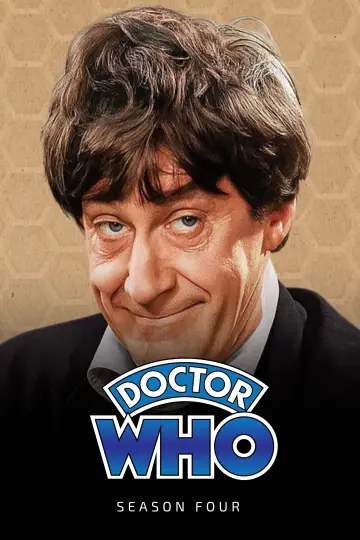
Season 4 This season was a season of major changes for Doctor Who, including some that have influenced the series and franchise ever since. Most notably, season 4 saw William Hartnell's First Doctor hand off the baton to Patrick Troughton's Second Doctor in the very first regeneration. When Hartnell annou…
|
43 | 1966-09-10 | 6.9 |
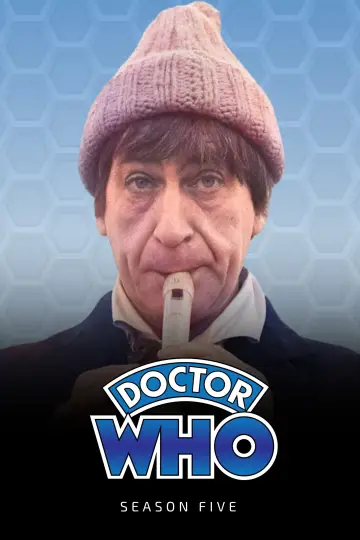
Season 5 No complete stories from the season were known to have survived until the early-1990s when archivists recovered a complete version of The Tomb of the Cybermen. A second complete story, The Enemy of the World was recovered in 2013, along with a nearly complete recovery of the story that followed i…
|
40 | 1967-09-02 | 6.9 |
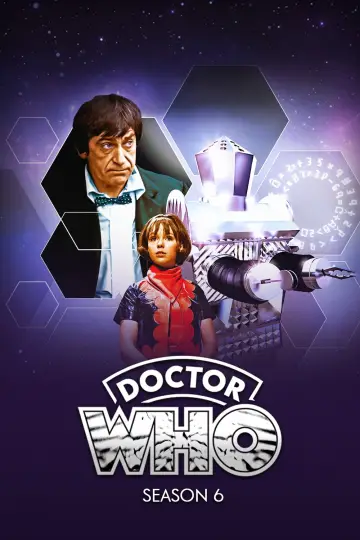
Season 6 This season featured the first ever UNIT story, The Invasion, which showcased the return of Brigadier Lethbridge-Stewart. It also featured the first official appearance of Time Lords and the as yet unnamed Doctor's home planet (another member of Susan and the Doctor's race, the Monk, had appeared…
|
44 | 1968-08-10 | 7.1 |
Season 7 It was the first series produced and broadcast in colour and the first set entirely in one time period and almost entirely on Earth (the latter of these factors would later be repeated for Season 26 and Series 1, although in those two cases there was no attempt at an in-universe explanation for c…
|
25 | 1970-01-03 | 7.5 |
Season 8 As of 2017, season 8 remains notable for being the season with the most number of regular characters. Not only did it see a new companion in the form of Jo Grant, but it featured a regular enemy — The Master — who was the first regular Time Lord enemy of the Doctor to appear more than twice, and …
|
25 | 1971-01-02 | 7 |
Season 9 It was noted for being the beginning of the end of the Doctor's exile on Earth, with the Doctor's TARDIS still under the control of the Time Lords (The Mutants) and restricted freedom (The Curse of Peladon and The Time Monster), as well as UNIT and the Master appearing less frequently in compared…
|
26 | 1972-01-01 | 6.5 |
Season 10 William Hartnell returned in a cameo as the First Doctor and Patrick Troughton in a more substantial role as the Second Doctor in The Three Doctors. This story marked the end of the Doctor's exile on Earth, opening up the series to more off-world adventures and beginning a gradual reduction of UN…
|
26 | 1972-12-30 | 7 |
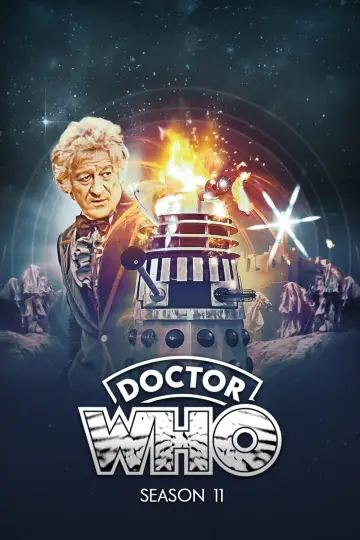
Season 11 It was Jon Pertwee's final season as the Doctor and included, very briefly, the first appearance of Tom Baker as the Fourth Doctor. The Time Warrior, the season opener, introduced Sarah Jane Smith, who was a frequently featured character in the Doctor Who universe decades after her departure in S…
|
26 | 1973-12-15 | 7 |
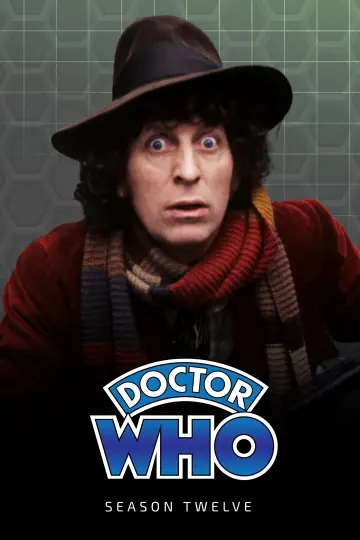
Season 12 All the stories in this season were interconnected, several forming a loose story arc relating to Space Station Nerva. The Cybermen returned to the series for the first time since The Invasion. Genesis of the Daleks, a story which introduced Davros and showed the creation of the Daleks, is one of…
|
20 | 1974-12-28 | 7.9 |
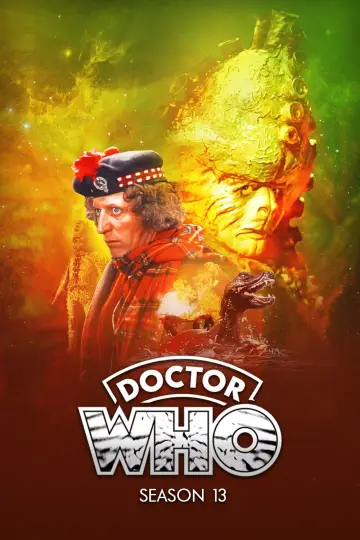
Season 13 It was during this season that the Doctor cut ties to UNIT (after Terror of the Zygons, the Brigadier would not appear again until Mawdryn Undead in 1983, and The Seeds of Doom marked the last occasion to date that the Doctor was explicitly said to be working for UNIT - as opposed to working with…
|
26 | 1975-08-30 | 7.8 |
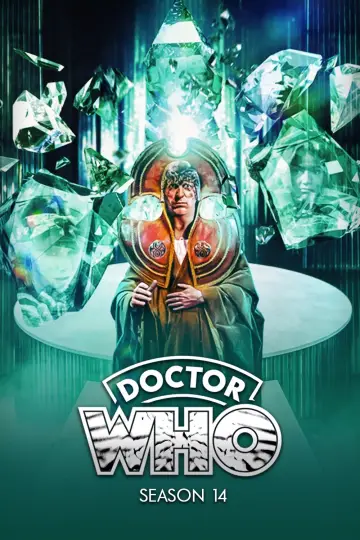
Season 14 The season is notable for the departure of Sarah Jane Smith in The Hand of Fear and for The Deadly Assassin, a story set entirely on Gallifrey which expounded greatly upon the culture and history of the Time Lords, and the Eye of Harmony and Rassilon are mentioned for the first time. The Deadly A…
|
26 | 1976-09-04 | 7.6 |
Season 15 This season introduced K9 to the series and saw the departure of Leela. It was originally intended to include Terrance Dicks' story The Vampire Mutations but, due to a major BBC production of Dracula, it was postponed. It later became Season 18's State of Decay. To replace it, Dicks quickly scrip…
|
26 | 1977-09-03 | 6.9 |
The Key to Time This season saw the introduction of the Black and White Guardians as well as the companion Romana, who became only the second female Time Lord companion since Susan. This season is sometimes colloquially known as The Key to Time season after the story arc involving the Key to Time. Although not t…
|
26 | 1978-09-02 | 6.8 |

Season 17 It consisted of five stories, plus the incomplete Shada, unfinished as a result of an industrial strike. Lalla Ward joined as Romana II, and the season is notable for the involvement of Douglas Adams in the writing department. This was the last season to use the traditional Delia Derbyshire "Doct…
|
20 | 1979-09-01 | 6.9 |
Season 18 The season featured a story arc involving E-Space and the return of the Master who had stolen a new body rather than regenerate. The stories were darker and more adult in tone than those during the Graham Williams era. They also attempted to emphasise science, much to the satisfaction of both scr…
|
28 | 1980-08-30 | 6.8 |
Season 19 Two milestones occurred in Earthshock. Firstly, the Cybermen returned, unannounced, for the first time since Revenge of the Cybermen in 1975 with a completely different design, with David Banks' first appearance as Cyber-Leader, a role he would return to in subsequent stories involving the Cyberm…
|
26 | 1982-01-04 | 6.7 |
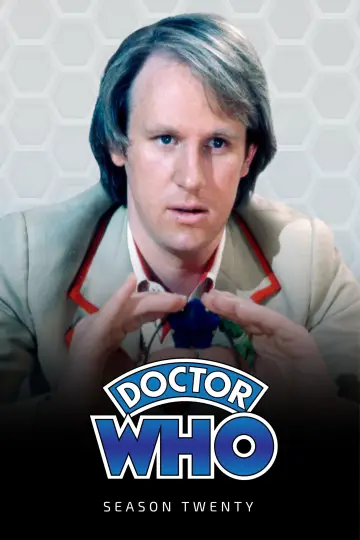
Season 20 Structurally, the season retread season 18's formula of including a trilogy of stories bound together by an overarching theme. In this instance, the tripartite tale involved Turlough's attempts to kill the Doctor at the behest of the Black Guardian.
|
22 | 1983-01-03 | 6.1 |
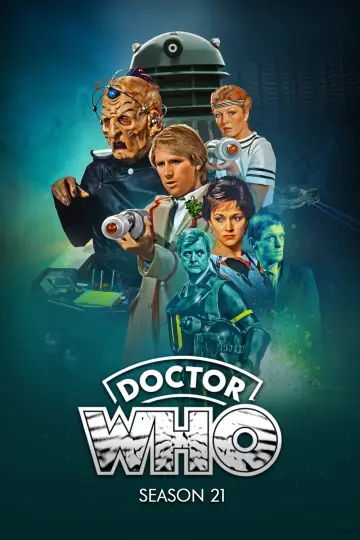
Season 21 The Twin Dilemma, the first story with Colin Baker as the Sixth Doctor, aired last in the season. This season saw the departure of companions Tegan, Turlough and Kamelion and introduced Peri. Most episodes were the traditional twenty-five minute length. However, due to coverage of the 1984 Winter…
|
24 | 1984-01-05 | 6.7 |
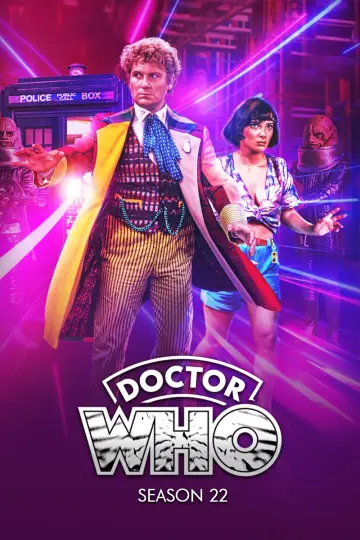
Season 22 With this season the BBC experimented with the format of the series, reducing the number of episodes to thirteen, but making each episode forty-five minutes long. The experiment did not result in improved ratings and at the end of the season the BBC announced it was cancelling the series; uproar …
|
13 | 1985-01-05 | 6.5 |
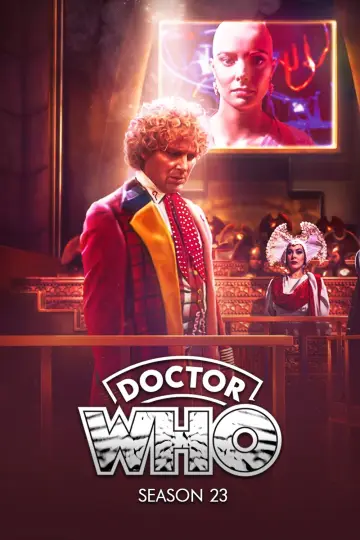
The Trial of a Time Lord This season had a unique format, never again repeated in the show. Doctor Who had returned to production after a near-cancellation and an eighteen-month production hiatus. For the first time, a season consisted of a single story, The Trial of a Time Lord, although this was made up of four serials…
|
14 | 1986-09-06 | 6.2 |
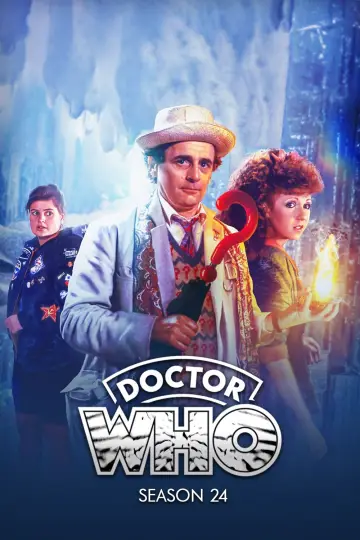
Season 24 Unlike season 23, there was no overall story arc, and the episode allotment - two four-episode stories, two three-episode stories - would be retained for the remainder of the original series. Notably, the season featured the introduction of new companion Ace, who would be a prominent figure in th…
|
14 | 1987-09-07 | 5.7 |
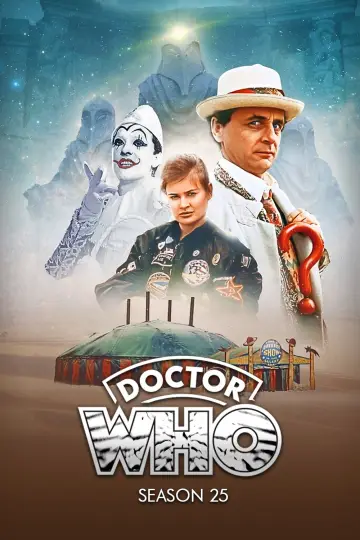
Season 25 As the silver anniversary season, it included several stories noting the milestone: Remembrance of the Daleks, which featured the final "classic series" appearance of the Daleks and Davros and which would feature scenes set at Coal Hill School and 76 Totter’s Lane, both significant locations in t…
|
14 | 1988-10-05 | 7 |
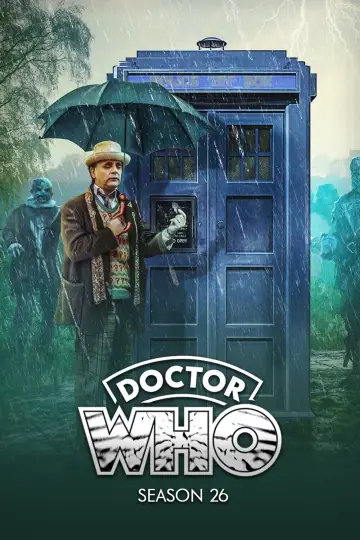
Season 26 It was the final season of the "classic" series. Unusually for a Doctor Who season, aside from some scenes in Survival, all the stories took place on Earth. Apart from Battlefield, the stories followed a loose character arc, as Ace came to terms with her past. As for the Doctor, he had become dar…
|
14 | 1989-09-06 | 7.1 |
What's left behind the scenes
- “Doctor Who” is the longest-running science fiction television series in the world, having been listed twice in the Guinness World Records.
- When the script required coordinates to be spoken aloud to program the TARDIS, Tom Baker would sometimes rattle off the digits of the show's production office phone number.
- The sound the TARDIS makes is the sound of piano bass strings being brushed by a hand, recorded, and then played backward at 10% of the original speed.
- The rights to the design of the police box, which serves as the TARDIS's disguise, are owned by the BBC, which in turn purchased them from the London police.
- The original pilot episode was accidentally discovered in 1978 in a film storage box with the wrong label (which was also the result of an unintentional error). Between 1972 and 1978, the BBC ordered the archives to be tidied and unnecessary materials discarded, which is when it was discovered that the episode, previously thought to be lost, had actually survived.
- In the 1960s, 253 episodes of 'Doctor Who' were filmed, but 97 of them no longer exist in the BBC archives because a purge was conducted between 1967 and 1978, during which the only copies of films and series whose value was questioned were destroyed. One reason for this purge was that those responsible for the BBC Film Library and BBC Enterprises archives assumed the latter company surely had copies of the films and series that the former had slated for destruction. Furthermore, with the advent of color film, it was decided that black-and-white materials would never be needed again. For this reason, the serial 'The Highlanders' (the 31st story, consisting of 4 episodes) was destroyed just two months after its 1967 premiere. This practice was ended in 1978 once fans of the show became aware of it. After this, the BBC realized the potential commercial and cultural value of the series and conducted a full audit of all archives. In January 2004, a former BBC engineer provided a surviving episode (the recovered episode was titled 'The Day of Apocalypse') from the 21st story, 'The Daleks' Master Plan' (1965), which consisted of 12 episodes. In 2011, two more previously lost episodes from 1965 and 1967 were discovered. In 2013, 'The Enemy of the World' (the 4th story of the fifth season, 6 episodes) and 'The Web of Fear' (the 5th story of the fifth season, 6 episodes) were found at an abandoned television transmitting station in Nigeria. While all 6 episodes of 'The Web of Fear' were found at the time, negotiations for their return to the UK dragged on for so long that the 3rd episode was lost again, this time forever.
- A wide variety of actors were considered for the role of the Doctor. Actor Ron Moody (born Ronald Mudnik, 1924–2015) twice refused the offer to play the character. He was offered the role when William Hartnell (1908–1975) left the series, but he declined (as did Peter Jeffrey, 1929–1999); he rejected the offer a second time in 1969 after Patrick Troughton (1920–1967) left the show. Graham Crowden (1922–2010) refused to play the Fourth Doctor. Richard Hern (1908–1979) was also planned for the role, but he declined as well. The role was also offered to Michael Bentine (1922–1996).
- Contrary to popular belief, the Daleks' shape was not based on a common table salt shaker; it was designed to conceal the operator sitting inside. It was conceived by designer Raymond Cusick (1928–2013). A Dalek was 167 cm tall, 121 cm long, and 91 cm wide, weighing 152 kg. The operator inside the Dalek controlled the weapon, the eye, and the lights, while the Dalek was voiced by an actor off-camera. However, since the lights flashed in time with the voice, the operator inside the Dalek still needed to know the lines by heart.
- Initially, the series was created as an educational program for a children's audience; one of the creators, Sydney Newman (1917–1997), had no intention of featuring alien monsters in it. The first episodes featured cavemen. But when the Daleks appeared, the nature of the show changed completely, although for several more seasons, the series continued to alternate between science fiction and historical narratives.
- When the health of Hartnell, who played the First Doctor, deteriorated to the point that it began to negatively affect the quality of his acting and his relationships with the other actors, he was asked to leave the series. Hartnell had an extremely strained relationship with the second producer, John Wiles (1925–1999), and shortly after Innes Lloyd (1925–1991) became the third producer, she informed Hartnell that he would soon be replaced by another actor. Instead of ending the successful project, Gerry Davis (1930–1991) invented the Doctor's ability to regenerate, which allowed for the replacement of one actor with another, although at the time it was not called regeneration. Previous producers had considered looking for an actor who would play the Doctor exactly as Hartnell did, but Lloyd and Davis preferred the idea of making the Doctor completely different. The term "regeneration" was first used only toward the end of the Third Doctor's tenure, in "The Planet of the Spiders" (the fifth and final episode of the 11th season, which consisted of 6 episodes).
- It was initially intended that the Doctor's time machine, the TARDIS, would have a different appearance that would allow it to easily blend into the landscape, regardless of where or in what era it appeared. However, it was decided that this would be too expensive and that this function of the time machine would be disabled because the machine itself was very old—taking the form of a 1963 police box.
- Tom Baker had two scarves of different lengths. He wore the shorter scarf during outdoor shoots for fear that the scarf might get caught on something.
- In the 1960s, television editing was a very complex task, which is why 'Doctor Who' (like many other series) was filmed for simultaneous broadcast. If an actor forgot their lines, they had to be 'covered.' There were several such instances in this series, for example, in the episode 'The Web Planet' (Season 2, Episode 5), when Hartnell forgot his line, and his co-star William Russell was forced to prompt him with the question: 'And in which galaxy is that, Doctor?' From Monday to Thursday, the actors had time for rehearsals; on Friday afternoon, there was a camera rehearsal, and on Friday evening, the studio recording took place. Saturdays were usually spent filming location shots for future episodes, Sunday was a day off, and then everything started over again. Editing techniques improved over time, but studio scenes continued to be filmed for simultaneous broadcast using multiple cameras until the series ended in 1989.


 Auditions in India
 Casting calls in USA
 Castingi w Polsce
 Кастинги в Україні
