The Chronicles of Narnia: The Lion, the Witch and the Wardrobe
Evil Has Reigned For 100 Years...
The Chronicles of Narnia: The Lion, the Witch and the Wardrobe (2005)
Timing:
2:23 (143 min)




Country
Production
Budget
$180 000 000
Box office
$745 013 115
Director
Actors
Scenario
Producer
Camera operator
Composer
Artist
Roger Ford, Larry White, Yuhon Ng
Audition
Liz Mullane, Gail Stevens, Pippa Hall
Editing
Sim Evan-Jones, Jim May, Marianna Rowinska
Whole Team (191)
Whole Team (191)
Short description
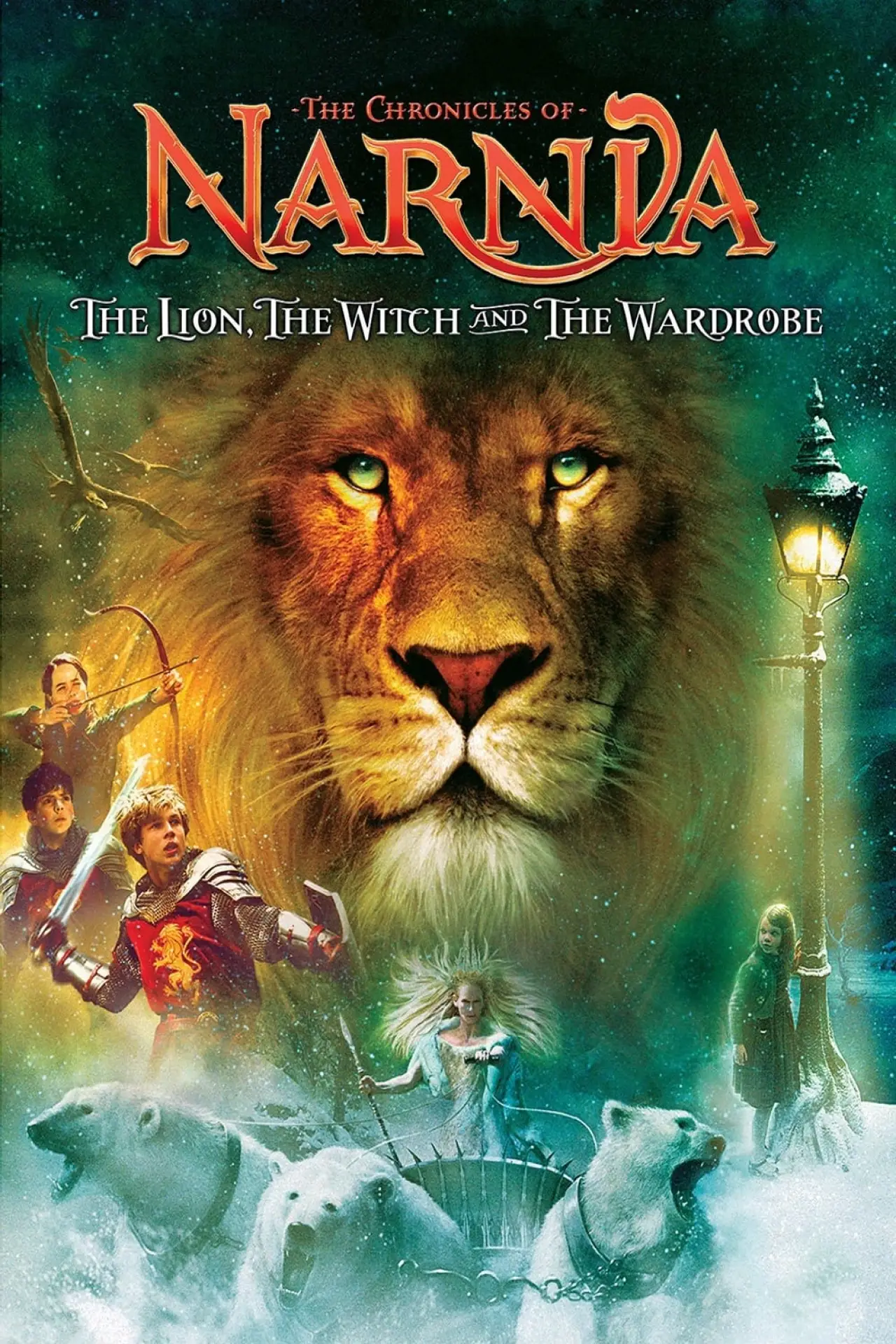
Siblings Lucy, Edmund, Susan and Peter step through a magical wardrobe and find the land of Narnia. There, they discover a charming, once peaceful kingdom that has been plunged into eternal winter by the evil White Witch, Jadis. Aided by the wise and magnificent lion, Aslan, the children lead Narnia into a spectacular, climactic battle to be free of the Witch's glacial powers forever.
What's left behind the scenes
- The film is based on C.S. Lewis's novel "The Lion, the Witch and the Wardrobe" (1950).
- Despite this film being merely a test run for the adaptation of C.S. Lewis's stories, the producers had already acquired the rights to adapt the entire series, which comprises seven books.
- The film had two false working titles: "The Hundred Year Winter" and "Paravel." Signs in Oklande, helping the crew reach the set, read "Paravel" in order to mislead fans trying to get onto the set.
- The role of the White Witch, Jadis, was originally intended for Michelle Pfeiffer, but the actress was forced to decline due to family circumstances. Michelle was the only movie star the producers decided to approach. Ultimately, the role of the Witch went to Tilda Swinton, who did not read the book before filming began.
- Douglas Gresham, a co-producer of the film, is C.S. Lewis's stepson.
- Brian Cox was originally supposed to voice the lion named Aslan, but Liam Neeson ultimately took on the role. Incidentally, the word “aslan” translates to “lion” from Turkish.
- The filmmakers wanted to bring 12 reindeer to New Zealand to pull the Snow Queen’s sleigh. However, the Ministry of Agriculture opposed this idea, citing Chronic Wasting Disease, which affects many North American deer. This disease can easily be transmitted from animals to humans. To avoid exposing the film crew to serious risk, they decided to replace the reindeer with wolves (and also reduce the number of animals in the team to six).
- Initially, the plan was to use a real lion and its models in the film, but when the crew received test computer graphics showing two girls walking down the street with a lion, they decided to create the lion using computer graphics.
- At the 102nd minute, there is a moment when Edmund loses blood on his lower lip, but it was present before and will reappear in the following battle.
- The juice of the Fireflower – a magical potion of Lucy’s – heals any wounds, healed Edmund’s mortal injuries, but did not heal the scratches and scrapes on his face.
- Georgie Henley’s (who played Lucy) reaction to James McAvoy’s character by the lamppost was completely genuine. She hadn't seen McAvoy in costume before the filming of that scene, so her fright was not at all acted. Her first reaction to the snow-covered Narnia was also genuine. Before filming, her eyes were covered, and she was brought onto the set and placed right in the middle of the decorations, hence the authenticity of her joyful surprise.
- Real animals were used for the role of the wolves in the film, although some were created using computer technology (a couple of individuals). Their tails were removed from the frame using computer technology, but then added back in. In the film, they wag their tails, demonstrating friendliness. Trained animals – a husky-Alaskan Malamute mix – were used in the filming.
- When the adults began to swear too much during filming, Georgie Henley would fine them. It is said that James McAvoy swore the most often. Among the children, Skandar Keynes (who played Edmund) most often had to pay the fines.
- C.S. Lewis sold the film rights to the entire series of books about Narnia shortly before his death. He was strongly opposed to television adaptations of his works, considering them completely unrealistic, especially the fact that actors in costumes played characters who were not humans. The author's adopted son, Douglas Gresham, agreed to the film adaptation only after seeing a demo reel with animals created using digital technology, and he himself became a co-producer of the project.
- Skandar Keynes was the last of the four children to be cast in the film. By the time he was approved for the role, the others had been together for almost a month, which led to some of his detachment. Keynes disliked it very much when the other children tried to hug him, so director Andrew Adamson instructed the other child actors to hug Keynes more often specifically to elicit negative emotions from him, which he expressed on camera. In the scene where his character follows Lucy into the wardrobe, Keynes did not appear. Anna Popplewell played the scene, simply wearing Keynes’ trousers.
- During filming, William Moseley constantly bumped Georgie Henley with the hilt of his sword, causing her to stumble and fall.
- The film was shot mostly in chronological order. Only the final scene, where the children fall out of the wardrobe, was filmed before all the outdoor scenes, so that the children would look pale, as in the beginning of the film.
- Tilda Swinton was not familiar with the works of C.S. Lewis before filming her role as the White Witch. Her costume included shoes with high soles (to make her appear taller), and during breaks between takes she used a special support to rest from the weight of the wig and crown.
- Real lions were not used in the film, simply because director Andrew Adamson wanted to film a scene in which Georgie Henley's character reaches out and touches Aslan's face. It took approximately ten hours to create the computer-generated lion and its mane (which consisted of 5.2 million individual hairs).
- Anna Popplewell is afraid of mice, so a stunt double played her in all the scenes with mice.
- William Moseley was chosen for the role of Peter out of 3,000 boys. After getting the role, he dropped out of school to focus on learning his lines.
- Although this film served as only a litmus test for the adaptation of C.S. Lewis's novellas, the producers had already acquired the rights to film the entire seven-book series.
- The film had two fake working titles: 'The Hundred Year Winter' and 'Paravel.' Signs in Auckland helping the crew reach the set read 'Paravel' specifically to mislead crowds of fans trying to crash the filming.
- The lion named Aslan was originally meant to be voiced by Brian Cox, but the role eventually went to Liam Neeson. Incidentally, the word 'aslan' translates to 'lion' in Turkish.
- The filmmakers wanted to bring 12 deer to New Zealand to pull the White Witch's sleigh. However, the Ministry of Agriculture opposed the idea, citing CWD (Chronic Wasting Disease), which affects many North American deer. This disease can easily be transmitted from animals to humans. To avoid putting the crew at serious risk, it was decided to replace the deer with wolves (and simultaneously reduce the number of animals in the team to six).
- Georgie Henley's (who played Lucy) reaction to James McAvoy's character by the lamp post was completely genuine. She hadn't seen McAvoy in costume before filming the scene, so her fright was not acted at all. Her first reaction to the snowy Narnia was also sincere. She was blindfolded before filming and carried into the middle of the set, which explains the authenticity of her joyful surprise.
- Whenever the adults started swearing too much during filming, Georgie Henley would fine them. It is claimed that James McAvoy was the most frequent offender. Among the children, Skandar Keynes (who played Edmund) had to pay the fine most often.
- C.S. Lewis sold the film rights to the entire Narnia series shortly before his death. He was strongly opposed to television adaptations of his works, considering them completely unrealistic—especially the fact that non-human characters were played by actors in costumes. The author's adopted son, Douglas Gresham, only gave his consent for the film adaptation after seeing a demo reel of animals created using digital technology, and subsequently became a co-producer of the project.
- Skandar Keynes was the last of the four child actors to be cast as Edmund. By the time he was cast, the others had already been together for nearly a month, which contributed to his somewhat detached demeanor. Keynes strongly disliked it when the other children tried to hug him, so director Andrew Adamson instructed the other child actors to hug Keynes more often specifically to provoke the negative emotions he expressed on camera. Keynes did not film the scene where his character follows Lucy into the wardrobe; in that scene, Anna Popplewell played the part, simply wearing Keynes's trousers.
- During filming, William Moseley constantly bumped into Georgie Henley with the hilt of his sword, causing her to trip and fall.
- Tilda Swinton was not familiar with C.S. Lewis's works before starting her role as the White Witch. Her costume included platform shoes (to make her look taller), and between takes, she used a special support to rest from the weight of the wig and crown.
- No real lions were filmed for the movie, simply because director Andrew Adamson wanted to film a scene in which Georgie Henley's character reaches out and touches Aslan's face. It took approximately ten hours to create the computer-generated lion and his mane, which consisted of 5.2 million individual hairs.
- Anna Popplewell is afraid of mice, so a stunt double took her place in all scenes involving mice.
- William Moseley was chosen for the role of Peter from 3,000 candidates. After landing the part, he left school to focus on learning his lines.
Similar movies
8.9/10
8.8/10

8.2/10
8.1/10
8.1/10
7.9/10
7.9/10
7.8/10
7.8/10
7.8/10


 Auditions in India
 Casting calls in USA
 Castingi w Polsce
 Кастинги в Україні
