How to Manage Your Sleep with an Unstable Filming Schedule
Behind the Scenes: Fitness: How to Manage Your Sleep with an Unstable Filming ScheduleA filming schedule rarely respects human biology. Monday might be a 4 AM call, Tuesday a wrap at 2 AM, Wednesday a day off, and Thursday another early start. The body cannot adapt to any single routine and exists in a state of constant desynchronization. The consequences are visible on screen—puffiness, dull eyes, slowed reactions—and audible in the performance: irritability, forgotten lines, and mistakes in blocking.

While it is impossible to completely stabilize a chaotic schedule, it is entirely possible to manage the consequences.
What Exactly Breaks Down
The body relies on a circadian rhythm synchronized with light. When wake-up times jump by several hours every day, this rhythm loses its anchor. The practical effects include:
- Sleep becomes shallow, even if the total duration is sufficient;
- Reaction speed and working memory decrease, directly impacting your ability to memorize lines;
- Cravings for sweets and fast carbohydrates increase;
- Fluid retention occurs, leading to morning facial puffiness;
- Emotional stability drops, and conflicts arise over trivial matters;
- The immune system weakens—catching a cold mid-production is rarely a coincidence.
What to Maintain at All Costs
With a chaotic schedule, keeping a consistent bedtime is impossible. However, three factors remain under your control and provide the most significant benefits.
Total Sleep Duration per 24 Hours
Don't count "how much I slept last night," but rather how much you slept over a 24-hour period. Day naps and night sleep are cumulative. If you only managed four hours at night, add two or three during the day—the body will count this toward its recovery, even if not fully.
Light
Light is the primary regulator of your rhythm and the most accessible tool.
- Bright light in the first 30 minutes after waking—even artificial light works, though daylight is best. This signals that the day has begun.
- Darkness before sleep. An hour before bed, use dimmed lights, blackout curtains, or a sleep mask.
- Sunglasses after a night shift. Morning light on the way home will prevent you from falling asleep.
- Screens. While not the primary factor, it is best to avoid them right before sleep.
The Bedtime Ritual
Maintain the same sequence of actions before sleep regardless of whether it is 10 PM or 9 AM: a shower, brushing teeth, ten minutes of reading, then darkness. The body attaches to the sequence when it cannot attach to the time.
How to Shift Your Routine Intentionally
If you know about a night block or an early call in advance, you can prepare the shift.
Before Early Shifts
- Three days prior, start going to bed 40 minutes earlier each day.
- Immediately seek bright light and light activity upon waking.
- Eat dinner earlier: late meals interfere with falling asleep early.
- Avoid napping during the day the day before to ensure you can fall asleep in the evening.
- Pack your bags the night before—a 4 AM wake-up is no time for organizing.
Before Night Shifts
- Two days prior, shift your bedtime two hours later.
- The day before, make sure to take a three-to-four-hour nap during the day.
- On the day of the shift, do not wake up early; sleep as long as possible.
- Eat a hearty meal before heading out.
- After the shift, wear sunglasses, avoid running errands on the way home, and go straight to sleep.
Daytime Napping: How to Do It Right
Napping is a primary resource for actors with unstable schedules, but it must be used correctly.
- Twenty minutes—a short restorative nap. This provides alertness without grogginess because you don't enter deep sleep stages.
- Ninety minutes—a full sleep cycle. This is also effective, as you wake up at the end of the cycle.
- Forty to eighty minutes—the worst option: waking up during a deep phase leaves you feeling groggy for an hour.
- No later than six hours before your main night sleep, if you are currently on a normal routine.
- Total darkness and silence—a mask and earplugs can turn twenty minutes in a trailer into a full recovery session.
Sleeping on the Go and on Set
The ability to sleep in uncomfortable conditions is a practical skill that significantly improves quality of life.
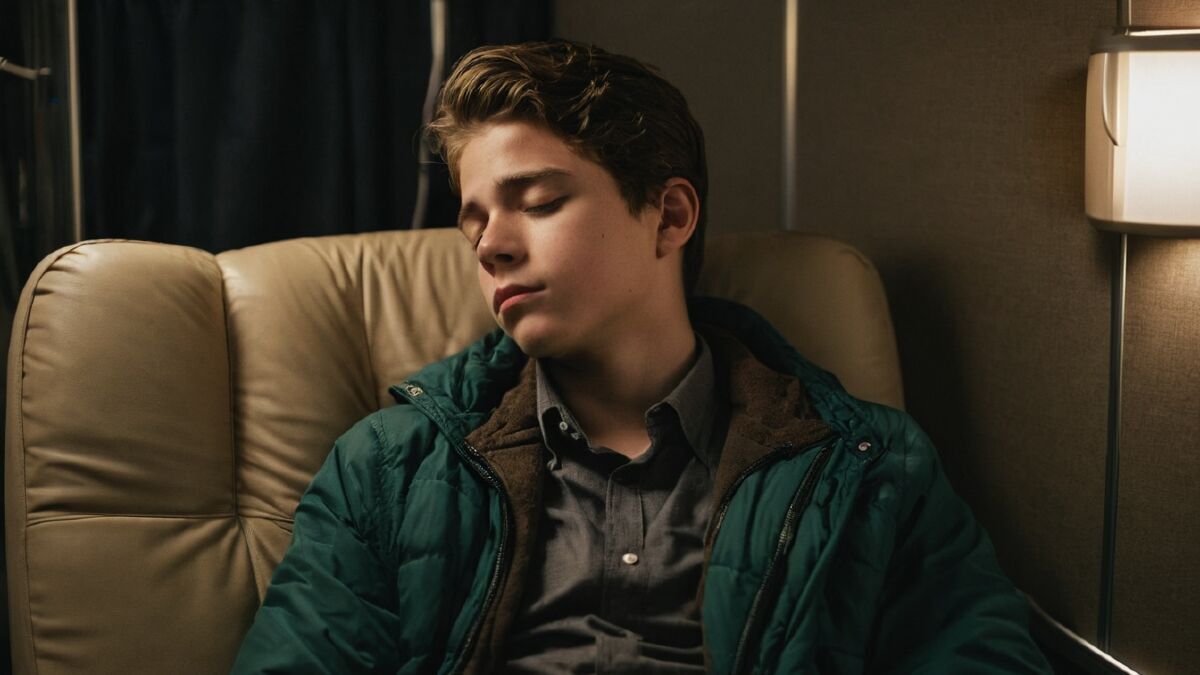
- The Essential Kit: a sleep mask, earplugs or noise-canceling headphones, a neck pillow, and a light blanket. It takes up little space and always works.
- In cars and buses—lean back rather than to the side; a tilted neck prevents full relaxation.
- In the makeup trailer—coordinate with the makeup artist; there is often a chance to nap before your call.
- Between blocks—twenty minutes with a timer is better than an hour of coffee.
- Do not sleep with makeup on—fixing a makeup imprint takes twenty minutes of someone else's time.
Dealing with Sleep Deprivation Right Now
The situation: the shift has started, you've slept four hours, and you have twelve hours of work ahead.
- Light and movement. Five minutes outside in daylight is more effective than coffee.
- Smart caffeine use. Small doses every few hours work better than one large dose. Stop caffeine intake six hours before your planned sleep.
- Hydration. Dehydration intensifies the feeling of fatigue and is often confused with it.
- Protein over sugar. Fast carbohydrates provide a 20-minute spike followed by a crash.
- Short naps during breaks. Twenty minutes is the most effective intervention possible.
- Cold water on the face and wrists—it works briefly but helps you push through the peak of a slump.
- Conversation and activity. The biggest crash usually happens mid-shift; movement and socializing help you push through.
Recovery After a Production Block
After several weeks of a grueling schedule, recovery takes more than a day. Here is what works:
- The first 24 hours—sleep as much as you need; do not set an alarm.
- From the second day—return to a normal routine: wake up at your usual time even after a bad night. A fixed wake-up time, rather than a fixed bedtime, restores the rhythm.
- Morning light—a walk within the first 30 minutes of waking.
- Light physical activity in the first half of the day, avoiding heavy strength training.
- Only short naps during the day, otherwise, your night sleep will not stabilize.
- Do not sleep until evening. One such day can delay your recovery by a week.
A full return to a normal rhythm takes three days to a week, depending on the length of the block. Plan for this time rather than scheduling important events for the second day after filming.
How to Look Rested When You Aren't
The practical side that every professional needs.

- Puffiness. Sleep on a high pillow; in the morning, use a cold compress or chilled spoons on the eyelids for five minutes, and a light lymphatic drainage massage from the center of the face toward the temples.
- Salt and alcohol the night before—the main causes of morning puffiness. Avoid these before a shift.
- Water in the morning—dehydration worsens puffiness rather than reducing it.
- Eyes. Use moisturizing drops if permitted; dry, red eyes are most noticeable in close-ups.
- Movement before the set. Ten minutes of walking clears congestion better than any cream.
- Tell the makeup artist. They can adjust their approach if they know about the puffiness—that is their job, not a reason for embarrassment.
When to See a Doctor
An unstable schedule creates stress, but there are signs that the issue is not just the schedule:
- You cannot fall asleep even when you have the opportunity, for more than three weeks;
- You wake up exhausted despite getting eight to nine hours of sleep;
- You have developed snoring with breathing pauses (as noted by others);
- Daytime sleepiness is so severe that you fall asleep while sitting;
- A persistent drop in mood or loss of interest in work.
These are not routine issues; they require a medical professional. Sleep disorders are treatable, and trying to "tough it out" is more costly in the long run.
What to Avoid
- Sleeping pills without a prescription. These can create dependency and degrade sleep quality.
- Alcohol as a sleep aid. It may help you fall asleep faster but destroys the second half of the night.
- Energy drinks. They cause a sharp spike followed by a deep crash and put undue strain on the heart during sleep deprivation.
- "Catching up" on all missed sleep during the weekend. This shifts your rhythm even further.
- Exhausting workouts while sleep-deprived. Recovery does not happen, and physical overload accumulates.
The Minimum Habit Set
If you do only these things, you will see an effect:
- Fixed wake-up time on your days off—your only anchor point.
- Bright light in the first thirty minutes after waking.
- A twenty-minute nap whenever possible.
- Caffeine no later than six hours before sleep.
- A sleep kit in your work bag.
- One full day a week without an alarm clock.
Projects that specify their schedules—day, night, or location shoots—are published in the castings section. It is advisable to clarify the filming routine before agreeing to a contract, especially if you are simultaneously involved in another project. Note that rates, contract forms, and tax rules vary by market.
Share


Author: Svetlana Lisa, Stylist and fashion designer
Publication date: October 28 2026
Views: 28
About us and our editorial policy
Comments
Other materials in this section
How to maintain your sleep cycle when call times shift from 4 AM to overnight shoots, how to handle transition days, and why "catching up" on sleep is a myth.

Learn what wears down your voice on set, how to warm up and recover, and how to handle screaming scenes or the first signs of vocal strain.

Learn what to eat before and during a shoot to avoid bloating and fatigue, how to handle on-set catering, and how to maintain your energy during night shifts.
Learn why posture is a vital professional tool for actors and models, how long wait times affect your body, and practical exercises to maintain your form on and off set.

A complete set of exercises for the body, breath, and voice that can be done in a dressing room or a corner of the studio, including explanations of why each step is essential.
 Auditions in India
 Casting calls in USA
 Castingi w Polsce
 Кастинги в Україні

