Best posture exercises for people who spend long hours standing
Behind the Scenes: Fitness: Best posture exercises for people who spend long hours standingPosture is the first thing a camera picks up, yet it is often the last thing a beginner considers. It is precisely what distinguishes a professional model from someone of the same height and build, or a seasoned actor from a random passerby in a frame. Ironically, the bulk of production work—hours of standing and sitting in anticipation—is what destroys it.
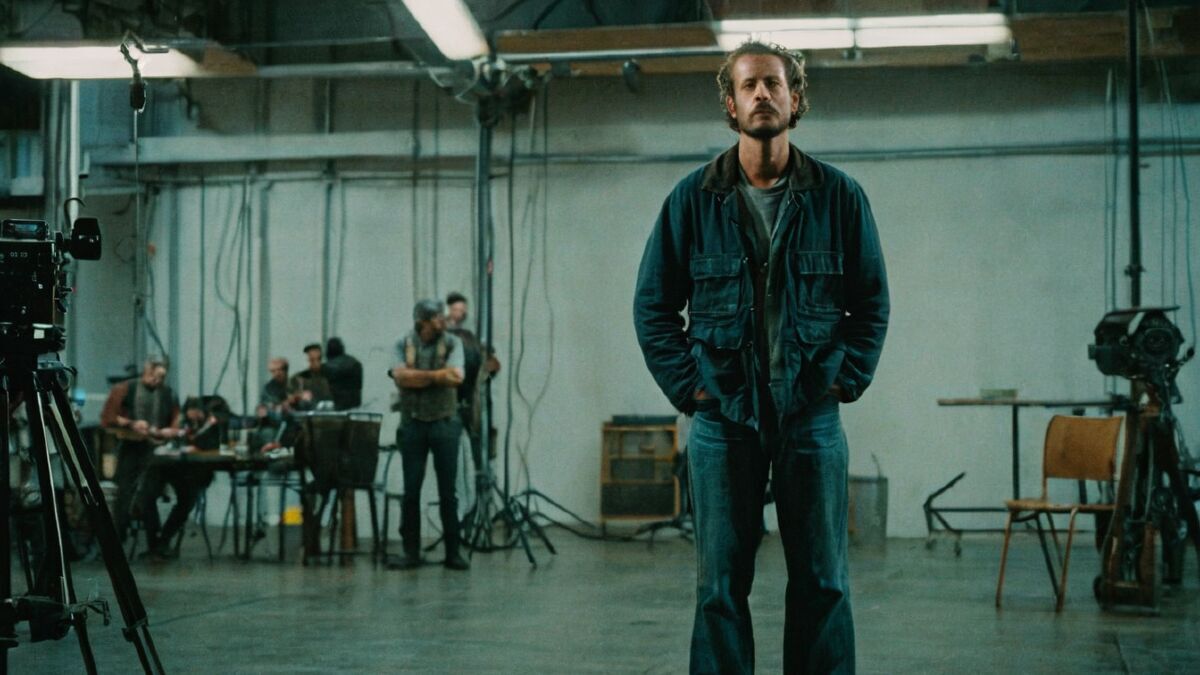
What Happens During a Shift
- Static Load. The muscles supporting the spine fatigue and "give up"—shoulders slump forward, and the head protrudes.
- Waiting While Seated. In the makeup chair, in the car, or on a chair by the set—the lower back rounds, and the thoracic spine becomes compressed.
- Cold Environments. On outdoor locations, the body instinctively contracts, pulling the shoulders up toward the ears.
- Uncomfortable Footwear and Costumes. High heels, heavy fabrics, and corsets shift the body's weight distribution.
- Phone Usage. Hours spent with the head tilted down during a shift cause more damage than the actual filming.
How Correct Alignment Looks
Try this simple wall test: stand with your back against a wall so that your heels, buttocks, shoulder blades, and the back of your head are all touching the surface. There should be enough space for a palm to fit between your lower back and the wall, but not a clenched fist. Remember this sensation—this is your "neutral."
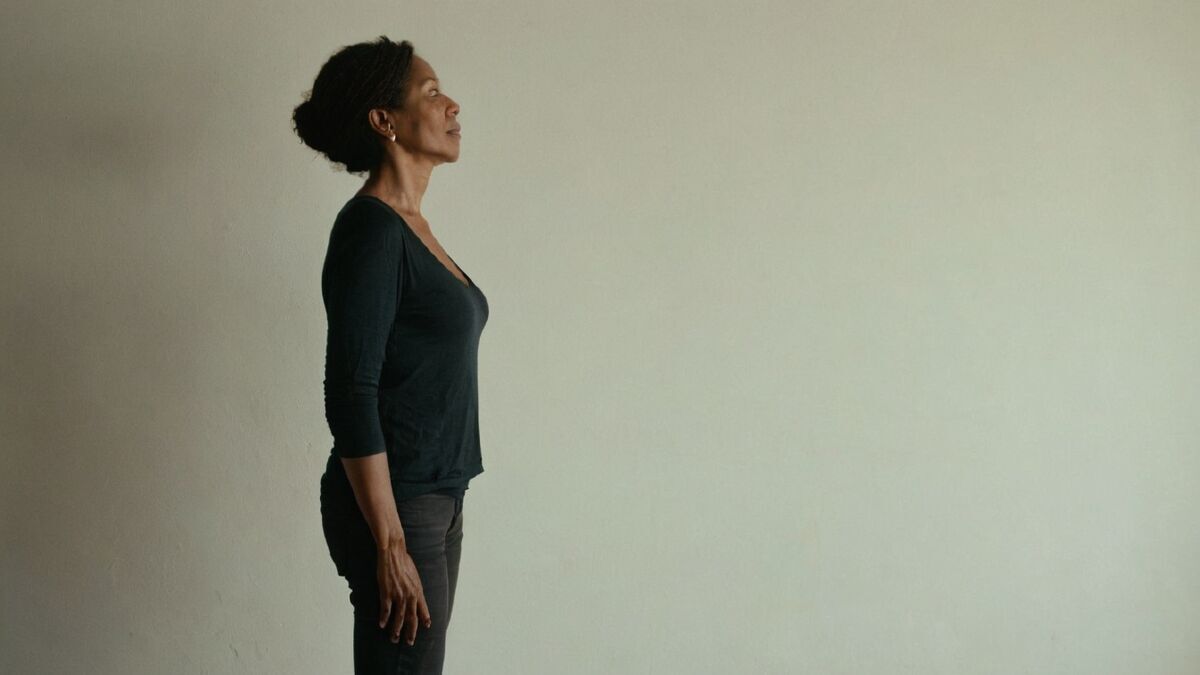
Key points:
- The crown of the head reaches upward; the chin is parallel to the floor and tucked slightly back.
- Shoulders are dropped and relaxed, with shoulder blades tucked "into pockets."
- The chest is open, but the ribs are not flared out.
- The abdomen is held in a light tone.
- Weight is distributed evenly across both feet; knees are not locked.
Daily Routine: 12 Minutes
Opening the Thoracic Spine
- Doorway Stretch. Place your forearms on the doorframe, step forward, and hold for 30 seconds. 3 sets.
- Scapular Squeezes. Extend arms to the sides and squeeze the shoulder blades together, holding for 3 seconds. 15 repetitions.
- Roller Extension. Lie on your back with a rolled-up towel along the spine, arms out to the sides, for 2 minutes.
Strengthening the Back
- The "Superman" (Boat). Lying on your stomach, simultaneously lift your arms and legs, holding for 20 seconds. 3 sets.
- Seated Rows. Use a resistance band or water bottles. 15 repetitions, 3 sets.
- Plank. 30–60 seconds, 3 sets. Ensure the lower back does not sag.
Neck Work
- Chin Tucks. Sitting straight, pull your chin straight back without tilting your head down. Hold for 5 seconds, 10 repetitions. This is the most effective exercise against "forward head" posture.
- Side Neck Stretches. Gently pull the head to the side with your hand, holding for 20 seconds per side.
Frontal Stretching
- Chest Stretch. Use a wall to stretch the pectoral muscles, 30 seconds per side.
- Hip Flexors. Lunge with a slight back arch, 30 seconds per leg. This is crucial for those who spend a lot of time sitting.
What to Do Directly on Set
Subtle adjustments you can make even in costume:
- Every 20 minutes: Squeeze your shoulder blades, drop your shoulders, and imagine the crown of your head reaching upward. Take five seconds.
- Shift your weight: Move from foot to foot; avoid standing statically on one leg.
- Do not lock your knees. "Locked" straight legs fatigue the lower back faster.
- Chin tucks: These can be done while sitting and are virtually invisible to others.
- Avoid looking down at your phone. Raise the device to eye level.
- Sit on your sit-bones, not on your tailbone.
- Walk. Five minutes of walking per hour is more beneficial than any single exercise.
Footwear and Heels
If your role requires a full day in heels:
- Break in your shoes in advance, not on the set.
- Bring a change of shoes and switch them out whenever possible.
- Use gel pads under the balls of your feet to reduce pressure.
- In the evening, roll your feet over a bottle of cold water and elevate your legs above heart level for 10 minutes.
What to Avoid
- Posture Correctors. Muscles become accustomed to not working, and posture often worsens once the brace is removed.
- Forced "Chest Out" Posture. A flared chest is not correct posture; it is another form of deformation.
- Stretching without Strengthening. Stretching the chest without strengthening the back will result in returning to the original slump within a week.
- Sharp arching of the back if you are experiencing lower back pain.
Timeline
With daily practice, changes become noticeable in about a month; sustainable results appear after three to four months. Posture is maintained by muscles, so a two-week break can reset your progress. This is a habit, not a one-time course.
Summary
- Posture is what defines a professional on camera, and it is ruined by waiting, not by the actual filming.
- Check your neutral position against a wall: head, shoulder blades, buttocks, heels.
- A 12-minute daily routine: open the chest, strengthen the back, work on the neck, and stretch.
- On set: every 20 minutes, squeeze the shoulder blades, shift weight, and keep knees unlocked.
- Avoid posture correctors; stretching without strengthening is ineffective.
- First changes in one month, stable results in three.
Find projects and shoots in the castings section.
Share


Author: Svetlana Lisa, Stylist and fashion designer
Publication date: August 24 2026
Views: 86
About us and our editorial policy
Comments
Other materials in this section
How to maintain your sleep cycle when call times shift from 4 AM to overnight shoots, how to handle transition days, and why "catching up" on sleep is a myth.
Learn what wears down your voice on set, how to warm up and recover, and how to handle screaming scenes or the first signs of vocal strain.

Learn what to eat before and during a shoot to avoid bloating and fatigue, how to handle on-set catering, and how to maintain your energy during night shifts.
A complete set of exercises for the body, breath, and voice that can be done in a dressing room or a corner of the studio, including explanations of why each step is essential.
 Auditions in India
 Casting calls in USA
 Castingi w Polsce
 Кастинги в Україні
