Aladdin
Imagine if you had three wishes, three hopes, three dreams and they all could come true.



Country
Production
Budget
$28 000 000
Box office
$504 050 219
Website
Director
Actors
Scenario
Producer
Camera operator
Composer
Artist
R.S. vander Wende, Vera Pacheco, Aaron Blaise
Audition
Albert Tavares
Editing
H. Lee Peterson
Whole Team (97)
Whole Team (97)
Short description
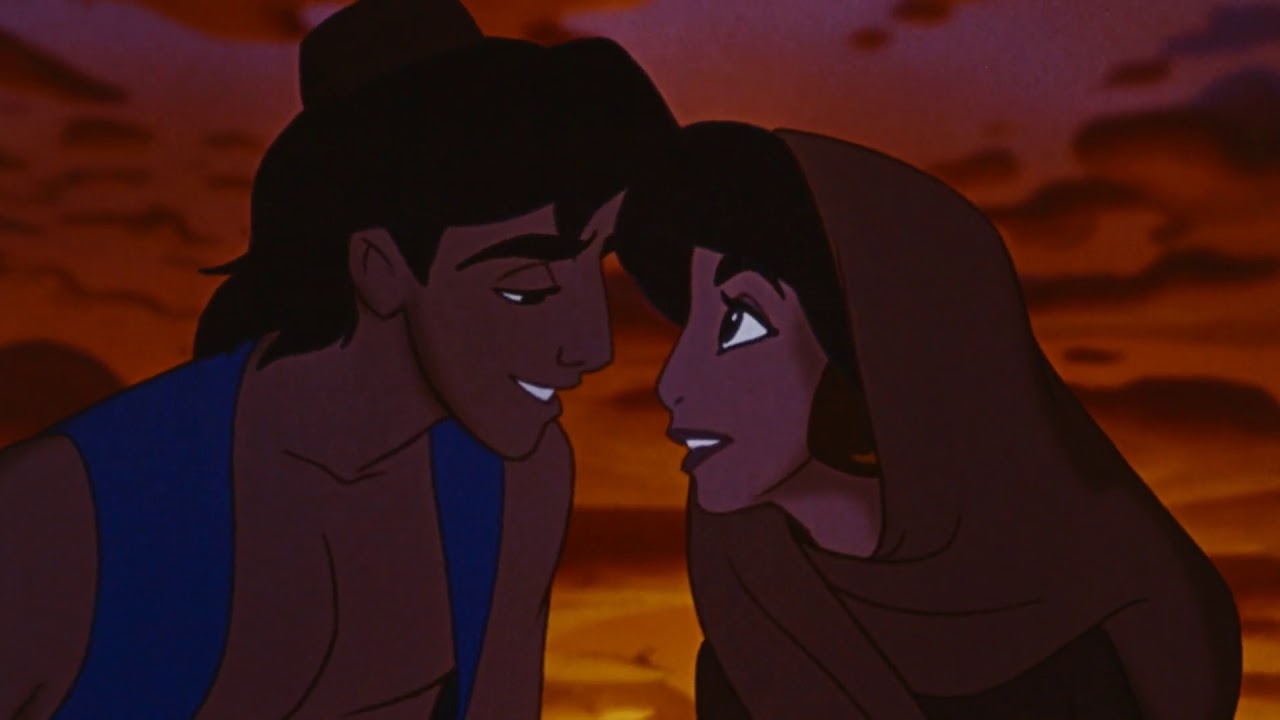
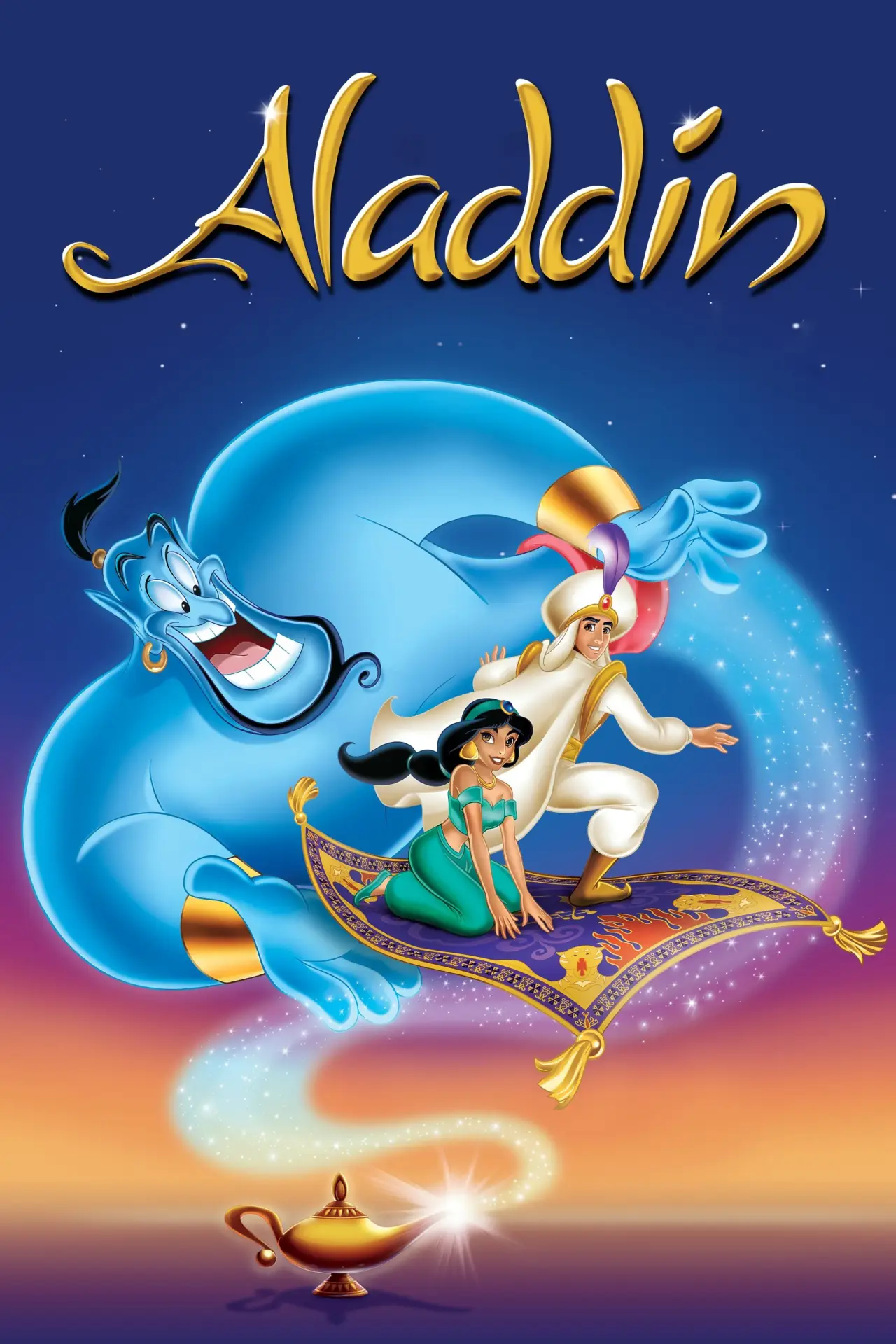
In the boorish city of Agrabah, kind-hearted street urchin Aladdin and Princess Jasmine fall in love, although she can only marry a prince. He and power-hungry Grand Vizier Jafar vie for a magic lamp that can fulfill their wishes.
What's left behind the scenes
- The cartoon is based on the tale of Aladdin from the 'One Thousand and One Nights' collection.
- In one of the scenes, when the Genie is casting a spell, you can spot another Disney character – Sebastian the crab, from the animated film 'The Little Mermaid' (1989).
- The scene with the Genie's song 'Friend Like Me' was completed first, before Aladdin's final appearance was approved. Therefore, in this episode you can see Aladdin as he was originally intended to look throughout the rest of the film.
- The film features some of the last songs written by Howard Ashman. Together with Alan Menken, he wrote 'Arabian Nights', 'Friend Like Me', and 'Prince Ali'. When Ashman passed away, the company invited Tony Award winner Tim Rice to finish writing the songs. He became the author of 'One Jump Ahead', 'A Whole New World', and 'Prince Ali' (the final version).
- Robin Williams worked for 'scale' ($485 a day – the minimum of the Actors’ Guild), plus a Pablo Picasso painting.
- Abu was voiced by Frank Welker, an actor specializing in voicing animals (among other things, he voiced the monkeys in the film 'Indiana Jones and the Raiders of the Lost Ark' (1981)).
- The 'Applause' sign after the Genie's song appeared when producer Jeffrey Katzenberg asked the animators why no one applauded after the songs during preview screenings. The animators jokingly added this sign, and it ultimately remained in the final version.
- Originally, Aladdin was supposed to be 15 years old, but his age was eventually changed to 18.
- The “Islamic Commission on Human Rights” criticized the cartoon for creating a negative image of Muslims. In its opinion, the Arabs in the film (with the exception of the “progressive” and “liberal” Aladdin) are generally presented as malicious and greedy people striving for wealth and power.
- Midway through the film, if you watch the moment the kitten transforms back into a tiger in slow motion, you can see Mickey Mouse.
- Characters in some scenes were drawn by different animators at different times and in different studios (in Florida and California). A second character was drawn on top of the first, and animators had to ensure that their movements matched perfectly during interactions.
- Aladdin, which was worked on by a team led by leading animator Glen Keane, was initially designed to resemble actor Michael J. Fox. During development, the character underwent a number of changes and acquired features of Tom Cruise, rapper MC Hammer, and Calvin Klein models.
- The cartoon frames were colored using the CAPS system. It was also used to create most of the reflections, the lava in the 'Cave of Wonders,' and a significant portion of the special effects.
- Howard Ashman approved the script only after revisions were made by Ron Clements, John Musker, and screenwriters Ted Elliott and Terry Rossio. Among other changes, Aladdin's mother was removed from the script, Princess Jasmine became a more assertive character, Aladdin was made 'slightly rougher, like a young Harrison Ford,' and the parrot Iago, originally conceived as a stoic British character, evolved into a comedic persona inspired by Gilbert Gottfried's performance in 'Beverly Hills Cop II' (1987).
- In the pyramid built by the Sultan, alongside animal figurines, there is a figurine of the 'Beast' from the Disney cartoon 'Beauty and the Beast' (1991).
- The scene at the very beginning of the film, where a street vendor offers his goods to the audience, was created as follows: Robin Williams, who voiced the vendor, was brought to a recording studio where a box with various items covered with a cloth was placed. Then the microphone was turned on, the cloth was removed, and Williams began to describe these items, which he was seeing for the first time in his life.
- Musker and Clements conceived of the Genie with Robin Williams in mind; even when Katzenberg suggested John Candy, Steve Martin, and Eddie Murphy, Williams had the best chance and was ultimately approved.
- The color scheme of the cartoon is dominated by rich blues and reds, as well as their shades (for example, in some scenes, shadows are made lilac). Richard Vander Wende, the film's artist, was the author of the concept where each color embodied a particular mood or emotion. Thus, blue symbolizes good here, while red symbolizes evil.
Similar movies
8.6/10
8.2/10
8.2/10
8.1/10

8.1/10
8.1/10
8/10
8/10
8/10
7.9/10


 Auditions in India
 Casting calls in USA
 Castingi w Polsce
 Кастинги в Україні
