Key differences between initial and follow up samples
Behind the Scenes: Guides: Key differences between initial and follow up samplesAn invitation to a callback is a positive sign, but not in the way it is often perceived. A callback does not mean "you are almost cast"; it means you have been moved from a long list to a shortlist, where there are now typically three to five people competing for the role. From this point on, the nature of the work changes.

What Changes Compared to the First Round
Who is in the room. In the first round, you were most likely seen by a casting director and a camera operator. For callbacks, the director appears, sometimes the producer, and in commercial work, representatives from the agency and the client. There are more people, the atmosphere is more formal, and reactions are generally more reserved.
What they are looking for. The first round answered the question, "Does the look fit and can this person act?" The second round addresses questions like, "Is this the actual character?" "Do they have chemistry with the already cast actors?" "Can they handle the workload?" and "Will they be easy to work with on set?"
Time commitment. Callbacks are longer. Instead of ten minutes, you might spend an hour in the studio, including wardrobe fittings, makeup tests, and filming several scenes.
The outcome. Usually, a name is chosen after the callback. Occasionally, there is a third round, and for major productions, even a fourth.
Why You Might Be Asked to Repeat the Same Performance
The most common complaint after a second round is: "They asked me to play it exactly as I did last time; why did they even call me back?" There are two reasons for this, both of which are professional necessities.
First — to show the director. The director may not have seen your first recording live and wants to see the performance with their own eyes.
Second — to test consistency. This is a key professional skill: can you deliver the same result on the tenth take at 6:00 PM? An actor who accidentally hits a great emotional state once but cannot reproduce it is a risk for the production.
Therefore, you should arrive at a callback with the same character approach, not a brand-new interpretation. Changing everything on your own is a common mistake: you were called back because of what you did, but you end up bringing something else entirely.
How to Prepare
- Review your first performance. If you recorded a self-tape, watch it again. If not, remember the specific task you played and how you executed it.
- Analyze the scene more deeply. Keep the same overall approach, but add more detail and nuance within that framework.
- Prepare new material if provided. Callbacks often include additional scenes — these should be memorized as thoroughly as the first ones.
- Dress the same. Literally: the same silhouette and color palette. This helps you get back into the same headspace and helps the team recognize you in the frame.
- Read the full script if it was provided. Questions about the character's arc are likely during the second round.
- Verify your availability. You will almost always be asked about your dates at a callback; answering "I'll check tonight" sounds unprofessional.

What Happens During the Audition
The order is usually as follows: a brief greeting, a slate, the scene in your version, and then adjustments — sometimes several in a row. This may be followed by chemistry reads with other candidates or already cast actors, wardrobe fittings, photo tests, or makeup trials.
Chemistry reads at a callback are primarily to check compatibility. Your goal here is the same as in group auditions: work with your partner, not over them. If your partner is weaker, trying to "save" the scene by overpowering them is pointless — the production will see it, and it often results in neither actor being cast.
Questions You Will Be Asked
In the second round, the conversation becomes practical. Be prepared to answer shortly and precisely:
- Are you free on these specific dates and do you have any parallel projects?
- Are you open to appearance changes: haircut, color, or weight?
- Are the skills listed in your application currently in working order?
- Where do you live and are there any issues with traveling for location shoots?
- Do you have an agent, and who should be contacted regarding terms and conditions?
It is also appropriate here to ask about the number of shooting days and the filming period — at a callback, this is a normal professional question, not a premature one.
How Many Rounds Are There?
For minor roles, there are usually one or two. For supporting roles, two or three. For lead roles in series or feature films, there are often three or more, sometimes spaced weeks apart. Between rounds, the production may be casting partners, revising the budget, or waiting for a decision from the network or streaming platform.
A long pause between rounds is normal. You may ask for feedback once and briefly during this time, preferably through your agent if you have one.
Common Mistakes
- Bringing a new interpretation. You were called back for the previous one.
- Arriving in a different look. The team won't recognize the "character" they saw in the first frame.
- Relaxing, thinking the job is done. A callback is a competition among the strongest candidates, not a formality.
- Over-preparing. The opposite extreme: two weeks of over-analysis can turn a natural performance into something forced.
- Not knowing your dates. This looks like a lack of seriousness toward the project.
- Starting to negotiate fees in the room. Terms are discussed after the casting decision, not during the audition. Note that rates, contract forms, and tax rules vary significantly by market.
If There Is Silence After the Callback
Silence after the second round is harder to handle than after the first because expectations are higher. However, the mechanics remain the same: a decision can take weeks due to partner casting, budget shifts, or scheduling, and rejections are often not communicated.
The practical approach: consider the project closed the moment you leave the room and only return to it if they call. In the meantime, continue applying for other projects — it is not advisable to keep your dates blocked "just in case" without a confirmed offer.
In Short
- A callback means you are on the shortlist, not that you are cast.
- Bring the same character approach, deepened, not a new one.
- Dress the same as you did the first time.
- Be ready for adjustments, chemistry reads, fittings, and availability questions.
- Know your schedule before you are asked.
- Pauses between and after rounds are normal, not a negative signal.
Check projects currently in the selection stage in the castings section.
Share


Author: Claire Bennett, platform editor
Publication date: September 01 2026
Views: 27
Comments
Other materials in this section

Learn what to include in your resume and in what order, how to present your credits when you have no experience, and which skills help or hinder your chances.

A comprehensive guide on how background talent and featured extras are recruited, what to ask coordinators, and how to navigate your first day on set.

Learn how to break down a foreign accent by its phonetic components rather than stereotypes, where to find authentic speech samples, and why clarity always beats precision during an audition.

Essential information on documentation, filming restrictions, spotting scams, and how to support your child on set without damaging their passion for the craft.
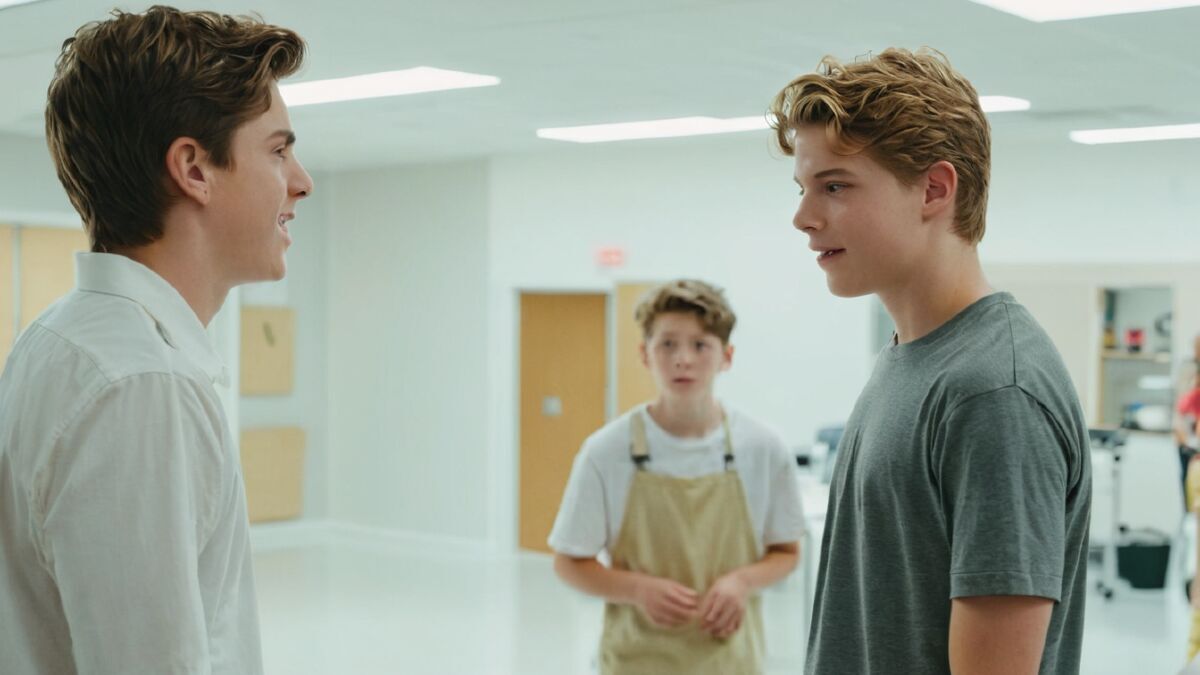
Why casting directors bring everyone into one room, what they are looking for in this format, and how to stand out without overstepping.

A guide to lighting, sound, framing, and connectivity for video auditions, how they differ from self-tapes and in-person calls, and how to handle technical glitches mid-scene.
 Auditions in India
 Casting calls in USA
 Castingi w Polsce
 Кастинги в Україні
