How to update your portfolio every year to stay competitive
Behind the Scenes: Guides: How to update your portfolio every year to stay competitiveA portfolio becomes outdated almost imperceptibly. Photos may seem fine to you because you see yourself every day, but a casting director will notice the discrepancy between the image and the person who walks into the room. This is one of the most common reasons for failed auditions—and the most frustrating, because it can be fixed in a single shooting day.
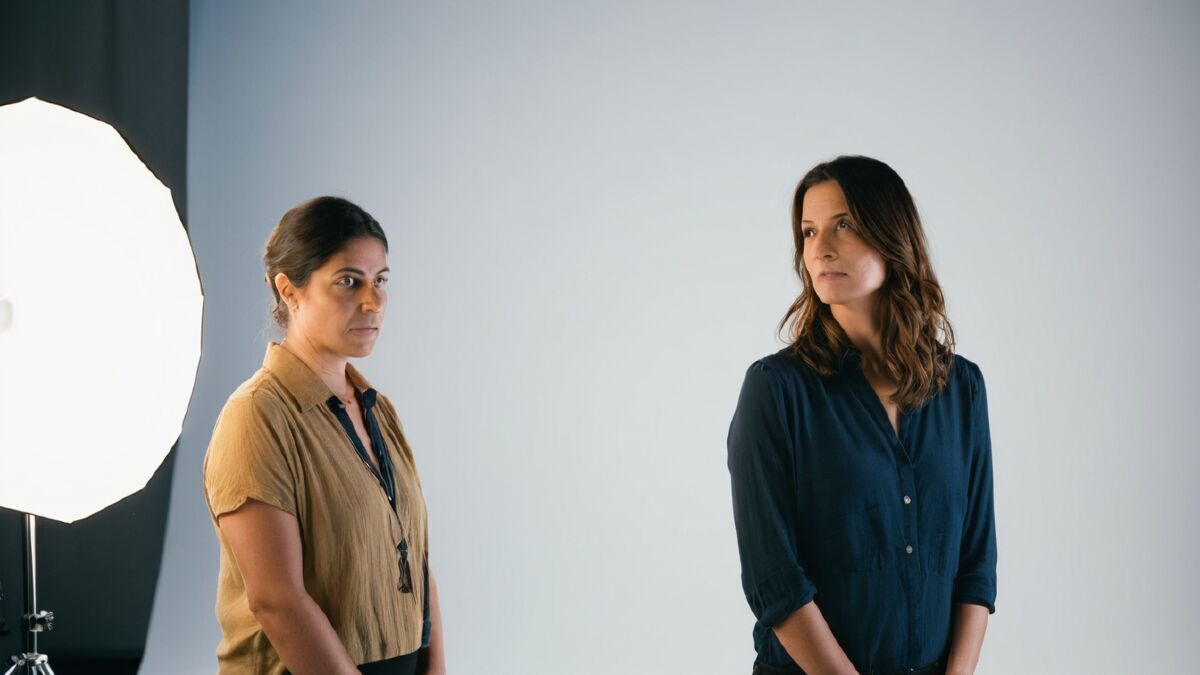
Signs It's Time to Update
Check yourself against this list. Even one point is a reason to review your materials.
- You hear "you look different from your photo" at auditions. This is a direct signal; there is nothing left to explain.
- Change in hairstyle or hair color. Even a change in length alters your "type" more than you might think.
- Weight change. A shift of a few kilograms is already visible on camera.
- A year has passed since your last shoot. The face changes slowly, but the cumulative effect over a year is noticeable.
- New projects have emerged that are not yet in your showreel.
- You have moved into a different age range. This often happens in leaps, typically around ages 25, 30, and 40.
- Changes in facial hair, glasses, or tattoos—anything visible on screen.
What to Change and How Often
Once a year:
- The main headshot—this is the fastest to expire.
- Full-body shot.
- Introduction video (slate), if your appearance or delivery has changed.
- Skills list—things you have mastered or those you no longer practice.
Every two to three years or upon a specific event:
- A full photo session with various looks.
- Showreel—after every significant project.
- Resume/CV—after every completed project.
Immediately:
- After a drastic change in image: haircut, coloring, or growing/shaving a beard.
- After a noticeable change in weight.
The Main Headshot: What It Should Include
This is the only frame that is guaranteed to be seen, so the requirements are stricter than for any other photo.
- Close-up of the face, with eyes clearly visible.
- Neutral expression, rather than a wide, toothy grin: a broad smile narrows the perceived range of your types.
- Soft natural light, without harsh shadows or overly artistic lighting choices.
- Simple background that does not distract.
- No glasses, hats, or oversized jewelry.
- Minimal retouching. Removing a random blemish is fine; changing the shape of your face is not.
- The "you" of today, not the best version of you from three years ago.
How to Update on a Budget
A full-scale professional photo session isn't necessary every year. Intermediate updates can be done more simply:

- Daylight portraits. A window, a plain wall, a good smartphone, and a helper—you can get a working shot for an intermediate update in half an hour.
- On-set photos. If permitted by your contract, "behind-the-scenes" or working photos from the set often look more natural than studio shots.
- Project stills. High-quality screenshots from your work are suitable for your portfolio section.
- TFP (Time for Print/Portfolio) exchanges. Aspiring photographers regularly look for models to build their own portfolios—this is a way to get test shoots for free.
A full studio session makes sense every two to three years or when your "type" changes and you need to rebuild your entire set of looks.
How Many Looks Do You Need?
The principle here is "quality over quantity." A reasonable minimum includes:
- Neutral portrait—the main shot.
- Portrait with a different mood—either edgier or softer.
- Full-body shot.
- One or two looks tailored to your actual casting types: if you are often cast as doctors or military personnel, you need corresponding shots rather than an abstract session in a field.
Ten identical portraits in the same sweater are worse than four diverse ones. A casting director is looking for range, not volume.
The Showreel
Update this after every notable project. The rules are the same as for photos:
- Put the strongest work first. The first fifteen seconds determine whether they keep watching.
- One and a half to two minutes maximum.
- Only fragments where you are on screen and audible. Cut out beautiful panoramas of someone else's cinematography.
- No music over dialogue and no captions that cover half the screen.
- Remove old, weak work, even if you are emotionally attached to it: a showreel is judged by its weakest fragment, not its average.
What to Do With Old Materials
Do not delete them, but remove them from your active portfolio. Old photos may be useful if a role requires a different age or image—keep them in a separate archive.
Additionally, ensure that old photos are not listed as "current" on third-party platforms or social media. A casting director might find those first, rendering your updated main headshot useless.
The "One Evening" Update Checklist
- Open your profile as if you were a stranger: what do you see first, and does it look like you today?
- Compare your main headshot with a recent photo of yourself from your phone.
- Check your age range and measurements—height, weight, hair color.
- Remove everything from your portfolio that is older than two years and no longer matches your current look.
- Verify that your introduction video and showreel open correctly, including on mobile devices.
- Update your skills list: add new ones, remove those you've abandoned.
- Add your recently completed projects.
In Short
- Update your main headshot annually; a full session every two to three years.
- A change in hairstyle, hair color, or weight is a reason to reshoot immediately.
- Four precise looks are better than ten identical ones.
- A showreel is judged by its weakest part—remove the weak links.
- Move old materials to an archive and remove them from public profiles.
Note: Please be aware that specific rates, contract forms, and tax regulations vary by market and jurisdiction.
Updated materials work for every database search, not just for a specific application. Explore open projects in the castings section.
Share


Author: Claire Bennett, platform editor
Publication date: September 21 2026
Views: 0
Comments
Other materials in this section

Learn what to include in your resume and in what order, how to present your credits when you have no experience, and which skills help or hinder your chances.

A comprehensive guide on how background talent and featured extras are recruited, what to ask coordinators, and how to navigate your first day on set.

Learn how to break down a foreign accent by its phonetic components rather than stereotypes, where to find authentic speech samples, and why clarity always beats precision during an audition.
Understand what a callback invitation really means, who will be in the room, and how to prepare to move from the shortlist to the final cast.

Essential information on documentation, filming restrictions, spotting scams, and how to support your child on set without damaging their passion for the craft.
Why casting directors bring everyone into one room, what they are looking for in this format, and how to stand out without overstepping.
 Auditions in India
 Casting calls in USA
 Castingi w Polsce
 Кастинги в Україні
