Differences between auditioning for a TV series and a feature film
Behind the Scenes: Guides: Differences between auditioning for a TV series and a feature filmTV series and feature films differ not just in length, but in production logic. This shift affects the audition process, the requirements for the actor, and the terms of the contract.
The Pace of Selection
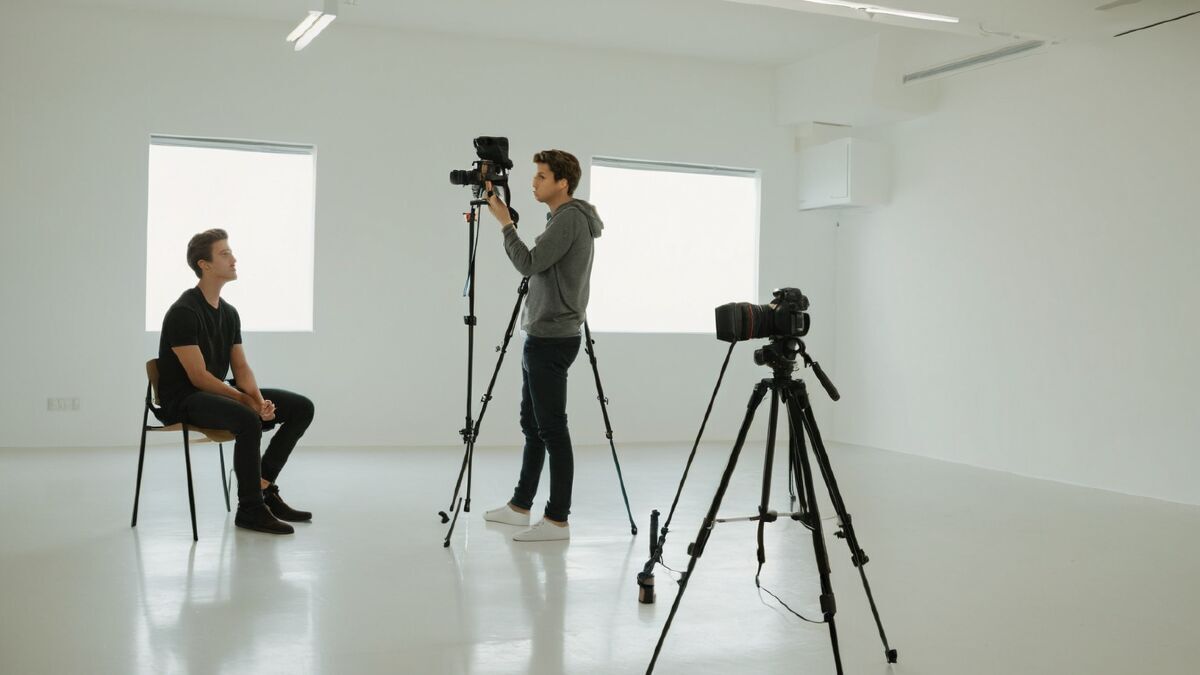
TV production generally moves faster. Casting for episodic and supporting roles is often closed within a few days, and self-tapes frequently replace in-person auditions. In long-form projects, casting happens in waves: lead roles are cast first, followed by the guest cast for each episode as the scripts are finalized.
Practical takeaway: You must react quickly and keep your materials ready. Applying a week after a casting call is posted is often too late.
What is Evaluated Differently
- Consistency. In a series, the ability to deliver a steady, reliable performance over many shooting days is more important than a single "peak" moment.
- Speed. There are fewer takes and less time per scene. Actors who require a long time to "get into character" may not be suitable.
- Cold Reading. Scripts are often rewritten on the fly; text may be sent the day before or changed right on set.
- Availability. The filming period is stretched over several months, and your commitment to another project may lead to a rejection.
- Type Recognition. The audience must be able to read and identify the character's essence quickly.
Long-Form Storytelling: What it Means for the Role
A character exists across dozens of episodes, leading to situations that rarely occur in feature films:
- Storylines may be expanded or dropped entirely based on audience reaction.
- Writers may change, causing the character's personality to shift over time.
- New plot points may emerge that contradict previously established traits.
- Scenes are shot out of order and with significant gaps: you must remember the character's emotional state from three months prior.
This creates a necessary professional habit: keep detailed notes on your character—what happened, what they wore, and their evolving relationships. While the script supervisor handles technical continuity, you are responsible for the logic of the role.
What to Ask Before Being Cast
- The estimated number of episodes and shooting days.
- The overall filming window and how the shooting days are distributed.
- Whether there is an option for the following season and under what terms.
- How payment is calculated: per day, per episode, or as a flat package (note that rates, contract forms, and tax rules differ by market).
- Whether you are permitted to work on other projects simultaneously.
- Whether there are appearance restrictions (look-locks) for the entire duration.
The last two points are critical: a series can tie you up for a long time, and "exclusivity during the filming period" can block your availability for six months or more.
Options and Renewals
Contracts often include an "option" clause, giving the producer the right to extend the collaboration for the next season under the same terms. This is convenient for the production, but not always for the actor: the rate fixed at the start will remain the same, even if the project becomes a global hit. This should be discussed before signing.
Summary
- TV selection is faster; self-tapes often replace in-person auditions.
- Consistency and speed are valued over a one-time brilliant performance.
- Scripts change on the fly—cold reading skills are essential.
- Maintain a character journal: filming lasts for months and is rarely sequential.
- Before confirming, clarify the number of days, exclusivity clauses, and option terms.
Find projects in the castings section.
Share


Author: Alexander Shaida, Editor-in-chief
Publication date: November 13 2026
Views: 33
About us and our editorial policy
Comments
Other materials in this section

Learn how the approval chain works from the director to the client, why there are multiple callback rounds, and how to prepare for commercial auditions.

Discover why casting directors give unplanned assignments, how to react in the first few seconds, and how to master the most common types of unexpected requests.

Learn how to gather professional materials when your filmography is nearly empty, where to find acting experience, and what to film independently to attract casting directors.

Learn the ideal length, which clips to keep or cut, the best sequencing for impact, and how to handle a limited amount of material.

Learn how to choose the right professional, what to bring to the shoot, and how to ensure your portraits actually work for casting directors.

A step-by-step guide on updating your professional materials: what expires annually, what lasts longer, signs that it's time for a reshoot, and how to refresh your portfolio on a budget.
 Auditions in India
 Casting calls in USA
 Castingi w Polsce
 Кастинги в Україні

