Mad Max
The maximum force of the future.



Country
Production
Genre
Budget
$380 000
Box office
$99 750 000
Director
Actors
Mel Gibson, Joanne Samuel, Hugh Keays-Byrne, Steve Bisley, Tim Burns, Roger Ward, Vincent Gil, Lulu Pinkus, Lisa Aldenhoven, David Bracks
All actors and roles (10)
All actors and roles (10)
Scenario
Producer
Camera operator
David Eggby
Composer
Brian May
Artist
Steve Amezdroz
Audition
Mitch Consultancy
Editing
Cliff Hayes, Tony Paterson
Whole Team (44)
Whole Team (44)
Short description
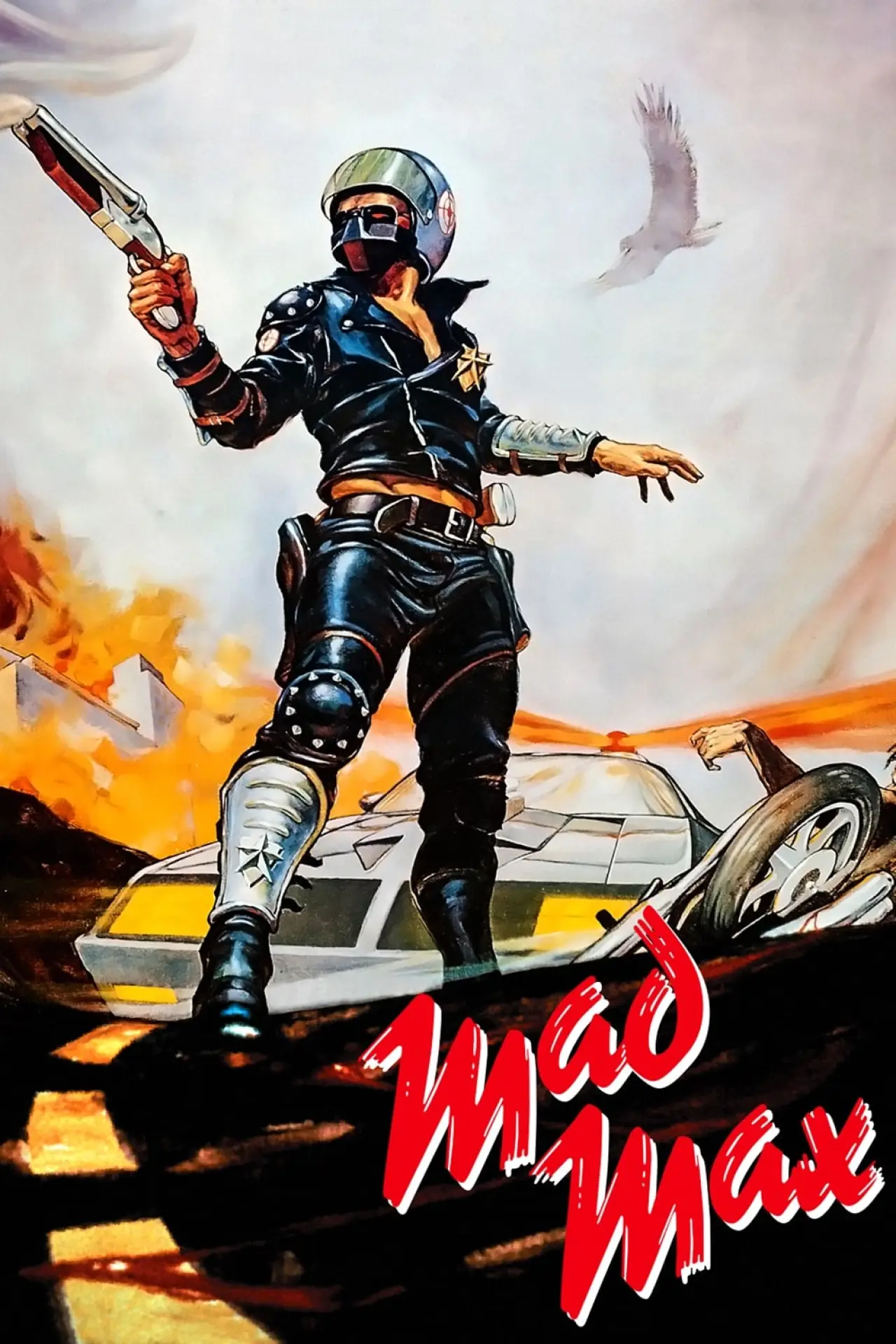
In the ravaged near-future, a savage motorcycle gang rules the road. Terrorizing innocent civilians while tearing up the streets, the ruthless gang laughs in the face of a police force hell-bent on stopping them.
What's left behind the scenes
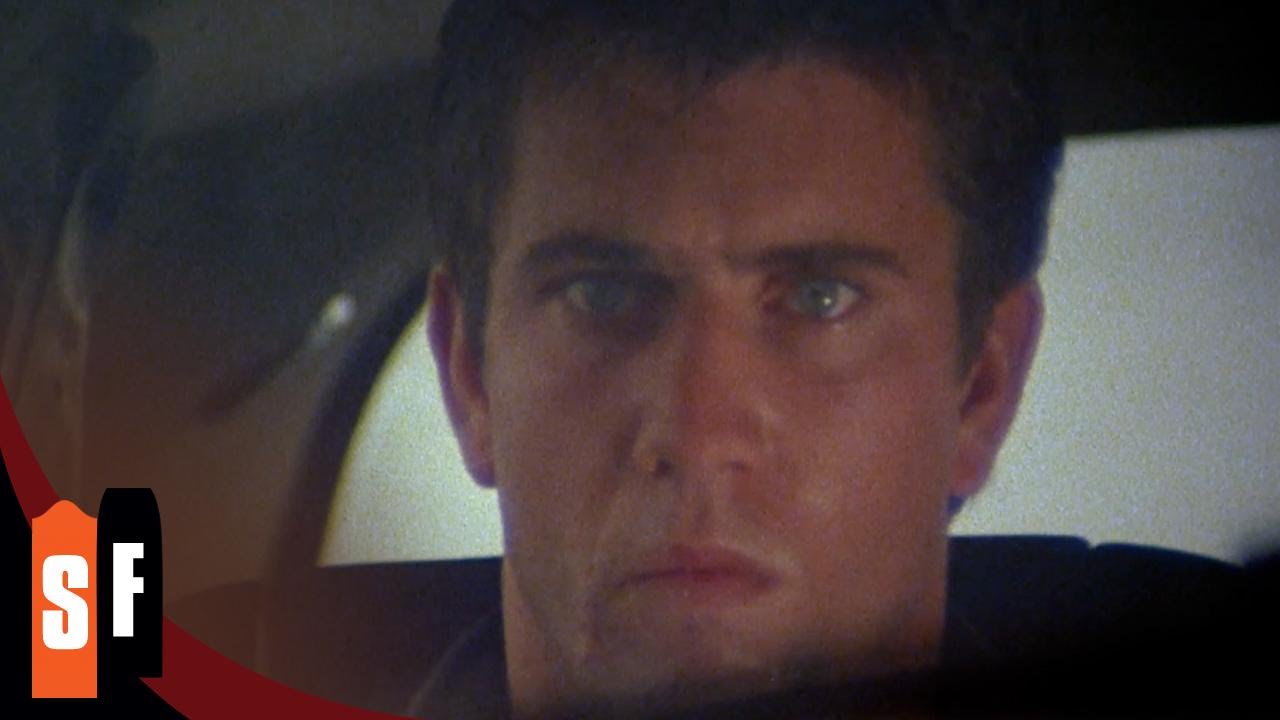
- Mel Gibson didn't intentionally audition for the film. He went to the audition with a friend. Having been in a bar fight the previous night, his face was bruised and incredibly swollen. Mel was told he could return in three weeks to audition for the roles of various outcasts present in the film. He returned three weeks later, no one recognized him, but he was offered to audition for the lead role.
- Max's car is a 'Ford XB Falcon Coupe.' This model was sold in Australia from December 1973 to August 1976.
- The Night Rider's car at the beginning of the film is an "HQ Holden Monaro," sold in Australia in the early 1970s in various configurations. The police cars in the film are "XB" sedan versions.
- Goose's motorcycle is a "1977 Kawasaki KZ 1000."
- Several cars used as police vehicles were repainted for filming in other scenes.
- Several phrases that the Night Rider says on the radio repeat lyrics from the song "Rocker" by "AC/DC."
- The van that is wrecked at the beginning of the film belonged to George Miller.
- Approximately 20% of the planned car chases were never filmed due to a lack of funds.
- Max's personal police number is 4073, Jim Goose's is 2241, and Charlie's is 3840 or 3842.
- Since he was relatively unknown at the time of the film's release, Mel Gibson was barely featured in the various trailers, with all attention focused on the car chases and crashes.
- Due to the limited budget, decommissioned police cars were used in the film. Only Mel Gibson wore clothing made of genuine leather. All other police officers wore clothing made of vinyl.
- “Mad Max” was the first Australian film shot in widescreen anamorphic format.
- The yellow 'Interceptor' of Max appears in the game Carmageddon TDR 2000 under the name 'Sheriff' or, in another translation, 'Crusher', acting as a police car in one of the locations. The 'Special Pursuer' also appears in the game, named 'SXE Black Luke'.
- The biker gang is entirely equipped with Kawasaki KZ-1000 and Honda CB750/CB900 motorcycles, which were provided for filming free of charge.
- The car that the gang wrecked with axes was a '57 Chevy Impala, which was in very poor condition and only painted. The pipes above the engine were decorative.
- The motorcycle with a sidecar and a glass dome-sphere that stopped Gus was a trike powered by a Honda CB750 engine.
- The car fleetingly seen in the film belonging to Fifie (Max's boss) is a 1974 or 1976 Buick Riviera.
- The wreck on which Gus transported his motorcycle after the accident was an EJ Holden.
- While working at the Melbourne hospital, Dr. George Miller met Byron Kennedy, an aspiring cinematographer and producer, at the film school in 1971. Four years later, the pair conceived of making a feature film. George Miller worked in the hospital's emergency room and, during his time there, witnessed numerous injuries and deaths, which were reflected in the film. However, Miller was primarily inspired by articles by journalist James McCosland, dedicated to Australian car culture and the problems of the global fuel industry.
- McCosland had a more anthropological view of motorists in Australia. Initially, Miller simply wanted to address the issue of road accidents in the script, due to the government allowing the sale of high-speed cars to ordinary citizens while most roads were not suitable for such speeds and took no steps to rectify this. McCosland, however, saw in the young speedsters a kind of frenzied racers, for whom their vehicle was the only meaning in life, in his opinion, especially during the 'oil embargo' of 1973, when gasoline at gas stations became catastrophically scarce and prices rose sharply. Australian drivers often began to fight in lines for the right to fill their tanks, something McCosland had not witnessed in the US. He was also a proponent of the peak oil theory, developed by American geologist and geophysicist Marion King Hubbert.
- Miller and Kennedy came up with several plot options: the first was a youth drama about traffic police and those same young speedsters in sports cars on the most dangerous country roads, due to which the protagonist lost loved ones; the second was an action film about the confrontation between traffic police and bikers avenging a comrade killed during a chase; the third option featured one of the speedsters as the protagonist. Miller also had the idea of a film set in the near future, when the planet's oil reserves were almost completely depleted, the world had collapsed, and drivers were now killing each other in road wars for the remaining gasoline. McCosland believed that all of this should be combined into a single plot, with the protagonist being both a speedster and a law enforcement officer. Shifting the action to the near future was also relevant because it allowed them to showcase universal cars and motorcycles, as well as unusual weapons. They decided that James would write all the dialogue and create the backstories of all the characters, and then George and Byron would refine the chases and stunt scenes. But in the end, the resulting script, which consisted of 214 pages, had to be significantly reworked due to cuts caused by a lack of funds.
- The script development, creation of core artistic decisions, and search for funding took a total of 14 months.
- The film was shot in twelve weeks, with filming taking place from October 24, 1977, to January 1978, in the vicinity of Melbourne. In May 1978, the scene of the Night Rider's death was reshot. Post-production of the film lasted exactly one year.
- Due to the low budget, the final editing and sound operations were completed at the Miller's house: George edited the film in the kitchen, and Byron Kennedy edited the sound in the living room.
- Filming took place in the western suburbs of Melbourne, in Melbourne itself, and in the state of Victoria.
- The supercharger installed on Max's car is a dummy. After filming, it was removed to allow the car to be operated on public roads, although its unchanged appearance was still used at film screenings for some time.
- Local bikers from the Australian state of Victoria were cast as the bandits.
- When the film was first released in the United States, the entire soundtrack (including Mel Gibson's voice) was redubbed at the request of distributor American International Pictures, who feared that American audiences would not understand actors with Australian accents and wanted to add an American accent to the voices. The only exception was the singer from the Sugartown cabaret, played by Robin Chaffey. The original Australian soundtrack was eventually released in 2000 in a limited re-release by Metro Goldwin Mayer.
- The Puretone music video for 'Addicted to Bass' recreates the opening chase scene from the film, but this time the fugitives manage to escape.
- Only two original 'Interceptor' vehicles were used in the Mad Max trilogy. The vehicle used in the first film was modified for the filming of the second (all shots inside the vehicle and external close-ups of the car). After filming of the second part was completed, this vehicle was bought and restored by Bob Forcenko. The car was then located at the 'Cars of the Stars Motor Museum' in England. The second vehicle was used only for car chase scenes in the second film. As in the movie, the car was smashed to pieces.
Similar movies
8.6/10
8.5/10
8.4/10
8.1/10
8/10
8/10
7.8/10
7.7/10
7.7/10
7.6/10


 Auditions in India
 Casting calls in USA
 Castingi w Polsce
 Кастинги в Україні
