Mr. Deeds Goes to Town
Rocking America with laughter!



![Video for the film Mr. Deeds Goes to Town — Mr. Deeds Goes to Town (1936) RE RELEASE TRAILER [HD]](https://i.ytimg.com/vi/eOu8pem4Huk/sddefault.jpg)
Country
Production
Budget
$800 000
Box office
$8 362
Director
Actors
Scenario
Producer
Camera operator
Joseph Walker
Composer
Artist
Audition
Editing
Short description
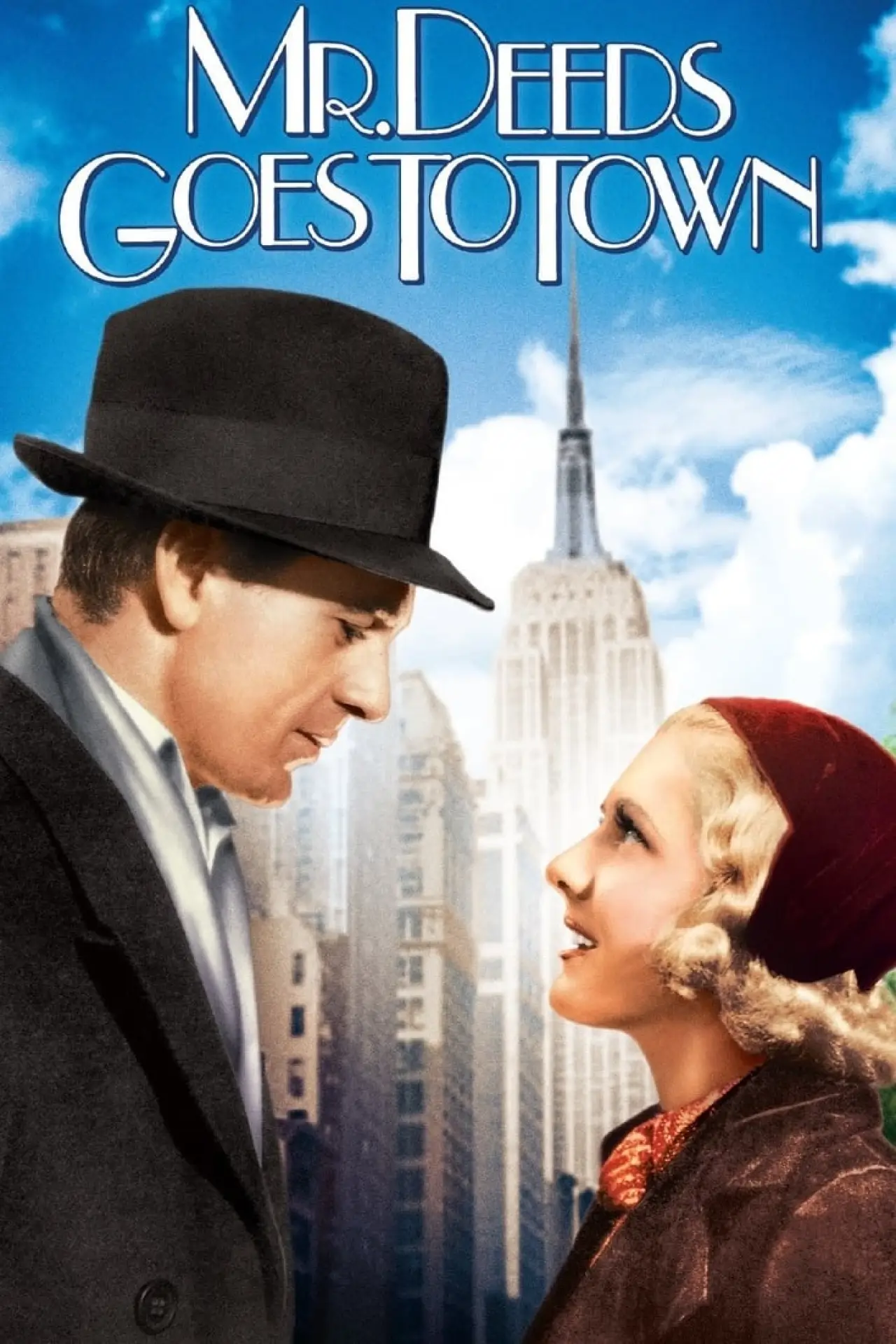
Longfellow Deeds lives in a small town, leading a small town kind of life. When a relative dies and leaves Deeds a fortune, Longfellow moves to the big city where he becomes an instant target for everyone. Deeds outwits them all until Babe Bennett comes along. When small-town boy meets big-city girl anything can, and does, happen.
What's left behind the scenes
- Guided by the ideological postulate that justice is impossible in the United States, officials from the Soviet cultural sphere altered the film's ending for domestic release: the hero was imprisoned (a close-up of him behind bars appeared at the end), and the scene of Deeds's fellow townsmen rejoicing at his return from the city was even redubbed (more accurately, resubtitled): they ostensibly expressed outrage at his arrest.
- Actress Jean Arthur (1900-1991) and director Frank Capra (1897-1991) only saw the film in its entirety in 1972 when they were guests at a film festival.
- Jean Arthur was so afraid of filming that she often vomited before shooting, and in between takes she had to run to the makeup room, where she locked herself in and cried. However, in front of the camera, she behaved quite professionally. One of those who helped her feel comfortable on set was Gary Cooper (1901-1961).
- Director Frank Capra was convinced from the very beginning that Gary Cooper would be perfect in the role of Longfellow Deeds. While waiting for Cooper to become available, the start of filming was delayed by six months, costing the film's budget $100,000.
- One of the ways Frank Capra minimized studio management interference in the filmmaking process was by refusing to work while any of the bosses were present on set. As soon as Harry Cohn or any other executives appeared on set, Capra would announce a half-hour break. These delays cost the film company so much that Cohn rarely appeared on set.
- Harry Cohn (1891-1958), founder, president, and producer of Columbia Pictures, made it a rule to only allow directors to shoot one take, which saved the studio a considerable amount of money, and strictly adhered to this rule. Frank Capra found a way around it. At the end of each take, he would not shout “Cut!” but “Once more!” and the actors would start the scene again.
Similar movies
8.5/10
8.4/10
8.1/10

8.1/10
8.1/10
7.9/10
7.9/10

7.8/10
7.8/10
7.8/10


 Auditions in India
 Casting calls in USA
 Castingi w Polsce
 Кастинги в Україні
