Prehistoric Planet
The epic series returns with a new era.
Prehistoric Planet (2022 — present)
Seasons: 3,
episodes: 15
Average rating:
8.3/10
22 722



Status
Returning Series
Country
Network
Apple TV
Production
Genre
Creators
Actors
David Attenborough, Tom Hiddleston, Mark P. Witton, Paul M. Barrett, Susannah Maidment, Michael Habib, Darren Naish, Kiersten Formoso, Natalie Kehrwald, Heïdi Sevestre
All actors and roles (10)
All actors and roles (10)
Scenario
Mike Gunton, Matthew Thompson
Producer
Tim Walker, Paul Thompson, Simon Bell, Dom Walter, Paul D. Stewart, Alec Ginns, James Shelton, Katrina Steele, Matthew Wright, Nick Lyon
Camera operator
Jonathan Jones
Composer
Editing
Andy Hague
Whole Team (81)
Whole Team (81)
Short description
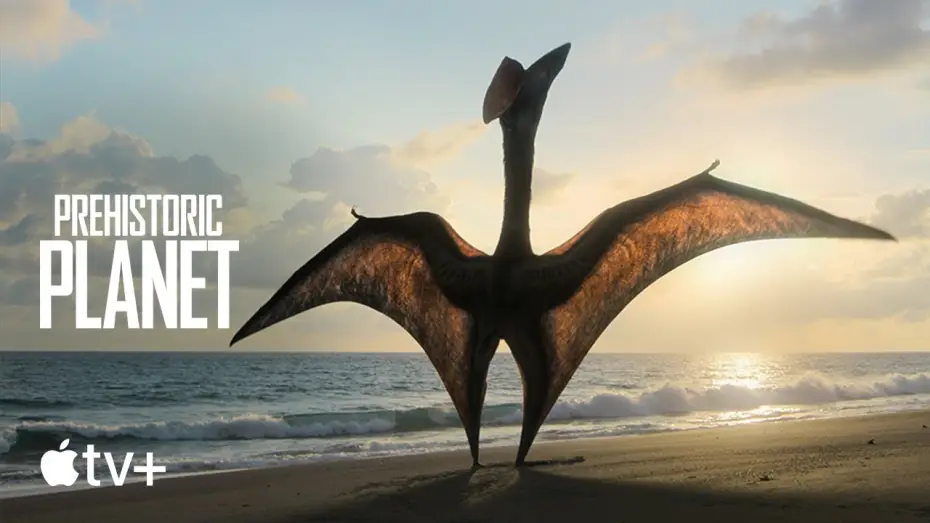
Experience the wonders of our world like never before in this epic series from Jon Favreau and the producers of Planet Earth. Travel back 66 million years to when majestic dinosaurs and extraordinary creatures roamed the lands, seas, and skies.
Seasons
| Season | Episodes | Release date | Rating |
|---|---|---|---|
| 5 | 2022-05-23 | 7.7 | |
| 5 | 2023-05-22 | 7.8 | |
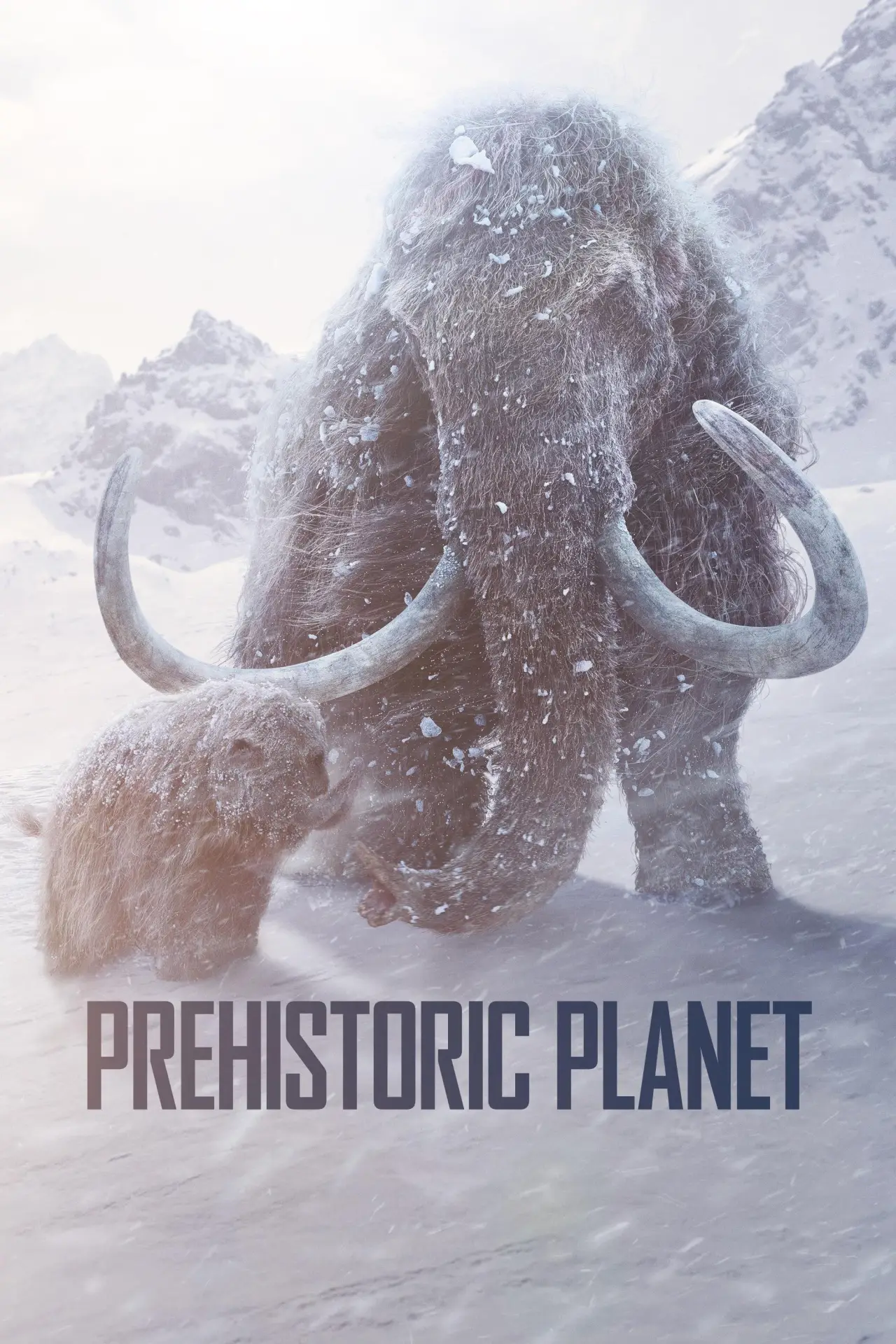
Ice Age From towering woolly mammoths to elusive snow sloths, terrifying saber-toothed tigers to resilient dwarf elephants (only 3 feet tall), Prehistoric Planet: Ice Age reveals the epic struggles and unexpected stories of animals that once ruled the Ice Age. Journey through vast tundras, barren deserts…
|
5 | 2025-11-26 | 7.3 |
What's left behind the scenes
- During the production of 'Prehistoric Planet,' scientific research clearly demonstrated that the massive scales on the back and sides of the predatory Carnotaurus were not arranged in even rows, as previously believed, but in a completely random order. The appearance of the Carnotaurus in the project was approved before this fact became widely known, and the project's scientific consultants did not have access to the fossils; therefore, the depiction of the Carnotaurus shown to viewers is considered outdated and inaccurate.
- A significant portion of the special effects in the series are the product of computer technology, although props were still used in some cases. The special effects were primarily produced by the British company Crawley Creatures, which was also involved in the work on the series Walking with Dinosaurs.
- The series' scientific consultant, Darren Naish, believed that the most speculative depiction in the entire series was that of the giant Dreadnoughtus with air sacs on its neck, which it inflated to intimidate rivals and attract a mate. There is no evidence that any dinosaurs—aside from modern birds, which are their descendants—possessed such an ability; however, every dinosaur had an air sac inside its body, and even their bones could be used for a variety of purposes. Many modern animals have similar soft tissues (mostly birds and elephant seals), and scientists believe that extinct species could have also developed similar traits. Thus, the Dreadnoughtus in the series is shown as the creators imagined it, which by no means implies that it was actually like that in reality.
- According to scientific consultant Mark Witton, this is the first major project in which the prehistoric animal designs he created were not altered at the whim of other project participants. For example, while working on the series Walking with Dinosaurs, producers and animators occasionally completely ignored scientific data to give the prehistoric animals a less unusual appearance and to make them easier to animate. Specifically, the head of the Quetzalcoatlus (a flying pterosaur) was significantly reduced in size because the creators of the series decided that it looked too implausible with its actual head. The amount of plumage on the Troodons (relatively small bird-like theropod dinosaurs) was reduced for the convenience of animation. In this series, however, the opinion of the scientific consultants was almost always decisive.
- Paleontology enthusiasts call this series the spiritual successor to the miniseries 'Walking with Dinosaurs' (1999). It is worth noting that David Attenborough, who narrated 'Prehistoric Planet,' had previously declined an offer to narrate 'Walking with Dinosaurs' because, at the time, he did not wish to participate in a documentary series about fictional animals. He has since changed his mind on the matter.
- In the 2000s and 2010s, it was believed that the Tyrannosaurus was covered in feathers, as feather impressions had been preserved on the fossils of many of its distant relatives. However, research results released in the late 2010s showed that feather traces were absent from impressions of tiny sections of Tyrannosaurus skin. Scientists still debate whether this means the Tyrannosaurus had no feathers at all, or if they existed on other parts of the skin, although the authors of most modern reconstructions of the dinosaur limit it to simply scaly skin. In this series, it is shown that young Tyrannosaurs have feathers that keep them warm and hide them from enemies, whereas adults have bare skin with only a thin line of down on the neck. Other dinosaurs were reconstructed differently. The giant Deinocheirus is shown with feathers even as an adult, which, incidentally, some scientists involved in the series objected to. However, considering the climatic conditions in the Deinocheirus's habitats, other scientists argued that the dinosaur needed feathers for warmth, and that dinosaurs could cool down in water or maintain a low internal temperature via air sacs located in the bodies of all dinosaurs.









 Auditions in India
 Casting calls in USA
 Castingi w Polsce
 Кастинги в Україні
