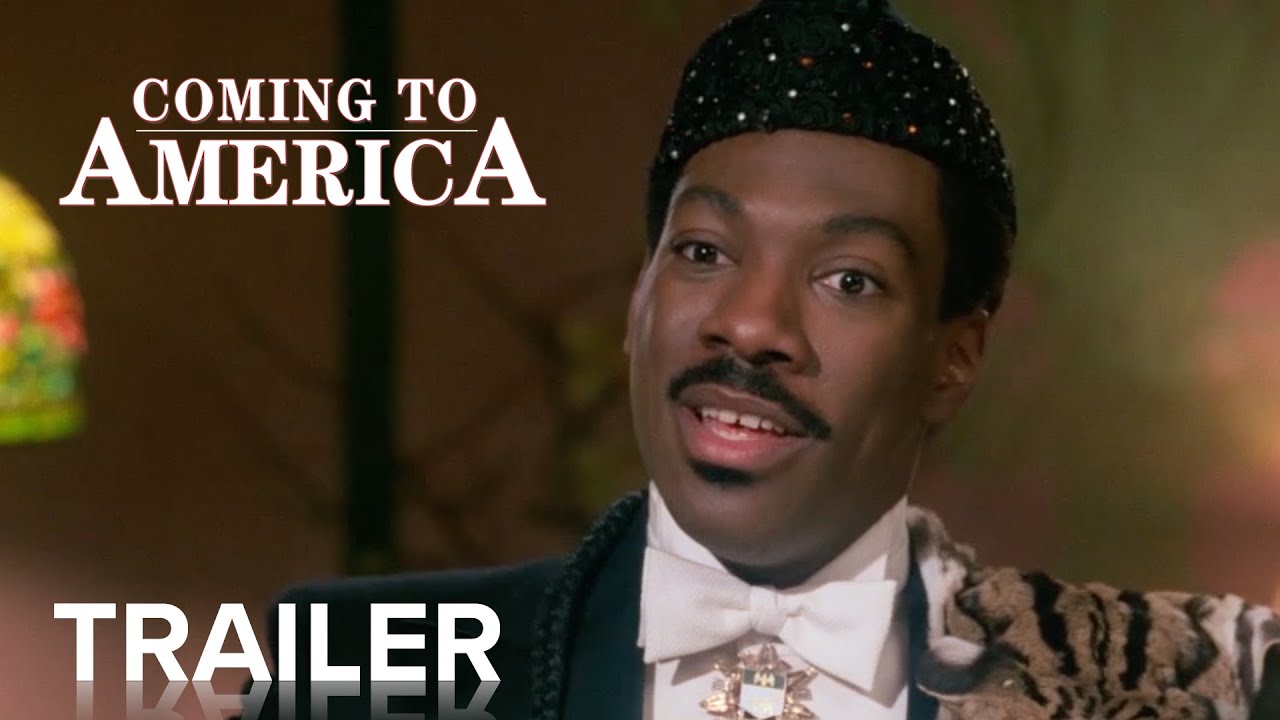
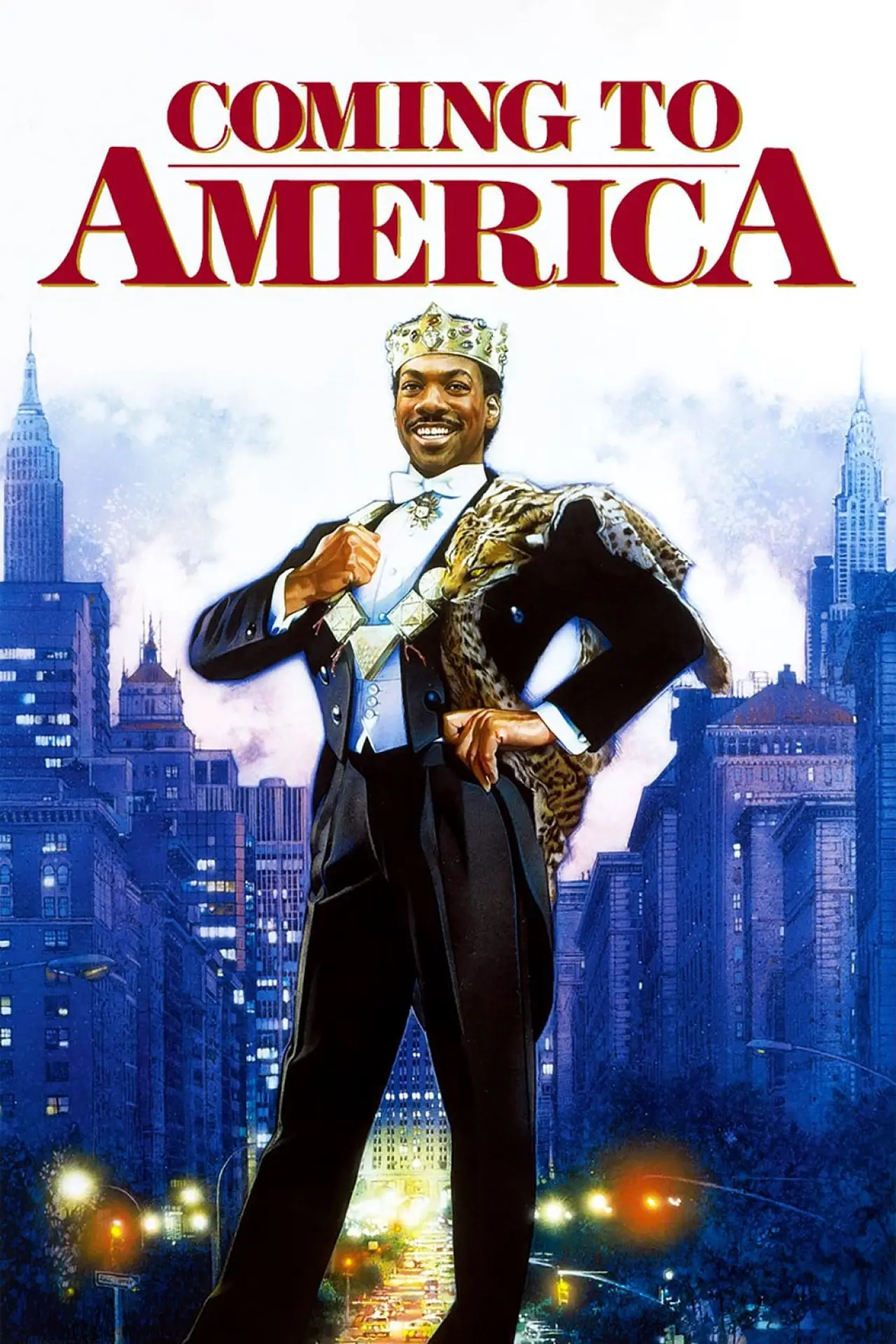
Coming to America
This summer, Prince Akeem discovers America.



Country
Production
Budget
$39 000 000
Box office
$288 752 301
Director
Actors
Scenario
Producer
Robert D. Wachs, George Folsey Jr., Mark Lipsky, Leslie Belzberg, Eddie Murphy
Camera operator
Composer
Artist
Richard Macdonald, Carole Lee Cole
Audition
Jackie Burch
Editing
George Folsey Jr., Malcolm Campbell
Whole Team (87)
Whole Team (87)
Short description
An African prince decides it’s time for him to find a princess... and his mission leads him and his most loyal friend to Queens, New York. In disguise as an impoverished immigrant, the pampered prince quickly finds himself a new job, new friends, new digs, new enemies and lots of trouble.
What's left behind the scenes
- After Eddie Murphy had his makeup applied and dressed as Saul, the Jewish man, the actor decided to test the makeup and costume. He took a golf cart and drove it from one department of the Paramount studio to another, where he got out of the golf cart and, in his normal voice, said, “Hello. It’s me, Eddie Murphy.” No one believed him.
- Much of the dance performed by the royal dancers in the scene with the future queen is a sped-up version of the dance from Michael Jackson's (1958-2009) “Thriller” (1983) music video.
- According to director John Landis, he came up with the idea to have Eddie Murphy play a Jewish man. It was a kind of revenge for the fact that in the early 20th century, Jewish actors often played Black characters. Screenwriter Barry W. Blaustein consulted with his own father when writing Murphy’s lines as the Jewish man.
- The African dance in the film was choreographed by singer Paula Abdul. It had to be filmed exclusively to the beat of drums, as composer Nile Rodgers had not yet finished writing the music for the film. The dancers kept slipping, so a binding material had to be sprayed on the floor, and the filming of the dance took a whole day.
- Eddie Murphy and Arsenio Hall played a wide variety of characters, so they had to spend 3-4 hours in the makeup chair each time to change their appearance. Costume designer Deborah Nedelman created over 500 costumes, drawing inspiration from the work of Christian Dior (1905-1957) from the early 1950s, as well as everyday clothing customary in the Ivory Coast, Gambia, and Senegal. The jewelry was created by Catherine Post from Thailand. When working on the design of the royal palace, John Landis was inspired by the Royal Pavilion (the former seaside residence of British monarchs) and the work of Henri Rousseau (1844-1910) from the late 19th century.
- The making of the film was accompanied by scandals. At one point, it escalated to a fight between director John Landis and Eddie Murphy. Then, the owner of a local McDonald’s restaurant arrived on set with his lawyer and began threatening to sue the filmmakers (although they had official filming permission from the fast-food chain’s management). Paramount Pictures was angry with Eddie Murphy, who allegedly tried to get his friends and relatives hired in various, self-created positions on the film crew. Murphy, in turn, later claimed that Paramount Pictures had not paid him the amount stipulated in his contract.
- The basis for the film's script was written by satirist Art Buchwald. However, Paramount Pictures rejected his idea, stating that it was uninteresting. As a result, the film was made without the author's knowledge. The surprised satirist only saw the realization of his vision in a movie theater. Because of this, Buchwald sued Paramount Pictures in 1990. He won the case: the studio was ordered to pay him $900,000. Since then, film studios have made it a rule to include a clause in their contracts stating that original ideas from outside authors are not subject to payment. This reference entered American copyright history as “Buchwald’s Law”.
- Filming in New York wrapped in February 1988, after which work on the film continued in Los Angeles. The palace of Prince Akeem, bathhouses, and makeup rooms were built on the grounds of the Paramount Pictures studio. It is claimed, however, that Eddie Murphy refused to travel to California for the filming of the reception, stating in a documentary filmed by Orson Welles (1915-1985) that, according to Nostradamus's (1503-1566) prediction, an earthquake was expected in California that week. Director John Landis found a solution. He had Murphy come in advance, shot many close-ups of him, and filmed everything else after the actor had left. The film remained on schedule. The earthquake never happened.
- There is an episode in the film where the main characters pass by two beggars. The Prince gives them his last money, and they turn out to be Randolph and Mortimer Duke, ruined by Eddie Murphy's character in 'Trading Places'.
Similar movies
8.4/10
8.1/10

8/10
7.7/10
7.7/10
7.7/10
7.6/10
7.6/10

7.6/10
7.6/10


 Auditions in India
 Casting calls in USA
 Castingi w Polsce
 Кастинги в Україні
