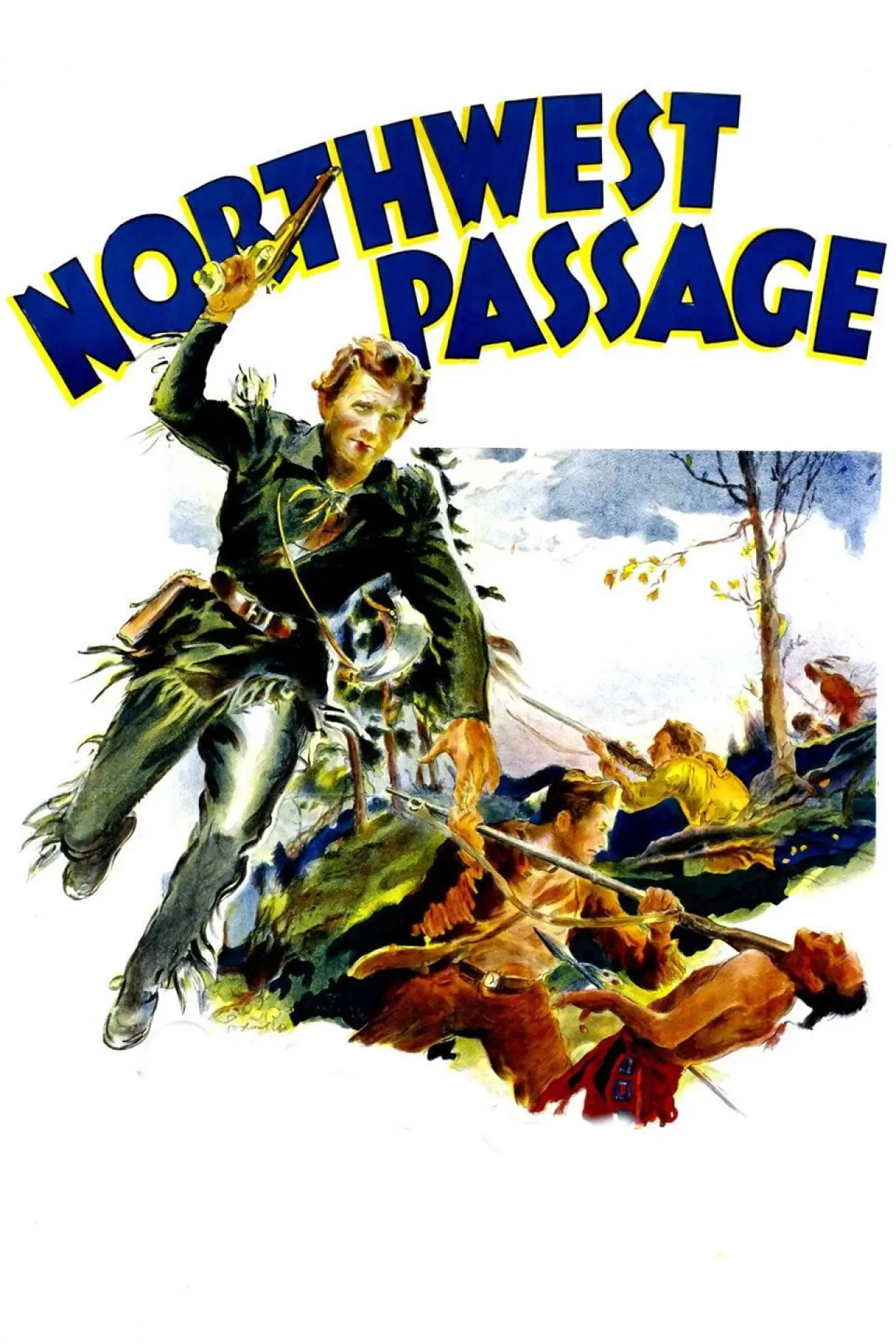
Northwest Passage
Half Men—Half Demons … Warriors Such As The World Has Never Known … They Lived With Death and Danger For The Women Who Hungered For Their Love!



Country
Production
Budget
$0
Box office
$0
Director
Actors
Scenario
Producer
Camera operator
William V. Skall
Composer
Artist
Audition
Editing
Short description
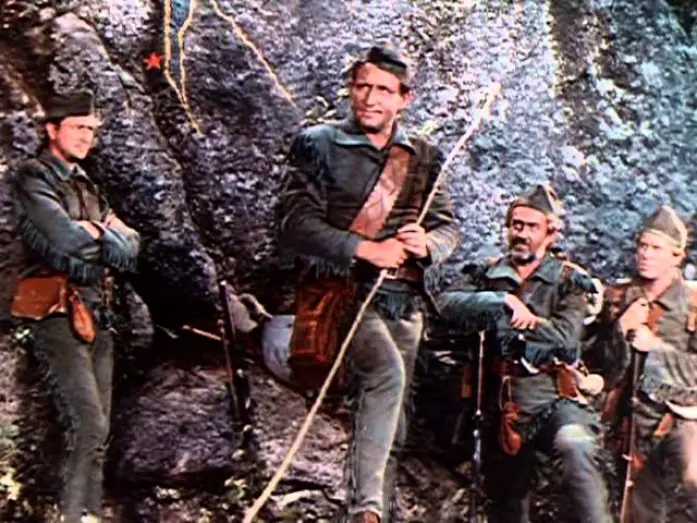
Based on the Kenneth Roberts novel of the same name, this film tells the story of two friends who join Rogers' Rangers, as the legendary elite force engages the enemy during the French and Indian War. The film focuses on their famous raid at Fort St. Francis and their marches before and after the battle.
What's left behind the scenes
- Initially, George Washington (1732-1799) refused Robert Rogers’s (1731-1795) offer to lead the army. He suspected that Rogers had been recruited during his long stay in Great Britain before the outbreak of hostilities. When Washington’s suspicions proved correct, Rogers formed a group called the ‘King’s Rangers’ (later – ‘King’s Rangers’), which he led in fighting on the side of the Canadians against the revolutionary forces.
- The most challenging part was filming the Rangers’s crossing of a water obstacle. The actors had to work without stunt doubles. The scene began filming on a lake in Idaho, but was finished on set, as filming on location proved too dangerous. At that moment, these turned out to be the most difficult shots in Spencer Tracy’s (1900-1967) career, who at one time publicly complained that the physical difficulties of the acting profession would not tire even a newborn. The difficulties of filming this scene surpassed even the challenges of filming Victor Fleming’s (1889-1949) adventure drama 'Captains Courageous' (1937).
- While flying to the set in Idaho from California over eastern Oregon, Spencer Tracy’s private plane ran out of aviation fuel. He managed to reach a remote ranch, but of course, there was no fuel there. Fuel from the ranch owner’s tractor was poured into the plane’s tanks, and his felt hat was used as a filter during the refueling process. The plane reached Idaho without further problems.
- On the very first day of filming on location, Spencer Tracy went on strike and refused to come to the set, demanding first that proper catering be provided. Within 24 hours, the film's director was fired, and the catering issue was resolved.
- It is said that MGM hired several hundred local residents to play rangers fording the river at the rapids just before the attack on the Indian village. The current was very strong, the water was icy, so the crossing was quite dangerous – and while some film stars depicted the crossing in a safe soundstage, – the extras crossed the river several times in a row as shown in the film (wading, with rifles held above their heads). Once all the takes were completed, they were immediately taken to specially heated tents and given something to drink.
- The film depicts Rogers' Rangers' raid on an Abenaki Indian tribe village. It is claimed that the film accurately portrays the events, except for the finale. When the Rangers reached the Fourth Fort, they missed a supply convoy by only two hours. Lieutenant Stevens heard their approach, mistook them for the French, and fled. Rogers and a couple of other men built a raft and chased after Stevens down the river. They caught up with him after ten days and sent the supplies, as promised, to the Fourth Fort. Subsequently, Stevens was court-martialed for his cowardice.
- Nearly 1,000 Native Americans from Oregon, Idaho, and Montana were hired as extras. They all had their heads shaved, and "Max Factor" gave them bangs (a lock of hair left on a shaved head as a challenge to enemies).
- During the filming of the scene where the swamp is crossed, a branch broke and John Merton (1901-1959), who played Lieutenant Dunbar but was not credited in the titles, fell into the murky water from a height of four meters. Half a minute later, after the take was completed, the actor raised his head above the surface and greedily gasped for air. The film's director, King Vidor (1894-1982), thanked him for his composure, which allowed the actor not to raise his head immediately and let them finish the scene, to which he replied: “What the hell composure?! I couldn’t get out from under the submerged log!”
Similar movies
8.4/10
8.1/10
8/10
7.9/10
7.9/10
7.9/10
7.9/10
7.8/10
7.8/10
7.7/10


 Auditions in India
 Casting calls in USA
 Castingi w Polsce
 Кастинги в Україні
