The Imitation Game
The true enigma was the man who cracked the code.



Country
Budget
$14 000 000
Box office
$233 555 708
Director
Actors
Scenario
Graham Moore
Producer
Teddy Schwarzman, Nora Grossman, Ido Ostrowsky, Graham Moore
Camera operator
Óscar Faura
Composer
Artist
Maria Djurkovic, Lauren Briggs-Miller
Audition
Short description
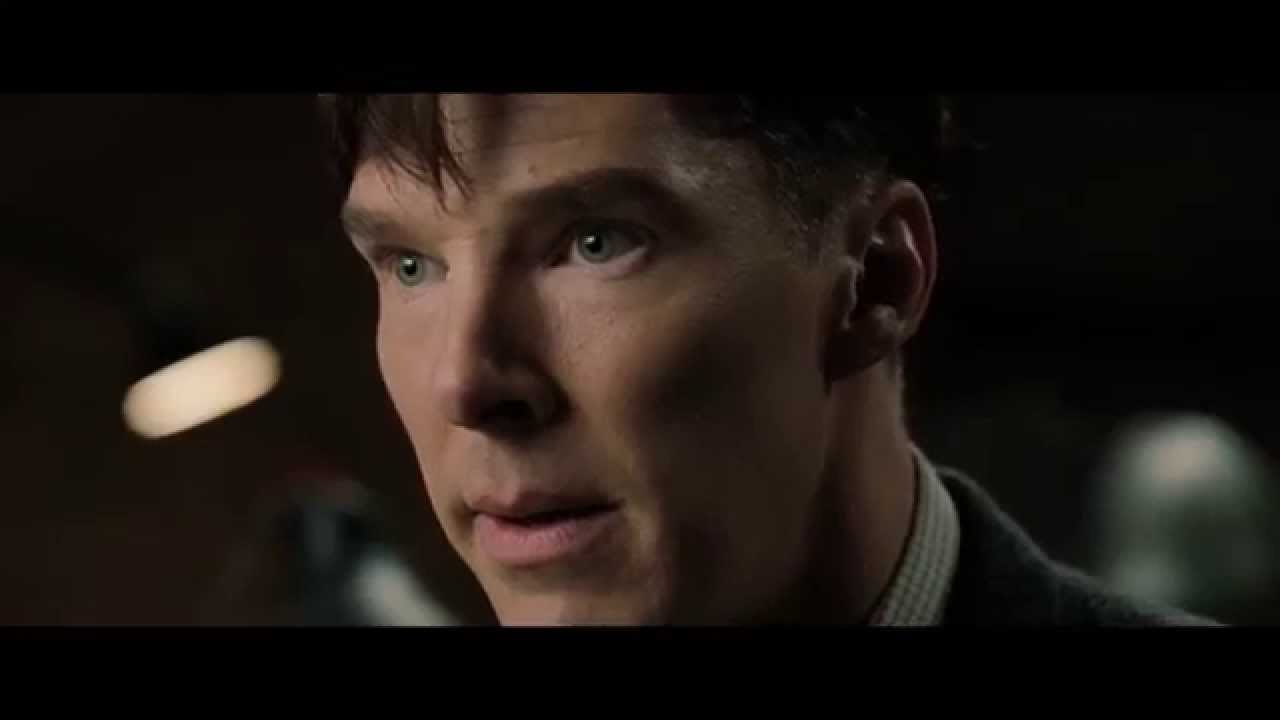
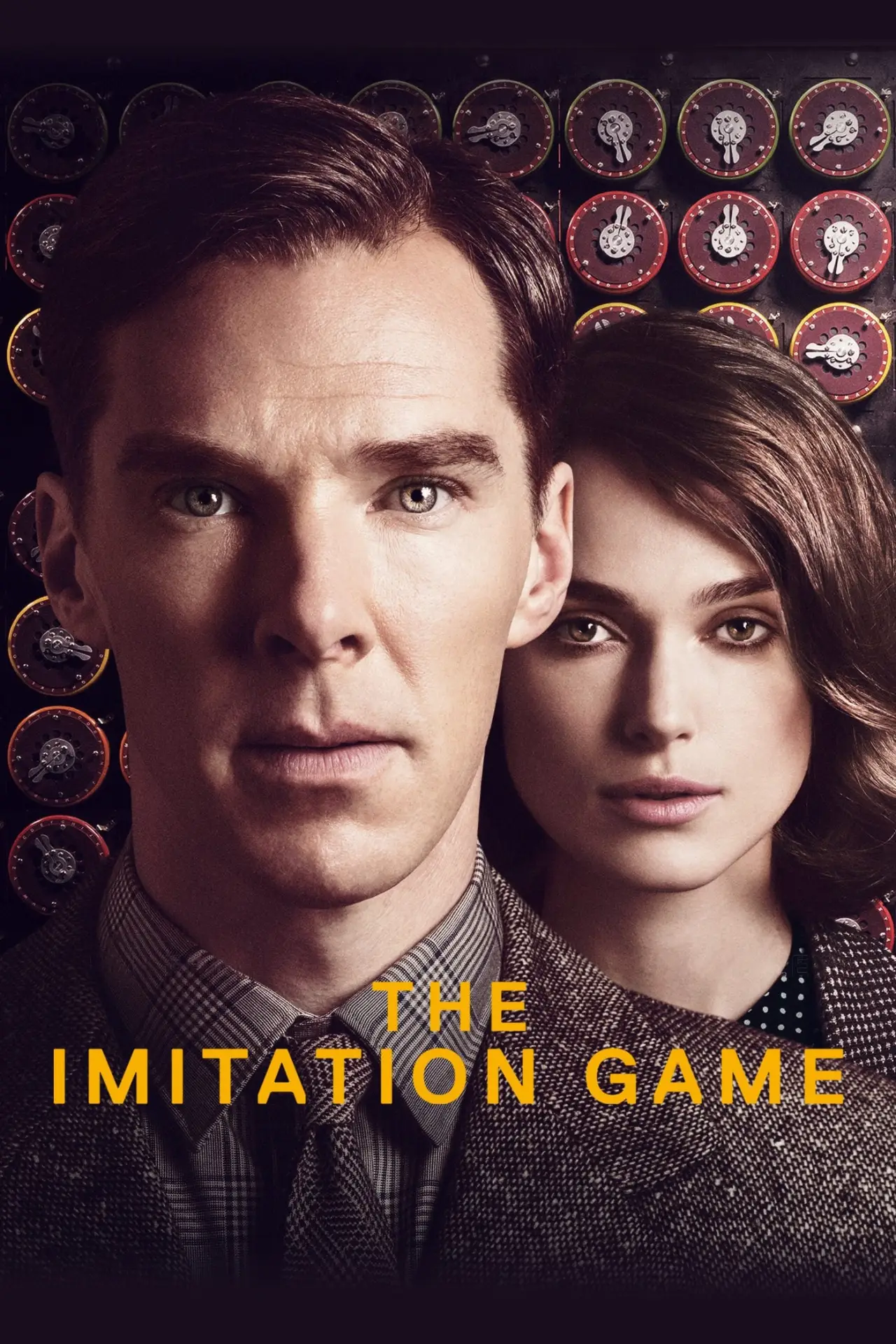
Based on the real life story of legendary cryptanalyst Alan Turing, the film portrays the nail-biting race against time by Turing and his brilliant team of code-breakers at Britain's top-secret Government Code and Cypher School at Bletchley Park, during the darkest days of World War II.
What's left behind the scenes
- The film is based on Andrew Hodges' book "Alan Turing: The Enigma" (1992).
- Alex Lawther, who played young Turing, and Benedict Cumberbatch both wore dentures in the film that were exact replicas of Alan Turing's original false teeth.
- The Enigma decryption machine shown in the film was made based on a copy of the original machine built by Turing and now located in the museum at Bletchley Park. However, production designer Maria Djurkovic admitted that this machine was deliberately made larger than it actually was, and with more exposed internal mechanisms, to make it look more impressive in the film.
- In the film, Alan Turing runs in various scenes, but it is not mentioned that he actively ran, competed, and achieved world-class results.
- Upon the film's release in the US, The New York Times printed the original crossword puzzle that The Daily Telegraph used in 1942 to recruit codebreakers for work at Bletchley Park during World War II. Those who solved the crossword could send their results to the newspaper's editorial office for a chance to win a trip to London for two and a tour of the famous Bletchley Park mansion.
- The film's screenplay topped the "Black List" of the best unproduced screenplays in Hollywood in 2011.
- The Weinstein Company acquired the distribution rights to the film in the United States for a record-breaking $7 million, a sum unprecedented for the European film market.
- Alexandre Desplat composed the music for the film in two and a half weeks. The recording took place with the London Symphony Orchestra at Abbey Road Studios.
- This is the first English-language work by Norwegian director Morten Tyldum.
- The film was released in the United Kingdom on November 14th. On the same day in 1940, the Luftwaffe devastated Coventry. Rumors circulated that the attack plan was revealed by codebreakers from Bletchley Park, but no action was taken because the British government feared it might expose the fact that the Enigma code had been broken. However, this information is inaccurate. The British knew about the impending attack, but did not know where the strike would fall.
- Graham Moore wanted to write a screenplay for a film about Alan Turing from the age of 14, when he became obsessed with computer science.
- Benedict Cumberbatch received a Bachelor of Arts degree in drama from the University of Manchester. It was at the same university that Alan Turing continued his work on computing after the war.
- The film, its cast, and crew were recognized by the Human Rights Campaign. It is one of the largest LGBT organizations in the United States, dedicated to protecting the rights of lesbians, gays, bisexuals, and transgender people.
- Leonardo DiCaprio was initially considered for the lead role in the film.
- The pinstripe suit worn by Mark Strong throughout the film is an authentic 1940s garment. It was chosen specifically to distinguish his character from his subordinates and give him the appearance of a mafia boss.
- On November 10, 2014, the electromechanical machine for deciphering the "Enigma" code, recreated by filmmakers, was sent to an exhibition in Bletchley Park, Great Britain. The exhibition also features clothing worn by the actors and props used in the making of the film.
- One of the dancers in the engagement party scene is a distant relative of the real Alan Turing.
- Benedict Cumberbatch's father, Timothy Carlton, studied at the private Sherborne School (from 1953 to 1958), the same school attended by Alan Turing himself.
- In the scene showing footage from German newsreels, there is a clip of a tall man in civilian clothes standing with his hands on his hips and a weapon. This is Wernher von Braun – a rocket and space technology designer, one of the founders of modern rocketry, and the creator of the first ballistic missiles.
- Principal photography was completed on November 11, 2013, coinciding with Remembrance Day.
- Some of Alan Turing's clothing features linear geometric patterns, a nod to his future work in computing.
- Benedict Cumberbatch and Alan Turing are actually distant relatives.
- Various directors were involved in the development of the project, including Ron Howard and J. Blake.
- Correction fluid (liquid paper for covering up text) was not invented until 1953 and did not become widespread until 1956. Consequently, it could not have existed during the time period depicted in the film.
- The film is based on Andrew Hodges’ book “Alan Turing: The Enigma” (1992).
- Time magazine placed Benedict Cumberbatch and his portrayal of Alan Turing at the top of its "Best Acting Performances" list for 2014.
- The character of Mark Strong, Stuart Menzies, served as the basis for James Bond’s boss – “M”.
- Some information about the decryption work carried out at Bletchley Park was declassified by the US government in 1996. A 500-page book titled “The General Report on Tunny,” written in 1945 by three cryptanalysts from Bletchley, was declassified in June 2000.
- Turing’s niece, Inagh Payne, agreed that Benedict Cumberbatch was very well suited to the role of Alan Turing, but disagreed with the casting of Keira Knightley as Joan Clarke, stating that the real Joan was “quite plain”.
- The actual name of the electromechanical machine for decoding the “Enigma” code is “Bombe”.
- Correction fluid (liquid paper for covering up text) was invented only in 1953 and became widespread starting in 1956. Consequently, it could not have existed during the time period depicted in the film.
Similar movies

8.5/10
8.4/10
8.4/10

8.4/10
8.4/10
8.3/10
8.2/10

8.2/10

8.2/10

8.2/10


 Auditions in India
 Casting calls in USA
 Castingi w Polsce
 Кастинги в Україні
