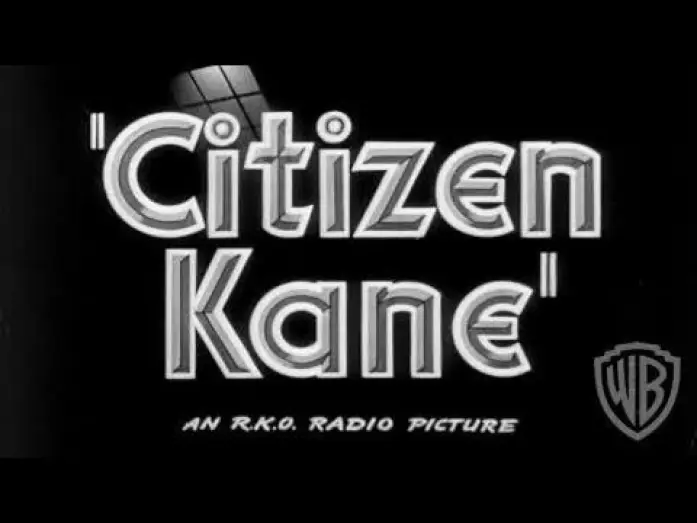
Citizen Kane
Some called him a hero...others called him a heel.




Country
Production
Budget
$839 727
Box office
$1 652 281
Director
Actors
Scenario
Producer
Camera operator
Composer
Artist
Audition
Editing
Short description
Newspaper magnate Charles Foster Kane is taken from his mother as a boy and made the ward of a rich industrialist. As a result, every well-meaning, tyrannical or self-destructive move he makes for the rest of his life appears in some way to be a reaction to that deeply wounding event.
What's left behind the scenes
- Kane's phrase "Rosebud" ranked 17th on the American Film Institute's list of "100 Greatest Movie Quotes of All Time."
- During filming, Gregg Toland frequently used lenses with anti-reflective coating, which was innovative for the film industry at the time.
- During the scenes where Kane buys his first newspaper and says he will only go bankrupt in 60 years, you can see what Orson Welles looked like at age 25. In all other scenes, the actor wore makeup that made him appear older.
- According to Total Film magazine, the film ranked 6th on the list of "100 Greatest Films of All Time".
- Even while in school, Welles wrote a play called 'Marching Song,' which was never staged. It told the story of how different people who had, in one way or another, connected their lives with a famous person felt about him.
- Before his arrival in Hollywood in 1926, Mankiewicz reviewed plays for The New Yorker magazine.
- RKO studio head George Schaefer suggested changing the film's title from "The American" to "Citizen Kane".
- In one scene, Kane says, "Don't believe everything you hear on the radio." This is a possible reference to Orson Welles' radio drama "The War of the Worlds," which many believed to be a genuine news report of an alien landing.
- The scene in which Kane destroys Susan’s room was filmed in one take. After filming wrapped, Orson Welles’ hands were covered in blood and bruises.
- Mankiewicz wrote the first draft of the screenplay in approximately six weeks; for most of that time, he was working from a hospital bed.
- At the five-minute mark, newspapers from various countries are shown with headlines reporting the death of Charles Kane, including the Soviet newspaper "Bednota" (The Poor). Such a newspaper actually existed and was primarily intended for the largely illiterate population of the USSR – poor peasants and soldiers, which determined its subject matter and style. It is unlikely that the death of an American publishing magnate would have made the front page of this newspaper. Furthermore, "Bednota" was published from March 27, 1918, to January 31, 1931, while Charles Kane dies in early 1941.
- The character of Joseph Cotten (Leland) is based on newspaper critic Ashton Stevens.
- After the film's release, Orson Welles apologized for how Marion Davies was depicted as Susan Alexander, saying that Marion was a wonderful woman.
- The agreement reached between Orson Welles and RKO Studios granted him unprecedented freedom for a debuting director: he was to write the screenplay, produce, direct, and star in two films for the studio, with him personally selecting the cast and crew. He also had the right to final cut of his films. Studio head George Schaefer could only halt production if the film's budget exceeded $500,000 (the budget for 'Citizen Kane' was overspent by $200,000), but no one except Welles was allowed to view the footage as it was being shot.
- In the opening scene of the film (after the newsreel), Joseph Cotten can be spotted in the background among the reporters.
- The film's production number at RKO Studios was 281.
- According to popular rumors, Ted Turner intended to colorize the film, but he abandoned the idea due to extremely negative reactions from viewers. The controversy surrounding the alteration of the film’s original appearance was one of the factors that led to the adoption of new rules regarding film release on video or television: if a film was changed compared to its theatrical version, a title card stating that the film had been altered from the original version had to appear at the beginning.
- The operatic piece Susan is practicing is “Una voce poco fa” from Gioachino Rossini’s “The Barber of Seville”.
- Although the character's and the prototype's biographies do not fully coincide, the film contains verbatim quotes from Hearst. For example, Kane repeats Hearst's telegram to his correspondent in Cuba word for word: 'Please remain. You furnish the pictures, and I’ll furnish the war.'
- Filming of the movie began at the end of June 1940 and ended on October 23 of the same year. The film was originally scheduled for release in February 1941, but due to a series of scandals surrounding the picture, the premiere was postponed until May 1, 1941.
- The character 'Mr. Bernstein' was named after Orson Welles' guardian, Dr. Maurice Bernstein.
- The film's script featured a storyline in which Susan Alexander was having an affair with her husband, and Kane discovered the infidelity. Storyboards were prepared for these scenes, but they were never filmed.
- According to Orson Welles, the fact that Dorothy Cominore was pregnant when filming began gave him some advantages: for example, in disputes with the studio, Orson used this argument as confirmation of his intention to finish filming on time. When watching the film, it is almost impossible to notice that Dorothy is pregnant, as she is either sitting at a table or wearing loose, long dresses.
- An attentive viewer may notice that the camera always looks up at Kane and Leland, while it looks down on 'weaker' characters, such as Susan Alexander. Orson Welles borrowed this shooting technique from John Ford, who had employed a similar approach two years earlier in 'Stagecoach' (1939).
- One of the voices of the reporters watching the news broadcast at the beginning of the film belongs to Joseph Cotten.
- In order to get away from the studio bosses, at least in the early days of filming, Welles announced that the film crew and actors were in rehearsals when, in fact, filming was in full swing. Orson's trick was revealed only a few days later.
- The scene with Charles Bennett and the "chorus girls" was originally intended to take place in a brothel, but the studio did not allow the filming of such a scene. However, this circumstance did not bother Orson Welles, who deliberately included such a scene in the script to distract the censors from other elements.
- The original film negatives were destroyed in a fire that occurred in the 1970s.
- William Randolph Hearst was so enraged by the film that he called Orson Welles a communist in an attempt to prevent its release.
- The film received rave reviews from film critics, but was a commercial failure. This was largely due to the fact that William Randolph Hearst forbade any mention of the film in his newspapers, which at that time constituted the majority of print media in the United States.
- Orson Welles’ friends asked him how the whole world could have learned about Kane’s last words if there was no one else in the room at the time of his death. Welles didn't know what to say for a long time, and then he said, “Don’t tell anyone else about this.”
- Mr. Bernstein's name is never mentioned during the course of the film.
- In the opening scene of the film (after the newsreel is shown), all the characters present in the room were played by actors who played the main male roles in the film, including Joseph Cotten and Orson Welles.
- Agnes Moorehead's debut film.
- The crowd watching Kane as he delivers his speech is actually a static photograph. To create the illusion of movement, hundreds of tiny holes were poked in it, behind which technicians constantly moved lighting.
- Figures in cinema such as Roger Corman, Christopher Nolan, Theo Angelopoulos, Terry Gilliam, Neil Jordan, David Lynch, Krzysztof Kieślowski, John Schlesinger, Paul Schrader, Martin Scorsese, Oliver Stone, King Vidor, John Woo, Krzysztof Zanussi, and Roger Ebert are among the film’s admirers.
- For decades, there have been disputes over the extent of Welles’ and Mankiewicz’s contributions to the screenplay. According to various sources, each author imbued the script with their own perspective on the biography and fate of the characters. Welles used facts from his personal life in the script, while Mankiewicz, in creating the image of Charles Foster Kane, gave him the traits of William Randolph Hearst, the famous publishing magnate. Rumors circulated that Hearst was most infuriated by the repeated mention of the “pink bud” (the nickname many claimed the magnate used to refer to the intimate parts of his mistress, Marion Davies).
- One of the possible titles Orson Welles considered for his film was "John Q".
- During filming, Orson Welles broke his ankle and was forced to direct the film from a wheelchair for two weeks.
- Orson Welles was only 24 years old when he co-wrote the screenplay for 'Citizen Kane' with Herman J. Mankiewicz.
- During the filming of the movie, Orson Welles received a warning from William Randolph Hearst, stating that the latter intended to discredit the director with photographs depicting Orson in the company of a nude woman in a hotel room. Welles did not return to the hotel that day to avoid a potentially compromising photoshoot. However, it remains unknown whether this threat was true or a fabrication.
- According to Welles, the prototype for Kane was also Chicago financier Gary Fowler McCormick, who spent vast sums on his mistress and second wife, Polish singer Hanna Walska, and one of the founders of General Electric, Chicago magnate Samuel Insull, who built an opera house in Chicago for his singer mistress.
- Almost the entire cast of the film consisted of actors from the Mercury Theatre troupe, which Orson Welles founded at the age of 21. This troupe produced radio adaptations of famous literary works, including "The Count of Monte Cristo", "Treasure Island", "The 39 Steps", "Abraham Lincoln", "The War of the Worlds", and others.
- The film places particular emphasis on Xanadu, Kane’s castle, which was modeled after Hearst’s lavish residence in California.
- In 2015, a BBC poll named “Citizen Kane” the best American film. 62 film critics participated in the poll.
- Alan Ladd played a small role, portraying one of the reporters in the film's finale.
- According to Entertainment Weekly, the film ranked 2nd on the list of “The Greatest Movies of All Time”.
- The journalist interviewing the elderly Kane is the film's cinematographer, Gregg Toland.
- For the filming of this film, Orson Welles and cinematographer Gregg Toland first used 'deep focus': a special shooting technique that allows objects in the foreground, middle ground, and background to be filmed with simultaneous focus.
- To give the newsreel shown at the beginning of the film a grainy appearance, Robert Wise (the editor) dragged the film with the footage across a stone floor and through gauze filled with sand. However, some theater owners did not understand the editor's idea and demanded replacement copies of the film due to the terrible quality of the first ten minutes.
- The lengthy scene in which Leland gives an interview in the nursing home was Joseph Cotten's first scene filmed for a Hollywood movie. Because Orson Welles broke his ankle, changes had to be made to the shooting schedule. Originally, the scene with the elderly Leland was supposed to be filmed near the end. To help the actor, his entire monologue was written on special cards for Joseph to read. However, due to the heavy makeup and contact lenses, he could barely see anything. Therefore, Cotten had to memorize all his lines in just a few hours.
- According to the American Film Institute, the film ranked first on the list of the greatest films of all time.
Similar movies
8.1/10
7.8/10
7.6/10
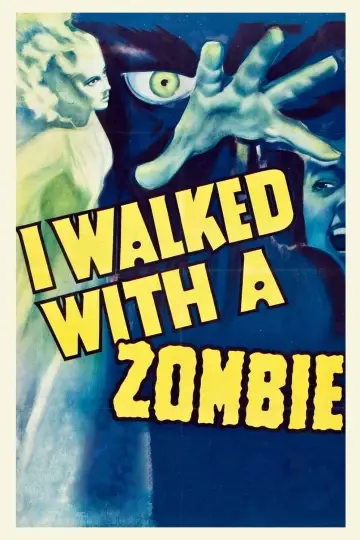
6.8/10
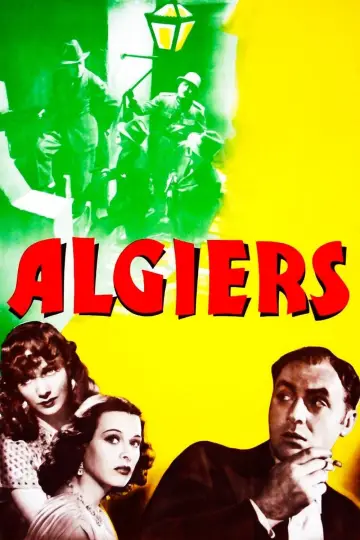
6.6/10
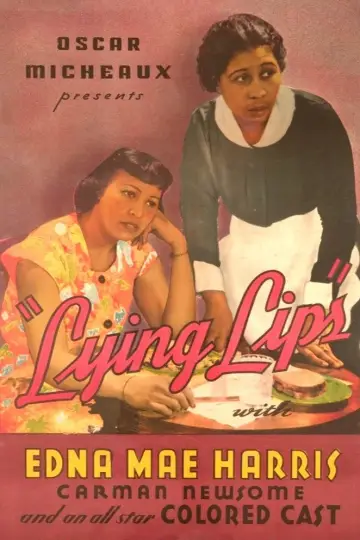
6.3/10
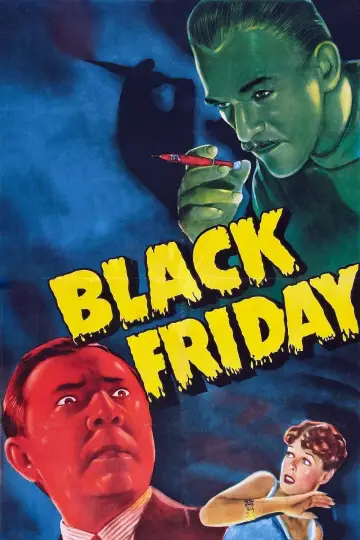
6.3/10


 Auditions in India
 Casting calls in USA
 Castingi w Polsce
 Кастинги в Україні
