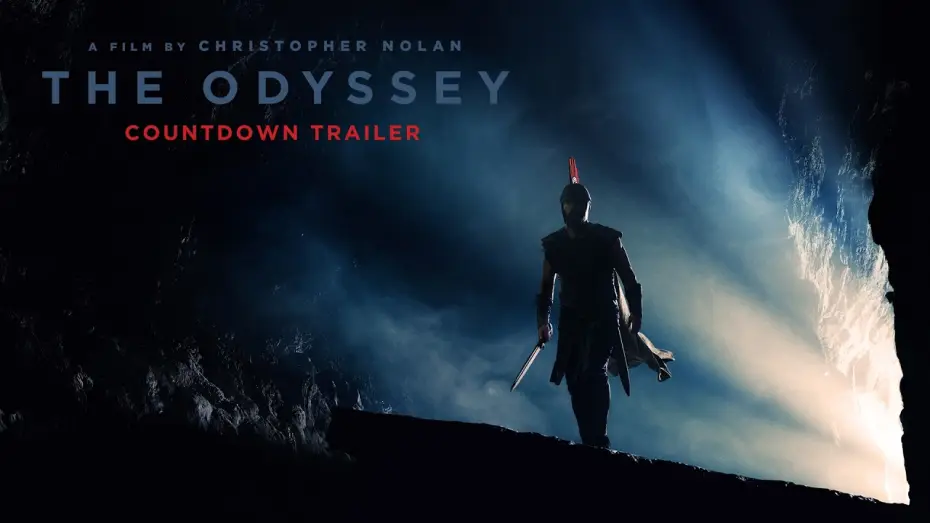
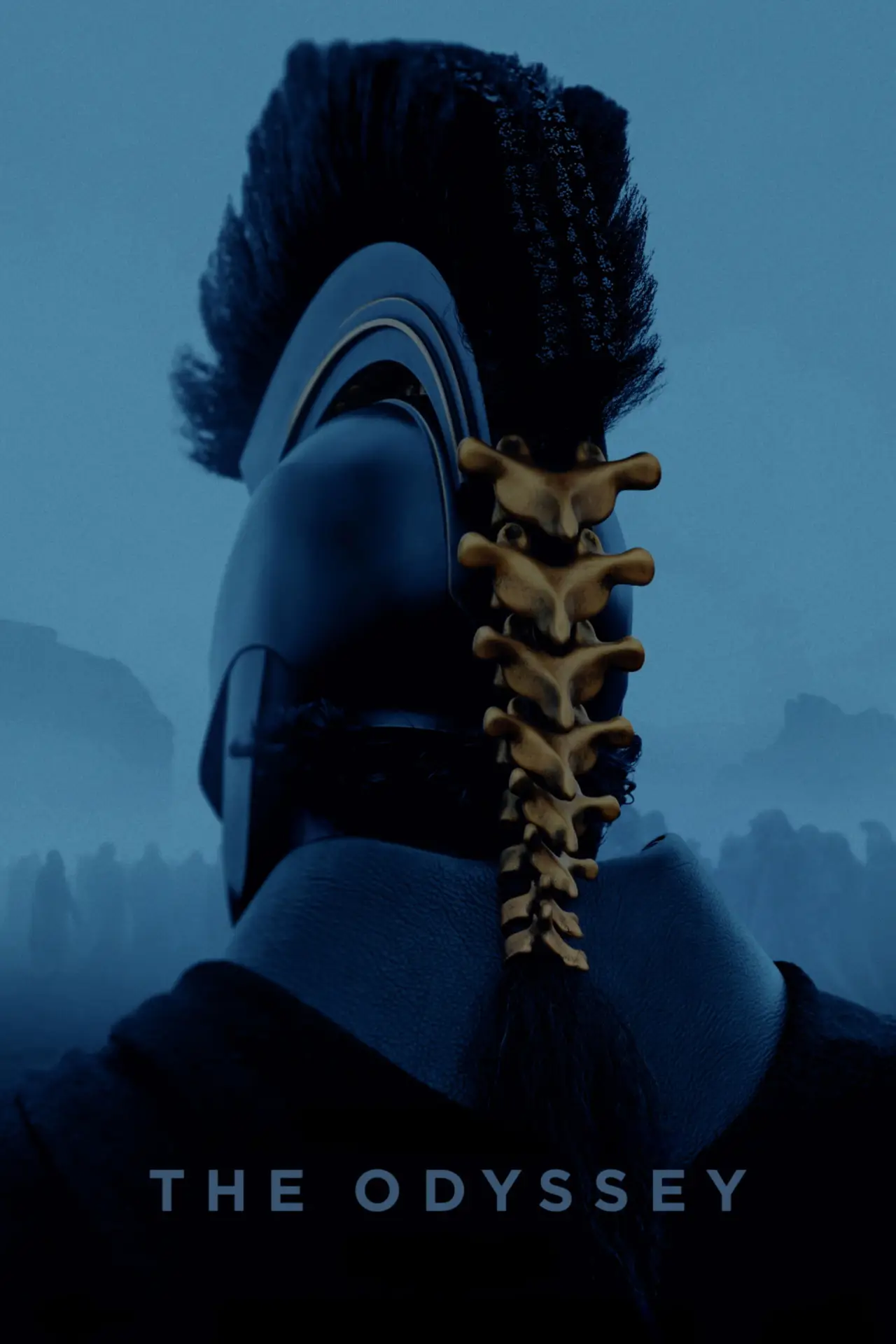
The Odyssey
Defy the gods.



Country
Production
Budget
$250 000 000
Box office
$1 721 314 740
Director
Actors
Scenario
Producer
Christopher Nolan, Emma Thomas, Thomas Hayslip
Camera operator
Composer
Artist
Ruth de Jong, Yunhong Xue
Audition
Editing
Short description
Odysseus, the legendary King of Ithaca, embarks on a long and perilous journey home following the Trojan War. Throughout his voyage, he is forced to confront the whims of gods, mythological monsters, and trials that stretch both his cunning and his humanity to the breaking point.
What's left behind the scenes
- At the request of director Christopher Nolan (who also served as the project's screenwriter and producer), Matt Damon grew a beard for the role of Odysseus. The actor later mentioned that he had never grown a beard before.
- Christopher Nolan decided to make this film because he had always been a great admirer of the work of Ray Harryhausen (an artist, designer, and visual effects master), and also because high-budget films based on classical mythology had not been made for some time.
- Approximately 640 km of film were used during production.
- During filming, specially designed IMAX camera housings were used to muffle the sound of the camera motors, thereby facilitating the recording of dialogue. Attempts to create similar housings for the sci-fi action film "Tenet" (Christopher Nolan, 2020) yielded unsatisfactory results.
- An IMAX camera holds only a few minutes of film before it needs to be reloaded. Camera assistant Keith Davis learned to reload the film so quickly that the actors in the scene only had to wait a short while, remaining in character, before filming could resume.
- Several Trojan horses, each over 10 meters tall, were constructed for the shoot. One horse, which was moved along the shore repeatedly, ended up severely damaged as a result; a joke even circulated among the crew that the horse would need nine lives, like a cat, to make it to the end of filming.
- The Cyclops Polyphemus was a 6-meter animatronic puppet. It was operated by Bill Irwin, who had worked with Christopher Nolan in the same capacity on the sci-fi drama 'Interstellar' (2014).
- While preparing for the role of Penelope, Anne Hathaway spent several weeks learning to weave on looms that were replicas of ancient equipment.
- According to director, screenwriter, and producer Christopher Nolan, he intentionally depicted the gods of the Greek pantheon through natural phenomena that were associated with the supernatural in ancient times.
- At the request of director Christopher Nolan, Matt Damon grew a beard for the role of Odysseus. The actor later mentioned that he had never grown a beard before.
- Christopher Nolan decided to make this film because he had always been a great admirer of the work of visual effects master Ray Harryhausen, and also because high-budget films based on classical mythology had not been made for some time.
- During filming, specially designed IMAX camera housings were used to muffle the sound of the camera motors, thereby making it easier to record dialogue. Attempts to create similar housings for the sci-fi action movie 'Tenet' were unsuccessful.
- An IMAX camera only holds enough film for three minutes of shooting. The camera assistant learned to reload the rolls so quickly that the actors didn't have to wait very long.
- To film certain scenes, equipment—specifically IMAX cameras weighing nearly 200 kg—had to be airlifted up mountain slopes by helicopter.
- A total of 5,300 costumes were sewn for the film. At certain points, over 500 costume designers worldwide were working on the movie.
- Several Trojan horses, over 10 meters tall, were constructed for the shoot. One horse, which was moved along the shore repeatedly, became severely damaged; as a result, a joke circulated among the crew that the horse would need nine lives, like a cat, to make it to the end of filming.
- A drakkar (a replica of a Viking ship) built in Norway was used as Odysseus's ship. Before the filming of the movie, the drakkar had crossed the Atlantic Ocean twice, and it participated in the shoot along with its entire crew.
- The Cyclops Polyphemus was a six-meter animatronic puppet. It was operated by Bill Irwin.
- When working with the props used in Odysseus's multi-year journey, the artists investigated how constant wear affects fabric, the impact of seawater on bronze, how dyes fade under the Mediterranean sun, and how defects accumulate in gear during wartime.
Similar movies

9/10

9/10

8.6/10

8.5/10

8.5/10

8.5/10
8.5/10
8.4/10
8.3/10
8.3/10


 Auditions in India
 Casting calls in USA
 Castingi w Polsce
 Кастинги в Україні
