Flesh + Blood
Betrayed by power. Corrupted by love. Bound by honor.



Country
Production
Budget
$6 500 000
Box office
$100 278
Director
Actors
Scenario
Producer
Gijs Versluys
Camera operator
Composer
Artist
Koldo Vallés
Audition
Jane Feinberg, Mike Fenton, Valorie Massalas
Editing
Ine Schenkkan, Malcolm R. Harding
Whole Team (55)
Whole Team (55)
Short description
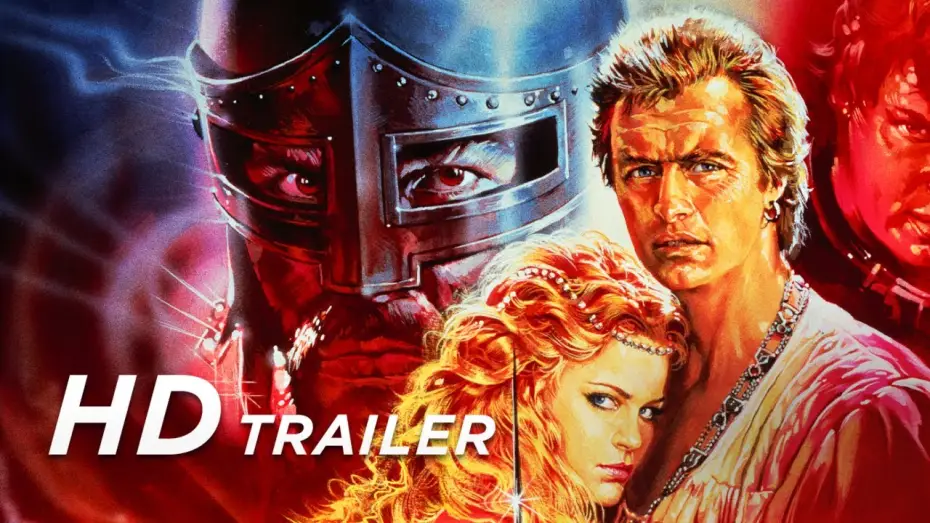
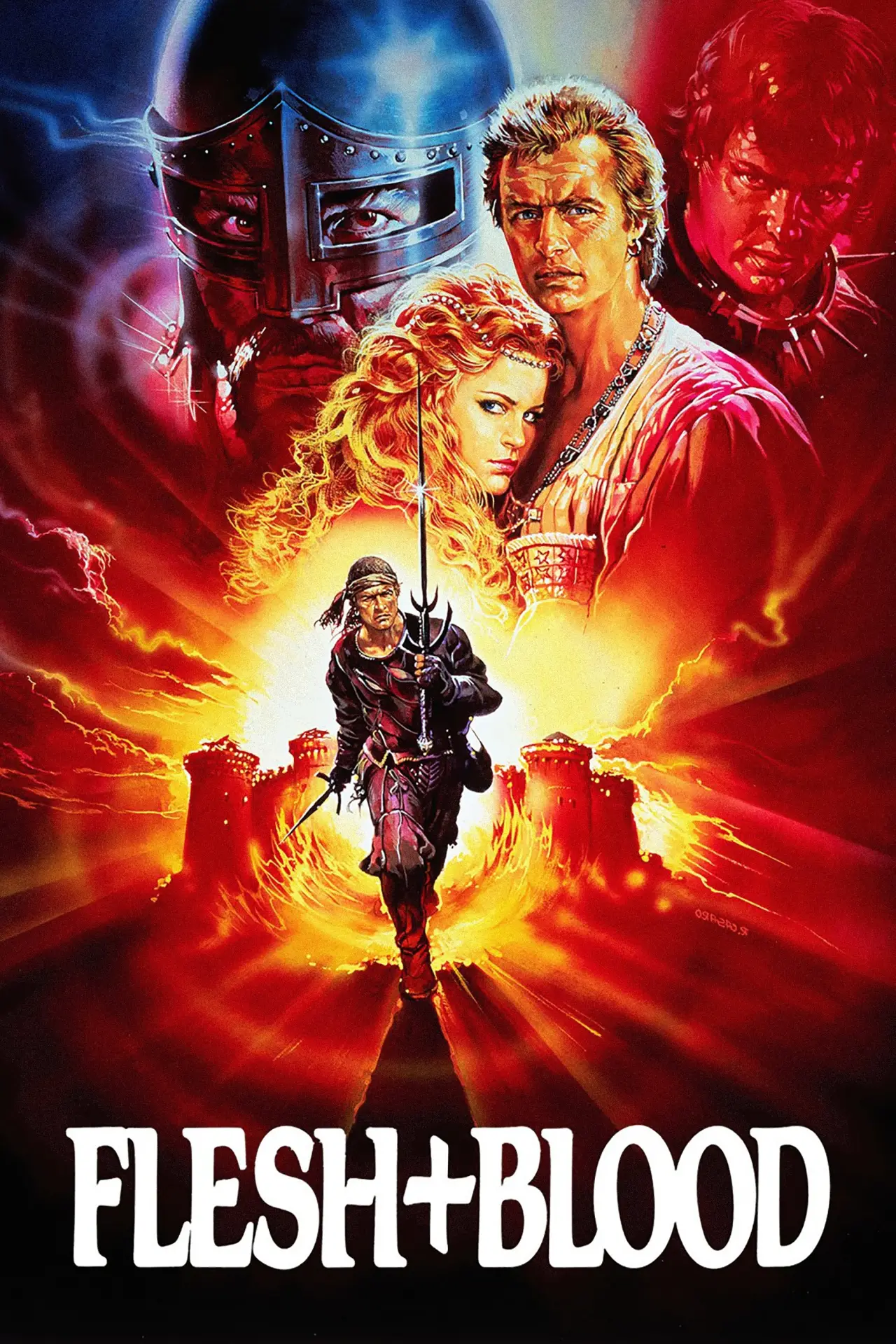
A band of medieval mercenaries take revenge on a noble Lord who cheated them by kidnapping his son's fiancée. As the plague and warfare cut a swathe of destruction throughout the land, the mercenaries hole up in a castle and await their fate.
What's left behind the scenes
- The film was entirely shot on location in Spain. The castle was filmed in Belmonte, near Cuenca, in the province of Castile-La Mancha, while the remaining scenes were shot in Cáceres, in the province of Extremadura, and Ávila, in the province of Castile and León.
- Another anachronism: in the opening scene, the cardinal distributes clearly modern communion wafers during the sacrament.
- The film was the last collaboration between Paul Verhoeven and Rutger Hauer. Their creative partnership lasted more than 15 years, beginning with their joint work on the television film 'Floris' in 1969. The director called Rutger the embodiment of the 'bright side of existence' (Verhoeven’s other favorite actor, Jeroen Krabbé, was the embodiment of the 'dark side'). During the making of 'Flesh and Blood,' a conflict arose between Verhoeven and the film's producers regarding the plot, with Hauer siding with the latter.
- The film was director and screenwriter Paul Verhoeven's response to numerous films that, in his opinion, presented an overly romanticized version of the Middle Ages. He wanted to show the Middle Ages as a period dominated by cruelty, disease, poverty, and hardship, where death from natural causes was rare.
- Paul Verhoeven and Rutger Hauer (who played Martin, a former mercenary) argued so frequently during filming that the rest of the crew literally demanded they argue in English so everyone could understand what was going on.
- The actors in the film were so competitive with each other for the amount of screen time allocated to each character that some of them soon began calling the film “Blood + Flesh + Elbows,” because figuratively, the actors were practically elbowing each other out of the way for screen time.
- Before filming this movie, Paul Verhoeven and Rutger Hauer had worked together on five pictures, but this time they argued a lot, and after the film's release, they never worked together again. After Hauer’s death in 2019, Verhoeven once said he regretted inviting Hauer to be in this film. Hauer signed on to the film before becoming a world-class movie star thanks to films like the action movie “Nighthawks” (Bruce Malmuth and Gary Nelson, 1981), the science fiction action film “Blade Runner” (Ridley Scott, 1982), and the thriller “The Osterman Weekend” (Sam Peckinpah, 1983). He now didn't want to play an overtly negative character for fear it would affect his career. Verhoeven didn't release him from his obligations to the film. Because of this, they constantly argued during filming and subsequently, when the actor, to Verhoeven’s great displeasure, began to criticize his directing style, and even the film itself, which hadn’t even been released yet. Verhoeven admitted that he himself was “quite stubborn” at the time, and that he and Hauer eventually reconciled.
- The character named Hawkwood was named after a real historical figure – Sir John Hawkwood (1320 – 1394). John Hawkwood commanded a band of mercenaries known as the 'White Company', which operated in Italy in the 14th century AD.
- The film contains an obvious anachronism: when Captain Hawkwood announces to the mercenaries that Arnolfini has deceived them, the cannons behind him are so-called 'parrot guns', which only appeared in the 19th century and were actively used during the American Civil War, while the film is set in medieval Europe.
- The character named Hawkwood was named after a real historical figure—Sir John Hawkwood (1320–1394). John Hawkwood commanded a band of mercenaries known as the "White Company," which operated in Italy during the 14th century AD.
- The film was director and screenwriter Paul Verhoeven's response to numerous movies that presented what he considered an overly romanticized version of the Middle Ages. He wanted to depict the Medieval period as a time dominated by cruelty, disease, poverty, and hardship, where death from natural causes was a rarity.
- Paul Verhoeven and Rutger Hauer (who played Martin, a former mercenary) argued so frequently during filming that the other crew members literally demanded that the two of them argue in English so that everyone else could understand what was going on.
- The production of the film was plagued by misfortunes. During filming, crew members and actors from Spain, the USA, and Denmark treated each other with poorly concealed animosity. Filming often had to be interrupted due to bad weather, which caused schedule delays and, consequently, budget overruns. Director Paul Verhoeven later described the work on this film as the most difficult shoot of his life and admitted that he even considered leaving the profession.
- Paul Verhoeven wanted to explore the rivalry between two former allies who had over time become bitter enemies. He mentioned that he was always disappointed by the fact that the enemies in Sam Peckinpah's Western 'The Wild Bunch' (1969) never came face to face. In this film, he strongly wanted to shoot a scene in which Martin (Rutger Hauer) and Hawkwood (played by Jack Thompson) take a bath together, each gripping the hilt of a knife underwater. However, studio management insisted on more screen time for the character played by Jennifer Jason Leigh and on expanding the love story in the plot; therefore, the bath scene was replaced by a love scene, and the feud between Martin and Hawkwood was pushed to the background, which Verhoeven later deeply regretted.
- Before this film, Paul Verhoeven and Rutger Hauer had worked together on five pictures, but this time they argued frequently, and after the film's release, they never worked together again. Following Hauer's death in 2019, Verhoeven once said that he regretted casting Hauer in this film. Hauer had signed on for the movie before becoming a world-class movie star through films such as the action movie 'Night Hawks' (Bruce Malmut and Gary Nelson, 1981), the sci-fi action film 'Blade Runner' (Ridley Scott, 1982), and the thriller 'Osterman Week' (Sam Peckinpah, 1983). By then, he no longer wanted to play an overtly negative character for fear it would affect his career. Verhoeven did not release him from his obligations to the film. Because of this, they fought constantly during filming and afterward, when the actor—to Verhoeven's great annoyance—began to criticize his directing style and the film itself, which had not even been released yet. Verhoeven admitted that he himself was 'stubborn enough' at the time, and that he and Hauer eventually reconciled.
- The film contains an obvious anachronism: when Captain Hawkwood informs the mercenaries that Arnolfini has cheated them, the cannons behind him are so-called 'parrot guns,' which only appeared in the 19th century and were used extensively during the American Civil War, whereas the film is set in medieval Europe.
Similar movies
8.1/10
8.1/10

7.9/10
7.8/10

7.8/10
7.7/10

7.6/10
7.4/10

7.4/10
7.3/10


 Auditions in India
 Casting calls in USA
 Castingi w Polsce
 Кастинги в Україні
