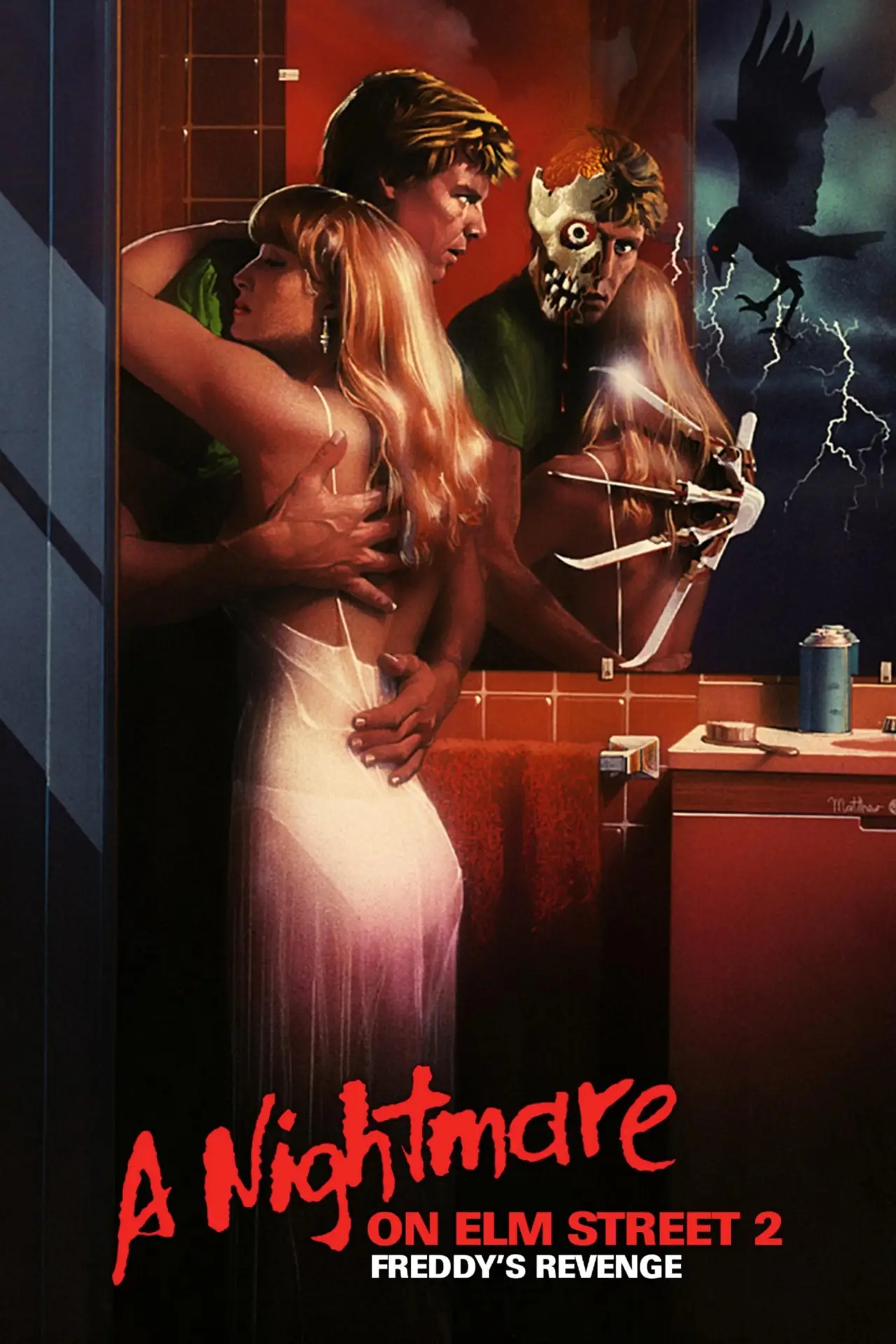
A Nightmare on Elm Street Part 2: Freddy's Revenge
The man of your dreams is back!




Country
Genre
Budget
$3 000 000
Box office
$29 999 213
Director
Actors
Mark Patton, Robert Englund, Kim Myers, Robert Rusler, Clu Gulager, Hope Lange, Marshall Bell, Melinda O. Fee, Tom McFadden, Sydney Walsh
All actors and roles (10)
All actors and roles (10)
Scenario
David Chaskin
Producer
Robert Shaye, Stanley Dudelson, Stephen Diener
Camera operator
Jacques Haitkin
Composer
Artist
Gregg Fonseca
Audition
Annette Benson
Editing
Bob Brady, Amy Rabins
Whole Team (62)
Whole Team (62)
Short description
Jesse Walsh moves with his family into the home of the lone survivor from a series of attacks by dream-stalking monster, Freddy Krueger. There, he is bedeviled by nightmares and inexplicably violent impulses.
What's left behind the scenes
- The original glove prop from Wes Craven's horror film "A Nightmare on Elm Street" (1984) was used in this movie; viewers could also spot it on a barn wall in Sam Raimi's "Evil Dead II" (1987). Similarly, in "The Evil Dead" (Sam Raimi, 1981), "A Nightmare on Elm Street" (Wes Craven, 1984) is shown on television. Raimi and Craven regularly included references to each other's films. When Craven lent the glove for the filming of "A Nightmare on Elm Street 3: Dream Warriors" (Chuck Russell, 1987), it was accidentally lost. Over time (in 2009), a fan of the franchise discovered the glove and put it up for auction.
- Former executive producer and head of New Line Cinema, Robert Shaye, appears in a cameo role as a bartender in the S&M club that Jesse visits.
- Initially, Robert Englund was not offered to return to the screen as Freddy. His request for a higher fee was denied, and a stunt double was hired and filming began. Two weeks after filming began, producer Robert Shaye realized this was a mistake. The stunt double was let go, the role was given to Englund, and his fee request was granted.
- Robert Englund played the bus driver in the opening scene of the film.
- The tongue scene was shot by the film's second unit director because Jack Sholder couldn't stop laughing during filming.
- Wes Craven refused to work on the continuation as he did not want to film a sequel. However, Craven's ideas for the first film were borrowed for the second. For example, an alternative ending in which Krueger takes Nancy and her friends away in a school bus became the opening scene.
- In the original video release, the closing credits first feature the song "Touch Me," followed by music by Christopher Young. In the restored version, the credits feature Bing Crosby's song "Did You Ever See A Dream Walking?", which also appears in the film's soundtrack list.
- The Swedish version of the film was cut by 5 minutes.
- Freddy received significantly more screen time than in the first film.
- This film used the original glove prop from Wes Craven's horror film "A Nightmare on Elm Street" (1984); it could also be seen by viewers on the wall of the barn in Sam Raimi's "Evil Dead 2" (1987). Similarly, in "The Evil Dead" (Sam Raimi, 1981), "A Nightmare on Elm Street" (Wes Craven, 1984) is shown on television. Raimi and Craven regularly included references to each other's films in their work. When Craven lent the glove for the filming of "A Nightmare on Elm Street 3: Dream Warriors" (Chuck Russell, 1987), it was accidentally lost. Over time (in 2009), a fan of the franchise discovered the glove and put it up for auction.
- The first film in which a male character appears as the Scream Queen.
- The first film in which a male actor plays the role of the Queen of Scream.
- This film is the only one in the Freddy Krueger series that lacks the original musical theme by Charles Bernstein or its variation.
- Above Jesse’s bed in his room, a Simple Minds poster for “Don’t You Forget About These” hangs on the wall. In fact, the song is titled “Don’t You (Forget About Me).”
- Almost all of the bloody scenes were cut from the German video version, making the film, in the opinion of fans, practically uninteresting to watch.
- Wes Craven refused to work on a sequel as he did not want to make one. However, Craven's ideas for the first film were borrowed for the second. For example, an alternative ending in which Krueger takes Nancy and her friends away on a school bus became the opening scene.
- Wes Craven refused to work on a sequel as he didn't want to make one. However, Craven's ideas for the first film were borrowed for the second. For example, an alternate ending in which Krueger takes Nancy and her friends away in a school bus became the opening scene.
- The tongue scene was filmed by the movie's second unit director because Jack Sholder could not stop laughing during filming.
- Due to the film's abundance of homoeroticism, against the backdrop of the escalating AIDS epidemic and homophobia, Jesse's actor, Mark Patton, left show business and remained out of the public eye for many years.
- This film is the only movie in the Freddy Krueger series that lacks Charles Burnstein's original musical theme or a variation of it.
- Many criticized the episode where Freddy appears to the group in the pool during a party as the most inappropriate and violating the rules established by Wes Craven in the first film of the franchise (Freddy's victims should not be people who are awake).
- Visual effects specialist Rick Lazzarini created a monstrous version of the Walsh bird. However, it was decided that the bird should look more realistic.
- Former executive producer and head of New Line Cinema, Robert Shaye, appears in a cameo role as a bartender in the sadomasochism club that Jesse visits.
- Makeup artist Kevin Yagher replaced David B. Miller, who created Freddy's look in the original 1984 film. To recreate Freddy's appearance, Yagher had only a few photos and the first film of the franchise, meaning he had to work practically from scratch. After studying photographs of fire victims, Yagher slightly altered Freddy's look, emphasizing the facial bones. According to Yagher, he wanted Freddy to look like a male witch. To achieve this, he made Freddy's eyes red-yellow, giving them a more "demonic look."
- Because the film contains a lot of homoeroticism, and against the backdrop of the growing HIV epidemic and homophobia, Mark Patton, who played Jesse, left show business, and nothing was known about him for many years.
- When Jesse, played by Mark Patton, transforms into Freddy, the viewer can notice Freddy's eye peeking out of Jesse's open mouth. To film this scene, a model of Patton's head was made with a hole for Freddy's eye. Only a friend of Kevin Yager (who was responsible for the special effects) was able to fit inside this model. This scene became the only one in the entire franchise where Freddy is played by a woman (not counting the times he pretended to be other people in dreams).
- Initially, Robert Englund was not asked to return to the screen as Freddy. His request for a higher fee was denied, and a body double was cast, and filming began. Two weeks into production, producer Robert Shaye realized this was a mistake. The double was let go, the role was given back to Englund, and his request regarding the fee was granted.
- In the original video release, the final credits first feature the song "Touch Me," followed by music by Christopher Young. In the restored version, the credits play Bing Crosby's "Did You Ever See A Dream Walking?" and it also appears in the list of songs used in the film.
- Visual effects specialist Rick Lazzarini created a monstrous version of the Walshes' pet bird. However, it was decided that the bird should look more realistic.
- The original Freddy glove was stolen during filming.
- Many criticized the episode in which Freddy appears to the group in the pool during a party as the most inappropriate and a violation of the rules established by Wes Craven in the first film of the franchise (people who are awake should not become Freddy's victims).
- The film is the second of three parts in which the main character lives in house #1428. In the other films, the house is abandoned.
- Former executive producer and head of New Line Cinema, Robert Shaye, appears in a cameo role as a bartender in a sadomasochistic club that Jesse visits.
- Brad Pitt, John Stamos, and Christian Slater auditioned for the role of Jesse.
- When Jesse, played by Mark Patton, transforms into Freddy, the viewer can notice Freddy's eye peeking out of Jesse's open mouth. To film this scene, a model of Patton's head was made with a hole for Freddy's eye. Only a female friend of Kevin Yagher (who was responsible for the special effects) was small enough to fit into this model. This scene is the only one in the entire franchise where Freddy is played by a woman (excluding instances where he impersonated other people in dreams).
- Makeup artist Kevin Yagher replaced David B. Miller in this role, who created Freddy's image in the original 1984 film. To recreate Freddy’s appearance, he had only a few photographs and the first film in the franchise, meaning he had to work almost from scratch. After studying photographs of burn victims, Yagher slightly altered Freddy’s appearance, emphasizing his cheekbones. According to Yagher himself, he wanted Freddy to look like a male witch. To achieve this, he made Freddy's eyes red-yellow, giving them a more “demonic” look.
Similar movies
8.5/10
8.3/10
8.1/10
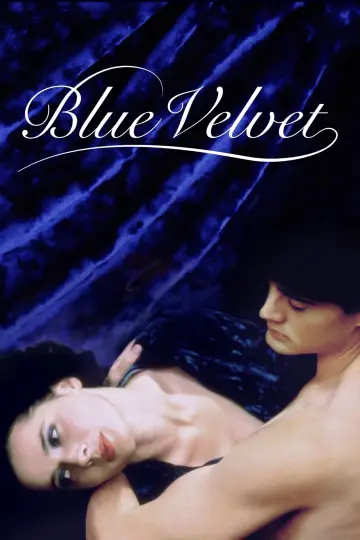
7.7/10
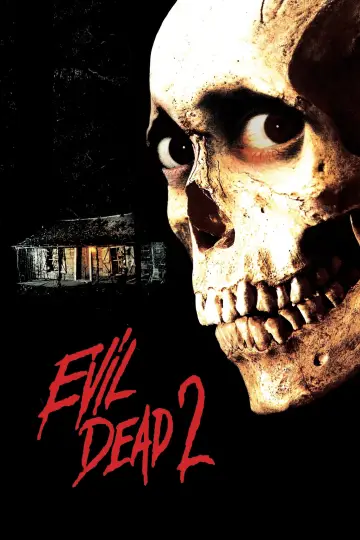
7.7/10
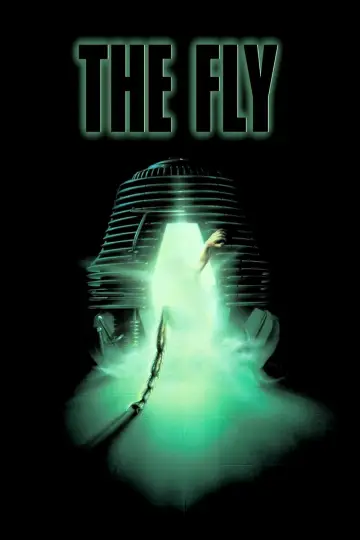
7.5/10
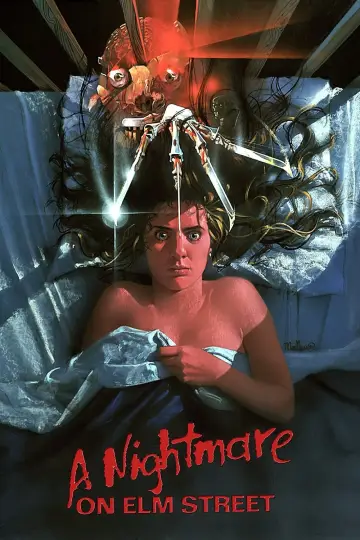
7.5/10
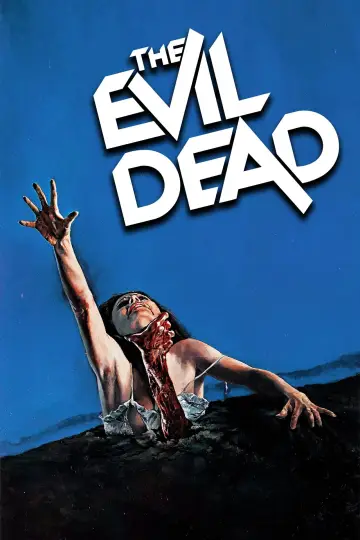
7.3/10
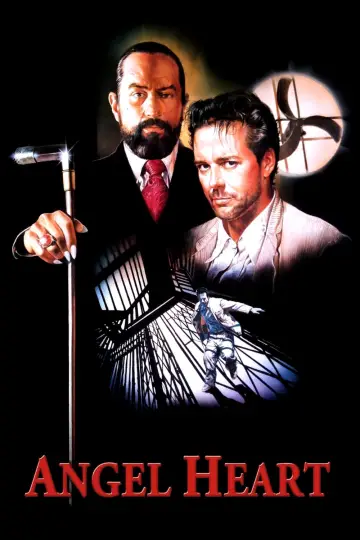
7.3/10
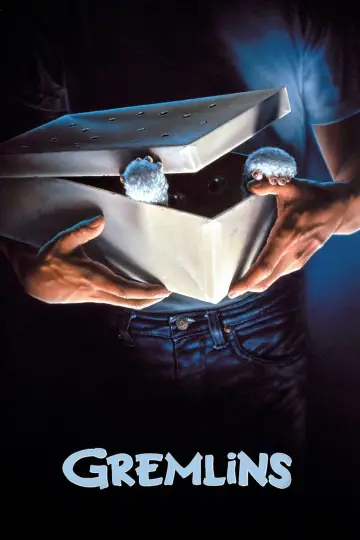
7.3/10


 Auditions in India
 Casting calls in USA
 Castingi w Polsce
 Кастинги в Україні
